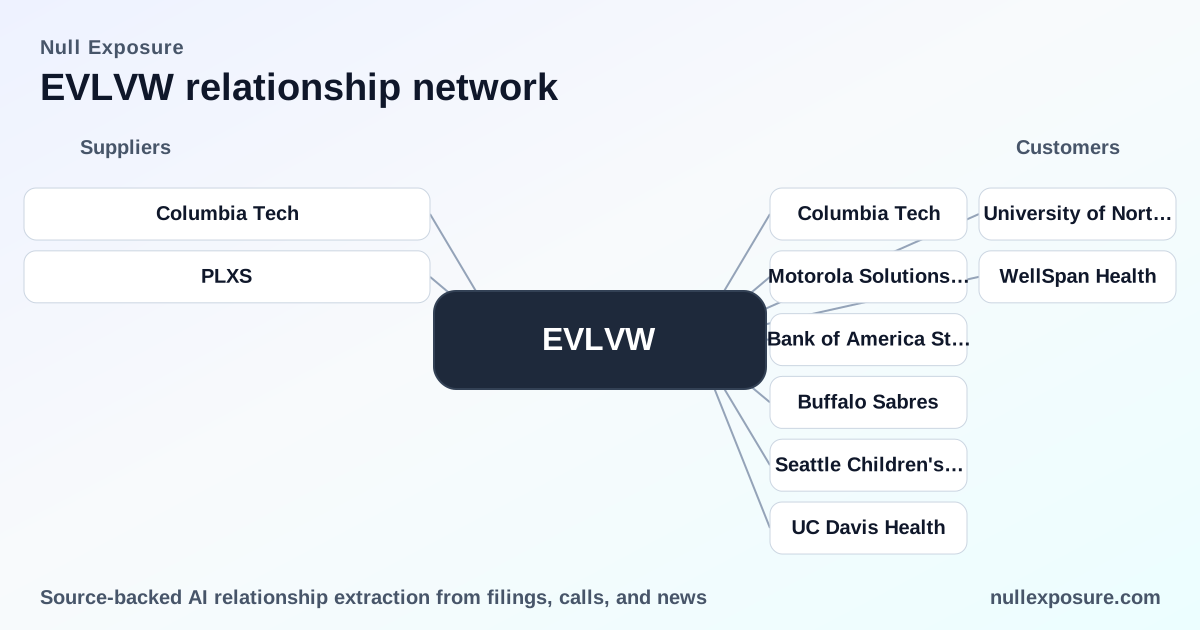
Evolv Technologies (EVLVW): supplier structure, concentration risks, and what investors should price in
Evolv Technologies sells AI-driven, touchless security screening systems and monetizes through direct product sales, recurring software and service contracts, and hardware license fees when third parties manufacture systems under license. The company relies on a small number of manufacturing and manufacturing-license relationships to scale capacity and international reach, so supplier posture directly maps to operational leverage and execution risk for revenue growth and margin expansion.
For a concise market view and ongoing supplier intelligence, visit https://nullexposure.com/.
The operating model through a supplier lens: short and direct
Evolv retains the intellectual property for its screening systems and supplements its internal fulfillment by licensing that IP to contract manufacturers who both produce and distribute hardware. That hybrid model—direct sales plus licensed manufacture—creates per-unit revenue from license fees while concentrating execution risk in a narrow supplier base. The FY2024 disclosure explicitly identifies Columbia Tech as the primary contract manufacturer and describes a licensing framework under which the manufacturer pays a hardware license fee for each system sold. According to the FY2024 Form 10‑K, Evolv granted licenses of its IP to Columbia Tech and recognizes hardware license fee income under that arrangement.
This posture delivers two clear commercial effects: (1) scalable gross margins when licensed manufacture substitutes for capital‑intensive in‑house build, and (2) operational concentration risk because a primary third‑party manufacturer controls a critical path to revenue. Evolv’s recent engagement of a large national advisory firm in January 2025 signals an intent to professionalize controls and support scale as accounts and disclosures grow, which is material for institutional investors evaluating supplier governance.
Visit https://nullexposure.com/ to see supplier relationships and risk flags in one place.
The two supplier relationships you must evaluate
Evolv’s public disclosures list two counterparty relationships relevant to supply, capacity, and contractual posture. Each is summarized below with source context.
-
Columbia Tech — Columbia Tech is identified as Evolv’s primary contract manufacturer and a licensee of Evolv’s intellectual property; Columbia Tech pays a per‑system hardware license fee for systems it manufactures and sells under the agreement. This relationship is explicitly described in the FY2024 Form 10‑K as the Company’s primary third‑party contract manufacturer. (Source: FY2024 Form 10‑K disclosure.)
-
Plexus — Evolv announced a strategic partnership with Plexus on the 2025 Q3 earnings call to expand production capacity, broaden global reach, and increase operational resiliency. The partnership is positioned as a capacity and geographic diversification play to complement the existing manufacturing base. (Source: 2025 Q3 earnings call.)
What the constraints tell investors about business model characteristics
Use the constraint excerpts as signals about how Evolv contracts, where it concentrates risk, and how mature its commercial model is.
-
Contracting posture — license plus contract manufacturing. The company discloses that it grants licenses of its IP to at least one contract manufacturer and records a hardware license fee per system produced. That structure preserves IP control while outsourcing capital and distribution, and it changes revenue composition toward both product sales and license fee recognition (company filing, FY2024).
-
Concentration — single primary manufacturer. Evolv relies on one primary third‑party contract manufacturer for production of its systems. That centralization creates single‑vendor operational exposure that is material to near‑term supply reliability and cost structure (company filing, FY2024).
-
Criticality — manufacturing is mission‑critical. With physical product manufacture outsourced, supplier performance directly affects revenue recognition timing, warranty and quality outcomes, and customer deployment schedules. The FY2024 filing identifies manufacturing as a critical operational dependency.
-
Geography and standards — North America focus with certified quality. The primary manufacturer is based in the United States and holds international quality certifications such as ISO 9001:2015, which supports reliability and compliance for major venue customers (company filing). This is a positive signal for enterprise customers and for scaling into regulated markets.
-
Governance and maturity signals. Engagement of a large national advisory firm in January 2025 to improve controls across significant accounts and disclosures indicates the company is moving toward institutional operational practices—important as supplier complexity grows.
How these relationships affect risk-adjusted valuation
The supplier profile drives three investment-relevant conclusions:
-
Upside lever: Licensing to third‑party manufacturers allows Evolv to scale without proportionate capital expenditure, preserving cash and improving gross profit capture per incremental sale when license economics are favorable. The license fee line creates an additional, unit‑linked revenue stream that benefits from higher volumes (10‑K disclosure).
-
Downside lever: Overreliance on a single contract manufacturer creates delivery and quality concentration risk that can compress revenue and increase warranty and service costs if the supplier falters. The addition of Plexus reduces this single‑vendor exposure and is a de‑risking move that investors should track via delivery cadence and product acceptance metrics (2025 Q3 earnings call).
-
Operational risk and governance: The company’s choice to engage a major advisory firm to design control activities suggests recognition of supplier‑related disclosure and process risk—an important positive for larger institutional investors concerned with auditability and repeatable supply execution (January 2025 filing).
What investors should monitor next
- Track execution metrics from the Plexus partnership: timing of initial production runs, geographic coverage, and quality acceptance rates reported on future calls. (Earnings call, 2025 Q3.)
- Watch for any amendments or broader licensing rollouts beyond Columbia Tech that would materially reduce concentration or change revenue mix; licensing language in the FY2024 filing indicates the structure is in place today.
- Monitor customer deployment timelines and warranty trends that reflect manufacturing quality and handoff processes between Evolv and its contract manufacturers.
Bottom line: clear levers, concentrated risks
Evolv’s supplier strategy is an explicit tradeoff: scalability through licensed manufacture versus concentrated operational risk on a single primary contractor. The Plexus partnership materially strengthens capacity and resiliency, and the company’s governance steps are aligned with scaling ambitions. Investors should price both the growth upside from outsourced scaling and the execution risk from supplier concentration into forward expectations.
For a focused supplier-risk briefing and regular updates on these relationships, visit https://nullexposure.com/. For deeper diligence workflows and supplier mapping, start here: https://nullexposure.com/.