Edgewise Therapeutics (EWTX) — supplier relationships and operational risk profile
Edgewise Therapeutics is a clinical‑stage biopharma that develops small‑molecule therapies for musculoskeletal disease and monetizes through advancement of candidates toward commercialization, strategic partnerships and capital markets activity (including equity programs). For investors and operators evaluating supplier risk, the company’s model is capital‑intensive, externally dependent on contract manufacturers and service providers, and supported by financing flexibility such as an at‑the‑market equity program. For a quick supplier-risk dashboard and monitoring tools, visit https://nullexposure.com/ to track counterparties and contract signals.
How Edgewise actually operates and where revenue will come from
Edgewise runs a classical asset‑light drug development model: it outsources manufacturing, clinical operations and distribution while retaining discovery and clinical strategy in house. The firm’s near‑term financial runway and eventual revenue depend on clinical progress for candidates such as sevasemten and EDG‑7500, licensing or commercialization deals, and access to capital markets to finance development programs. The company has no product revenue to date, and cash management plus access to equity capital are central to execution.
The contracting posture: long leases, short‑term suppliers, high operational dependency
Edgewise’s supplier posture is mixed and instructive for counterparty risk management.
- Real estate is long‑dated and committed. The company disclosed an 8.2‑year lease for ~18,614 sq ft in Boulder with aggregate base rent of about $3.3 million over the initial term and total undiscounted future lease payments of $5.61 million as of December 31, 2024, indicating fixed occupancy cost exposure on the balance sheet. This is a firm, long‑term contract that provides operational stability for labs and offices but creates a non‑flexible fixed cost. (Company 10‑K / FY‑end disclosures.)
- Manufacturing and supply are short‑term / spot‑oriented. Edgewise purchases drug product from CDMOs on a purchase‑order basis and explicitly does not maintain long‑term supply agreements, which leaves material supply continuity at the discretion of third parties. The company documented both short‑term and spot procurement language in its filings. (Company 10‑K / risk factors.)
- Distribution and clinical services are outsourced and operationally critical. The company relies on CROs, clinical data organizations and distributors for trials, making these relationships high‑impact to timelines and regulatory milestones. (Company 10‑K risk disclosures.)
- Geographic concentration shifted toward the U.S. After COVID supply disruptions, Edgewise moved manufacturing from an international vendor to a U.S. third‑party manufacturer to reduce cross‑border risk. (Company disclosure on trial delays and supplier shift.)
Together these elements create a supplier profile that mixes long‑term fixed cost commitments (leases) with short‑term operational dependence on external manufacturers and service providers, increasing operational fragility if capital or single suppliers are constrained.
For ongoing monitoring of these dynamics and counterparty exposures, see https://nullexposure.com/.
The single documented financial counterparty: Leerink Partners LLC
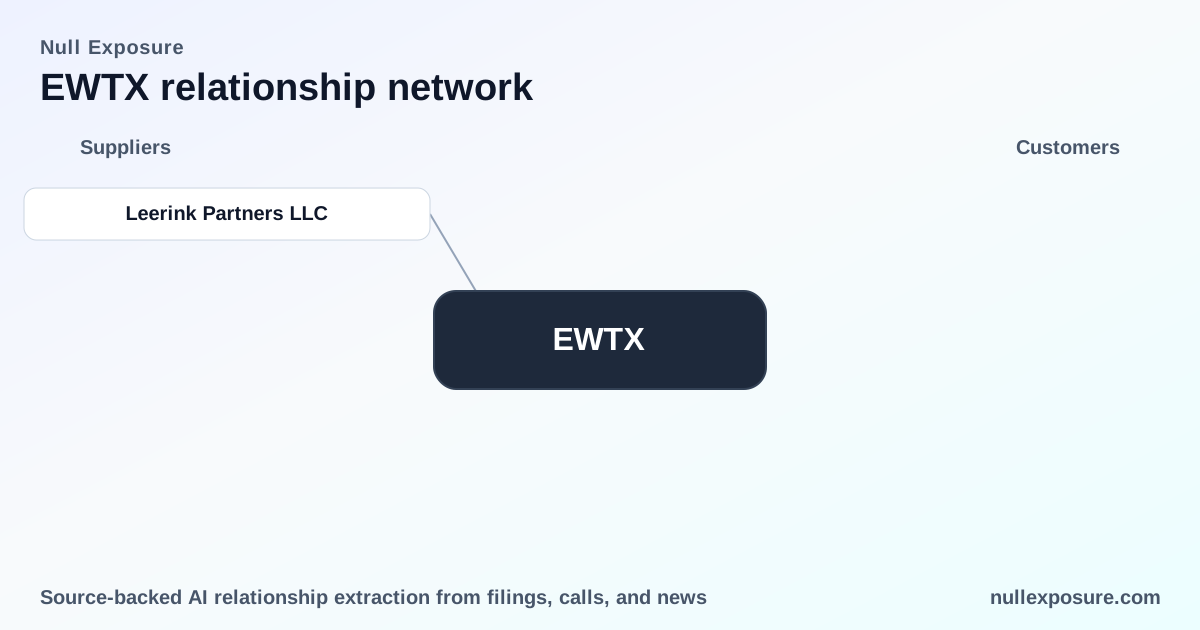
Edgewise maintains an at‑the‑market (ATM) equity offering program with Leerink Partners LLC that permits the sale of up to $175 million in common stock, which provides immediate access to equity liquidity and a mechanism to monetize shares as needed to fund development. A TradingView summary of the company’s SEC 10‑K highlighted the ATM program on March 9, 2026. (TradingView note summarizing the company 10‑K, March 9, 2026 — referencing the Leerink ATM program.)
All material supplier and counterparty roles identified
Below are the company‑level counterparties and roles disclosed in filings and risk narratives; these are not exhaustive vendor lists but cover every relationship type surfaced in the available disclosures.
- Leerink Partners LLC — Edgewise has an ATM equity program with Leerink enabling up to $175 million of common stock sales, supplying financing liquidity to support operations and R&D. (TradingView summary of the company 10‑K, March 9, 2026.)
- Contract Development and Manufacturing Organizations (CDMOs) — Edgewise contracts CDMOs to manufacture sevasemten and EDG‑7500 for preclinical and clinical use and purchases product on a purchase‑order basis rather than under long‑term supply contracts; this exposes timelines to the operational performance of manufacturers. (Company 10‑K risk disclosures.)
- Distributors / logistics providers — The company relies on third parties to store and distribute drug supplies for clinical trials, and distributor failures could delay development or commercialization. (Company 10‑K risk disclosures.)
- CROs, clinical data vendors, investigators — Edgewise relies on CROs and clinical sites to conduct trials and manage data, making these services critical for regulatory timelines. (Company 10‑K risk disclosures.)
Each of these roles is active and material to program execution; the filings treat them as core operational dependencies rather than ancillary vendors.
What the constraints mean for investors and operators
The documented constraints provide a clear picture of how counterparty risk translates into execution risk.
- Concentration and criticality: The business is critically dependent on third‑party manufacturers and clinical service providers. Loss of a key supplier would force trial delays or restarts and could be existential with respect to timelines to market authorization. This is a company‑level signal: supply loss has high impact.
- Contract maturity mix: The presence of a multi‑year lease is balanced against short‑term or spot manufacturing contracts, creating a mismatch between fixed occupancy cost and flexible production procurement. This increases downside in cash‑strained environments.
- Spending profile: Lease commitments disclosed (undiscounted future payments of approximately $5.61 million as of Dec 31, 2024) indicate modest but real fixed cash outflows that constrain near‑term liquidity planning.
- Geographic risk response: The deliberate shift to U.S. manufacturers after COVID demonstrates operational learning and risk mitigation, but also concentrates supplier geography domestically, which reduces some risk vectors while potentially increasing local supplier concentration.
These signals should shape vendor diligence: prioritize redundancy for manufacturing, contract terms that secure at least bridge supply quantities, and robust contingency plans with logistics partners.
For a practical supplier risk scorecard that overlays these constraints against counterparties, consult https://nullexposure.com/.
Investment implications and recommended actions
Edgewise is a development‑stage biotech with no product revenue and clear external dependency on CDMOs and CROs. The ATM with Leerink provides an important liquidity mechanism that reduces financing tail‑risk, but operational execution remains the primary value driver and risk.
- For investors: underwrite clinical milestones and supplier continuity before scaling exposure; monitor ATM usage as a signal of near‑term cash needs and dilution risk.
- For operators and procurement: negotiate minimum supply commitments or safety‑stock arrangements with key CDMOs, and codify secondary suppliers and logistics contingency plans to protect timelines.
- For risk managers: track lease obligations against cash runway and ensure any financing from the Leerink ATM is aligned to discrete development inflection points.
Conclusion — clear operational levers, actionable monitoring
Edgewise’s model combines outsourced clinical and manufacturing execution with public‑market funding flexibility. The company’s supplier profile — long‑term lease commitments plus short‑term manufacturing contracts and critical reliance on CROs and distributors — requires focused vendor management and liquidity oversight to de‑risk clinical timelines. For continuous tracking of these counterparties and contract signals, visit https://nullexposure.com/ to benchmark exposures and receive alerts tied to filings and vendor events.
For hands‑on due diligence support and to map counterparties against contractual risk, go to https://nullexposure.com/ and request the supplier monitoring package.