Eagle Materials (EXP) — supplier posture and what it signals for investors
Eagle Materials operates as a vertically integrated producer of heavy and lightweight construction materials and supplementary inputs to oil and gas extraction, monetizing through the sale of gypsum, cementitious products, aggregates and wallboard while selectively investing in low‑carbon input technologies to secure future feedstock advantages. The company's supplier posture combines multi‑decade bilateral supply commitments for plant feedstocks with short‑term commodity hedges and third‑party delivery networks, creating a hybrid risk profile that is operationally secure but exposed to commodity and logistics cycles. For a broader look at supplier relationships across industrials, visit https://nullexposure.com/.
Why supplier relationships matter for valuation and operations
Eagle's procurement profile is not a simple spot market story. Company disclosures show a mix of anchoring long‑term agreements that support plant throughput and short‑term contracts that leave commodity exposure in natural gas and leased equipment. That combination shapes free cash flow durability and capital intensity: long agreements preserve utilization and margins through secured feedstock, while short arrangements preserve tactical flexibility but transfer price volatility to operating costs.
Key company‑level signals:
- Long‑term contracting is entrenched: disclosures reference multi‑decade supply agreements for synthetic gypsum signed in 2005–2006 with extension options through 2069.
- Tactical short‑term exposure exists: forward purchase contracts for natural gas covering roughly 20% of anticipated usage expire in 2025–2026, and short‑term equipment leases remain part of the operating footprint.
- Supplier concentration is nuanced: the company states its individual quarries are not material for disclosure, but several multi‑decade supply arrangements create site‑specific dependencies.
- Dual relationship roles: Eagle acts as buyer for key raw inputs (e.g., slag granules and natural gas) while functioning as a service provider at the delivery layer through third‑party common carriers for wallboard logistics.
Those points are drawn from Eagle Materials’ own disclosures and investor communications in filings and quarterly remarks.
Contracting posture: decades of certainty paired with tactical hedges
Eagle’s procurement strategy shows deliberate locking of critical feedstock through very long agreements while using short‑term instruments for volatility‑prone inputs. Company disclosures reference a 60‑year synthetic gypsum agreement signed in 2006 and an earlier 2005 long‑term agreement with a public utility in South Carolina with extension options through 2069, which anchor plant operations. In contrast, the firm uses forward purchase contracts for natural gas that expire in the near term (calendar years 2025 and 2026) and account for approximately 20% of expected consumption, and it maintains short‑term leases for some equipment. These dynamics create a blend of price certainty for some inputs and exposure for others, which investors should treat as both a durability signal and a source of earnings volatility depending on commodity cycles.
Concentration and criticality: local dependencies versus broad sourcing
Eagle declares individual quarries immaterial for disclosure purposes, which suggests a dispersed extraction footprint, yet the company also references site‑specific, long‑dated arrangements that give certain plants outsized strategic importance. For example, contracts tied to synthetic gypsum and slag processing create operational criticality at specific plants. The company also specifies buyer obligations—its Illinois slag facility has an arrangement requiring the purchase of up to 550,000 tons of granules per year from a steel manufacturer—signaling concentrated flows of particular intermediate inputs even if upstream raw quarries are broadly distributed.
Explicit supplier relationships uncovered in company communications
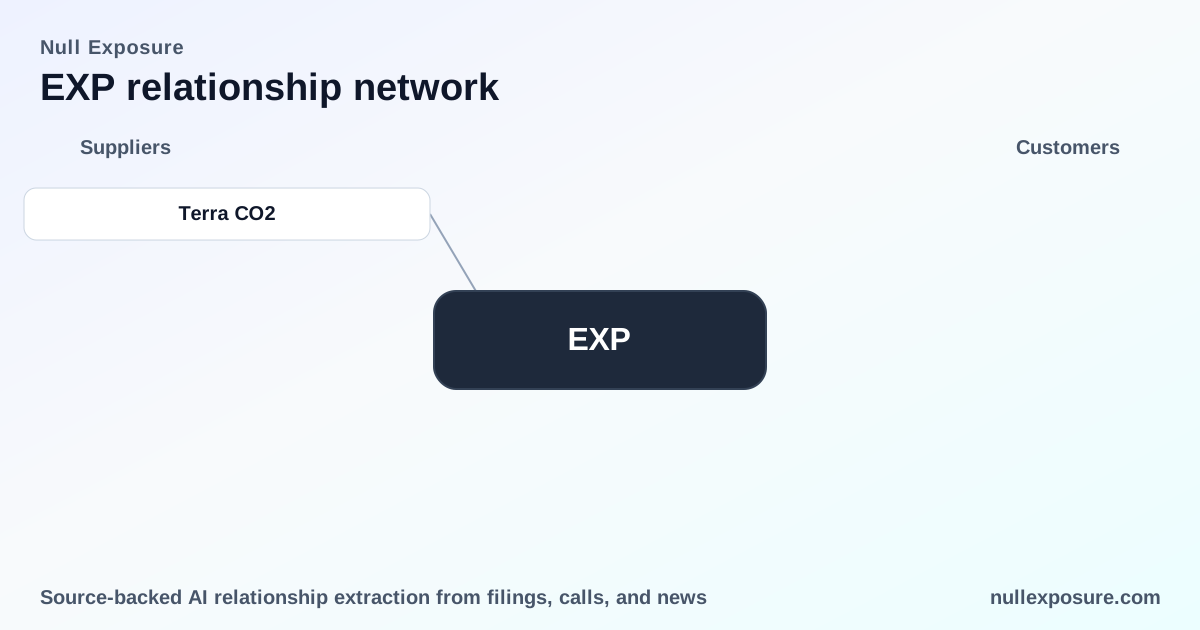
Terra CO2 — strategic investment in low‑carbon cementitious feedstock
Eagle disclosed in its Q1 2026 earnings call that it acted as a lead investor in Terra CO2 to accelerate production of low‑carbon supplementary cementitious material, positioning the company to capture future demand for decarbonized cement inputs. (Eagle Materials Q1 2026 earnings call, March 2026)
This relationship is an investment rather than a traditional supplier contract; its importance is strategic rather than immediately volumetric, underwriting future feedstock optionality and potential cost advantage as low‑carbon cement substitutes scale.
Operational and financial risk implications
Eagle’s supplier posture produces a clear set of investor considerations:
- Counterparty longevity risk is low for contracted gypsum supplies because agreements run for decades, but those same contracts create plant‑level concentration that would be costly to replace if a contracted supplier relationship ruptured. Company disclosures from the mid‑2000s document these long terms.
- Commodity exposure remains material for energy inputs: near‑term natural gas contracts cover only a portion of usage, leaving the company exposed to market gas price swings beyond contract coverage. The company notes forward purchases that expire in 2025–2026 and that comprise roughly 20% of anticipated usage.
- Logistics are outsourced but operationally critical: gypsum wallboard deliveries rely largely on third‑party common carriers, making transportation availability and costs a direct driver of margin volatility.
- Investment strategy supplements supply risk: the Terra CO2 investment is a deliberate play to secure low‑carbon supplementary cementitious materials, shifting some supplier risk into an equity‑like position with upside optionality.
Mid‑article action: for deeper due diligence on Eagle’s supplier network and comparable industrial suppliers, go to https://nullexposure.com/.
Monitoring checklist for investors and operators
Focus on the following signals when tracking Eagle’s supply risk and upside:
- Contract expiry and extension elections for long‑dated gypsum agreements and public utility arrangements.
- Timeline and commercialization metrics for Terra CO2 investments—successful scale‑up changes feedstock economics.
- Natural gas contract renewals and percentage of usage covered; rising unhedged exposure amplifies earnings cyclicality.
- Logistics cost trends and carrier capacity, given the reliance on third‑party trucking for wallboard deliveries.
- Aggregate supplier concentration metrics at the plant level even if quarries are not disclosed as material.
A concise, consistent monitoring cadence will reveal whether long contracts are preserving margins or creating fragility through concentration.
Bottom line and recommended next steps
Eagle Materials runs a hybrid supplier model: long‑dated feedstock agreements that secure plant throughput and short‑term commodity arrangements that preserve flexibility but expose margins to market volatility. The Terra CO2 investment is a strategic move to vertically position Eagle for low‑carbon inputs and should be tracked as a capability enhancer rather than a current volumetric supplier. For investors, the primary questions are the durability of long contracts, timing of natural gas renewals, and the pace at which low‑carbon alternatives move from pilot to production.
To explore supplier profiles across public companies and benchmark Eagle’s posture against peers, visit https://nullexposure.com/.