Farmmi Inc (FAMI): supplier relationships and what they tell investors
Farmmi Inc processes and sells agricultural and packaged food products across China, North America, Europe and parts of Asia and the Middle East, monetizing through product sales and cross-border distribution of mushrooms, edible fungi, and related packaged foods. The public company is small by market cap, loss-making on an operating basis, and relies on export channels and public liquidity to support growth and working capital. For a rapid supplier-risk scan and investor signals, visit https://nullexposure.com/.
How Farmmi makes money and where the pressure is
Farmmi operates as a vertically integrated food-products processor and exporter: it sources agricultural inputs, processes mushrooms and packaged foods, and sells finished goods to domestic and international distributors and retailers. Revenue (TTM) is $27,971,400 while gross profit is modest at $801,520, and the company reports negative EBITDA of $47,020,984, indicating meaningful operating losses relative to scale. Farmmi is publicly traded on Nasdaq, giving its suppliers and counterparties a visible market stamp and regulated disclosure obligations. Key balance and market signals include a market capitalization of roughly $17.7 million, high insider ownership (about 34.85%), and almost no institutional ownership (0.105%), which shapes governance and negotiation posture.
The regulatory and liquidity anchor: Farmmi is a Nasdaq-listed issuer
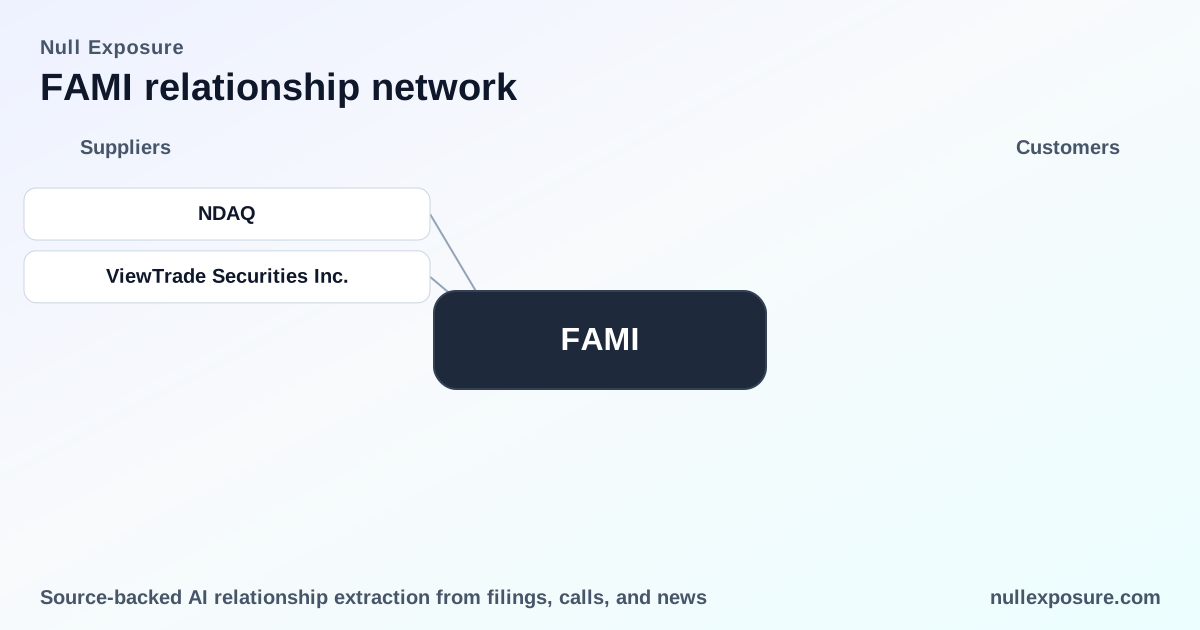
Farmmi's Nasdaq listing is a visible element of its supplier profile. According to a Xinhua English report dated February 27, 2018, Farmmi began trading on the Nasdaq on February 16, 2018 under the ticker FAMI, an event that created public-market liquidity and periodic reporting obligations. This listing gives counterparties the advantage of public disclosures when assessing credit and supplier terms. (Source: Xinhua English, Feb 27, 2018.)
Who underwrote the IPO and why that matters
The same Xinhua report identifies ViewTrade Securities Inc. as the sole underwriter and book-running manager for Farmmi's offering. That underwriting relationship is primarily historical but important: it documents which capital markets intermediary structured and distributed Farmmi’s equity to public investors. For investors and suppliers, knowledge of underwriting partners informs pricing, placement and the institutional reach that accompanied the company’s public debut. (Source: Xinhua English, Feb 27, 2018.)
Complete relationship map — every relationship in the results
Nasdaq Stock Market
Shares began trading on Nasdaq on February 16, 2018 under ticker FAMI, establishing Farmmi as a U.S.-listed Chinese food supplier with ongoing disclosure and exchange compliance obligations. According to Xinhua’s English report from February 27, 2018, the listing event is the primary structural market relationship underpinning Farmmi’s public profile. (Source: Xinhua English, Feb 27, 2018.)
ViewTrade Securities Inc.
ViewTrade Securities acted as the sole underwriter and sole book-running manager for Farmmi’s offering, meaning ViewTrade handled the execution and placement of the company’s initial public equity into U.S. markets. That underwriting arrangement is recorded in the public narrative of Farmmi’s 2018 listing. (Source: Xinhua English, Feb 27, 2018.)
Firm-level operating constraints and structural signals
There are no discrete constraint excerpts tied to specific relationships in the available record; instead, the data yields company-level operating signals that affect contracting posture, concentration, criticality and maturity:
- Contracting posture: High insider ownership (≈34.85%) and minimal institutional ownership (≈0.105%) indicate a controlling shareholder structure and limited institutional investor pressure. This typically produces a negotiation environment where counterparties face concentrated decision-makers rather than broad institutional governance.
- Concentration: The company’s modest market capitalization (~$17.7M) and limited scale relative to global food suppliers indicate concentration risk in revenue channels and buyer counters; counterparties should expect relatively limited bargaining leverage compared with larger, more diversified processors.
- Criticality: Farmmi’s role as an exporter and brand owner for specialized edible fungi categories creates commercial criticality for certain distribution partners, yet financial distress (negative EBITDA and losses) reduces its long-term purchasing power and increases supplier credit risk.
- Maturity: Public listing since 2018 gives Farmmi regulatory maturity and disclosure cadence, but persistent operating losses and weak analyst coverage signal early public-company commercial maturity rather than a stable, cash-generative business.
These are company-level signals to use when structuring supplier terms, credit lines, or joint distribution agreements.
What this means for investors and operators
- Credit risk is elevated. Negative EBITDA of $47.0M and modest gross profit versus revenue indicate cash-flow stress; suppliers should prioritize shorter payment terms, higher margins, or collateral measures.
- Visibility through Nasdaq listing reduces some information asymmetry. Regular filings allow monitoring of inventory, receivables and related-party transactions, improving early-warning capabilities.
- Governance is concentrated. Substantial insider ownership can accelerate decisions but also concentrate execution risk—operators should negotiate governance protections into long-term contracts when feasible.
For a supplier-ready risk checklist and contract templates oriented to small Nasdaq-listed food companies, see https://nullexposure.com/ — it provides practical tools and monitoring frameworks.
Practical next steps for investors and counterparties
- Conduct a covenant- and cash-flow-focused review of the most recent filings (quarterly and annual) to confirm working capital dynamics and counterparty concentration.
- Negotiate shorter payment terms and priority remedies when extending credit or inventory consignment.
- Treat the Nasdaq listing as a monitoring advantage: set calendar-based covenant checks tied to public filings and share-price movement triggers for early remediation.
For a concise supplier-risk assessment tailored to Farmmi’s public profile and underwriting history, visit https://nullexposure.com/ to generate a customized partner score and monitoring plan.
Bottom line
Farmmi is a small, publicly listed Chinese food processor with meaningful operating losses, concentrated ownership, and a historical underwriter relationship to ViewTrade and market structure via Nasdaq. Investors and suppliers should treat the listing as a transparency tool but factor in elevated credit risk and concentrated governance when structuring commercial terms. The public relationships documented in the 2018 Xinhua report are historical anchors that continue to matter for market access and disclosure, but the company’s current financial profile drives counterparty risk and contracting posture going forward.