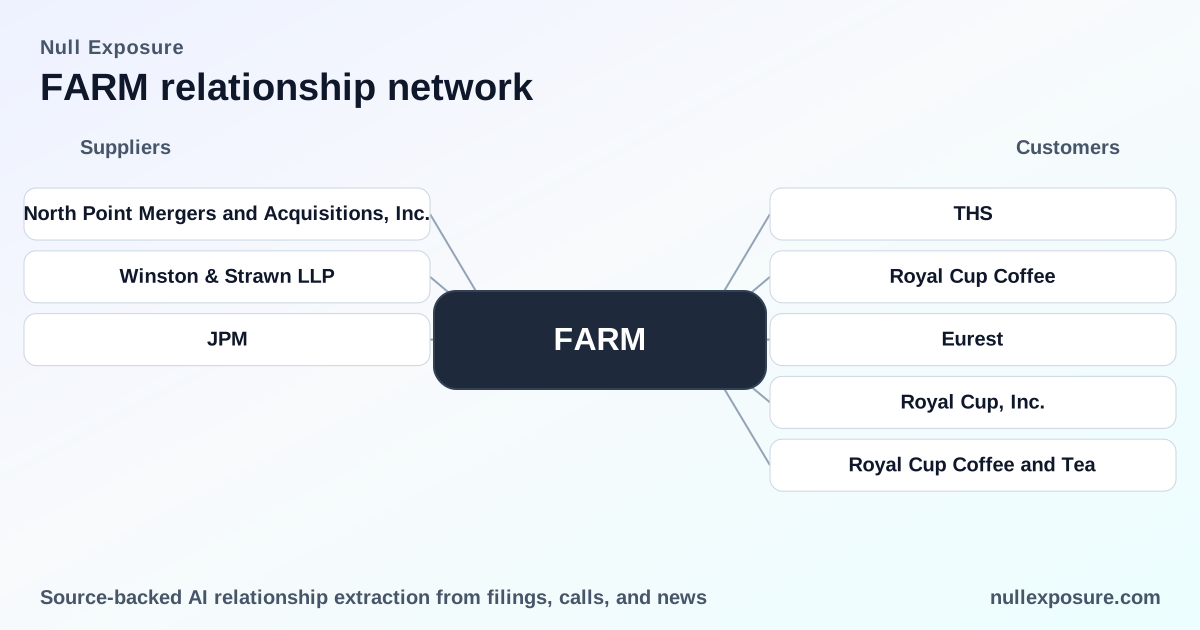
Farmer Bros. Co (FARM): Supplier relationships that determine operational optionality
Farmer Bros. Co operates as a national coffee roaster, packager and distributor that monetizes through product sales to foodservice, retail and institutional channels and through its direct-store-delivery (DSD) distribution network and long-haul logistics partnerships. The company’s revenue model is volume-driven, with thin operating margins and negative net income in recent reporting; Revenue (TTM) was $337.7M with gross profit of $137.5M and a market capitalization near $26.7M, which frames any supplier or financing action as material to cash flow and continuity.
Explore supplier and counterparty signals on the platform: https://nullexposure.com/
Why the recent advisor and legal engagements matter for suppliers and operators
Farmer Bros. has engaged external advisors to evaluate strategic options, which directly changes counterparty dynamics for suppliers and service providers. According to a QuiverQuant news release (March 9, 2026), Farmer Bros. retained North Point Mergers and Acquisitions, Inc. as its financial advisor to work with the board and strategy committee on potential opportunities. The same release confirms that Winston & Strawn LLP has been retained as legal counsel to support that review. Both relationships are active and transaction-focused, and they increase the probability of near-term corporate action that will affect supplier contract renegotiation, payment terms, and logistics planning.
- North Point Mergers and Acquisitions, Inc. — Farmer Bros. engaged North Point as its financial advisor to evaluate strategic alternatives and enhance shareholder value, signaling a board-directed review of capital or strategic options (QuiverQuant, March 9, 2026).
- Winston & Strawn LLP — The company engaged Winston & Strawn LLP as legal counsel to support the board and strategy committee during the strategic alternatives evaluation (QuiverQuant, March 9, 2026).
The bank relationship that underpins working capital flexibility
JPMorgan Chase Bank, N.A. is an important credit counterparty for Farmer Bros., historically providing a secured facility that the company has amended to increase operational flexibility. An SEC press release dated July 2, 2020 documents an amendment to Farmer Bros.’ credit facility with JPMorgan intended to support operations through the pandemic period. A standing relationship with a major bank like JPMorgan represents critical liquidity optionality and covenant exposure for suppliers and contract partners; any tightening or renegotiation will ripple through payables and logistics commitments.
- JPMorgan Chase Bank, N.A. — Farmer Bros. amended its credit facility with JPMorgan to increase flexibility in supporting business operations amid COVID-19 disruptions, establishing a key financing relationship used to manage liquidity (SEC press release, July 2, 2020).
Company-level constraints and what they imply for supplier management
The available supplier-focused signals describe Farmer Bros.’ operating model and contracting posture in three clear dimensions: global sourcing, logistics as a service dependency, and an active supplier governance program. These are company-level signals that shape supplier risk and negotiating leverage.
- Global sourcing: Farmer Bros. purchases green coffee from multiple regions around the world. This creates exposure to commodity price cycles, currency movements and regional supply disruptions, which requires suppliers to understand seasonal and geopolitical risk drivers rather than treat Farmer Bros. as a purely domestic buyer.
- Service-provider dependence: The company runs a large DSD fleet while relying on third‑party logistics (3PL) providers for long-haul distribution. Logistics partners are operationally critical and contractually important; continuity and performance of 3PLs materially affect distribution economics and working capital turns.
- Active supplier standards: Farmer Bros. requires all suppliers to acknowledge and adhere to Supplier Standards of Engagement. That formal onboarding and compliance posture signals mature contract governance and the likelihood of standardized supplier terms, audits and sustainability reporting requirements.
Together, these constraints indicate a contracting posture that is formal and enforcement-ready, operational concentration on logistics partners, and commodity exposure that will be a recurring negotiation point with green-coffee suppliers.
How these relationships affect supplier risk and opportunity
For investors and operators assessing supplier strategies, the combination of an active strategic review, existing bank financing and the company’s supplier governance creates a clear risk/reward profile. An advisor-led strategic alternatives process typically results in one of three outcomes that change supplier dynamics: a sale or divestiture (accelerates contract novation and payment re-prioritization), capital raise or refinancing (stabilizes payables but compresses supplier margin), or operational restructuring (introduces renegotiation and potential supplier consolidation). Suppliers should assume accelerated diligence and tighter contractual enforcement while strategic work is underway.
Operationally, dependence on 3PLs and a DSD footprint means suppliers that can provide flexible lead times, pooled shipments, or favorable payment terms will be advantaged. Conversely, pure commodity sellers with limited service capabilities will face pricing pressure linked to Farmer Bros.’ need to control distribution cost and working capital.
If you evaluate counterparty exposures, consider a targeted review of logistics continuity, contract assignment clauses, and the company’s supplier standards. Learn how our platform maps these exact relationships: https://nullexposure.com/
Actionable takeaways for investors and supplier managers
- Monitor corporate actions closely. The appointment of North Point and Winston & Strawn signals active consideration of strategic alternatives that will affect supplier contracts and cashflow priority. (QuiverQuant, March 9, 2026.)
- Assess payment and covenant sensitivity. Historical amendments to the JPMorgan facility show the company relies on bank liquidity to manage shocks; covenant renegotiation or lender conservatism will directly influence vendor payments. (SEC press release, July 2, 2020.)
- Prioritize logistics counterparty resilience. Farmer Bros.’ DSD/3PL model makes long‑haul logistics providers critical to revenue delivery and margin protection; suppliers integrated with Farmer Bros.’ distribution model capture negotiating leverage.
- Document compliance readiness. The Supplier Standards of Engagement indicate formal requirements for sustainability and operational controls; suppliers should be prepared for audits and standardized contractual clauses.
Explore supplier-level intelligence and actionable due diligence at https://nullexposure.com/.
The bottom line for relationship-driven diligence
Farmer Bros. operates in a low-margin packaged goods environment with concentrated logistical dependencies and global commodity sourcing. The company’s active engagement of a financial advisor and legal counsel combined with a material banking relationship changes the risk profile for suppliers and investors: expect heightened diligence, potential contract re-pricing, and an acceleration of strategic decisions that affect payment priority. For operators, the practical follow-up is straightforward—validate distribution continuity, confirm contract assignment language, and align offer structures to Farmer Bros.’ supplier standards and short-term liquidity posture.
For prioritized, relationship-level intelligence you can act on today, visit https://nullexposure.com/ and map counterparty risk into your procurement or investment decisions.