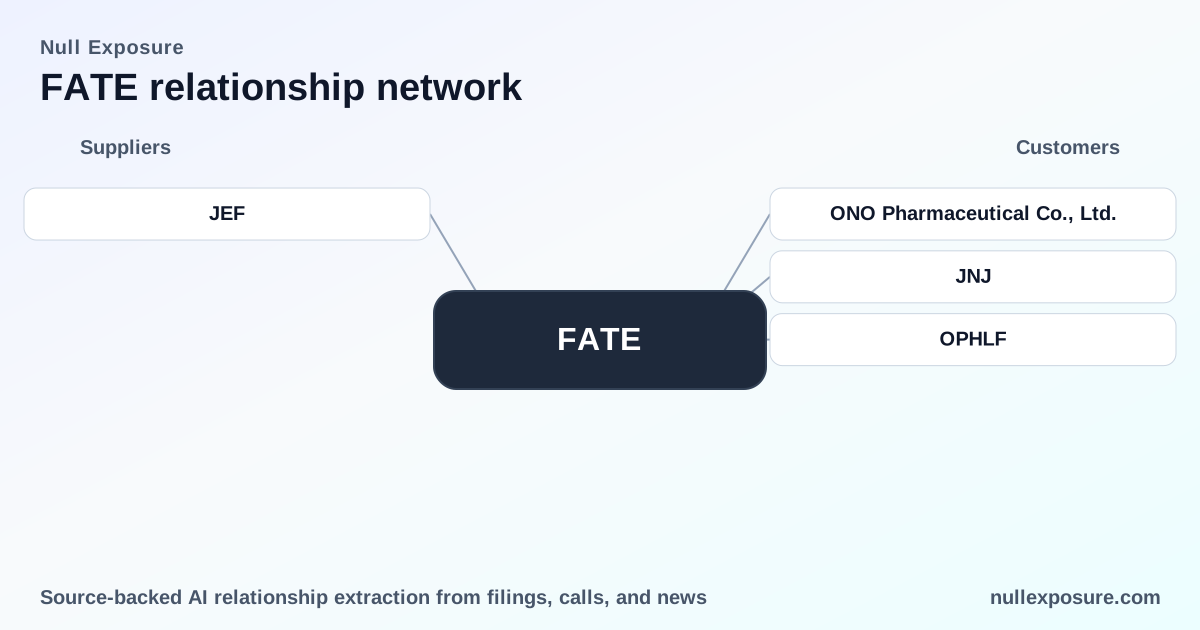
Fate Therapeutics: supplier relationships, capital posture, and operational constraints investors should price in
Fate Therapeutics develops programmed cellular immunotherapies and currently monetizes through clinical-stage product development, collaboration and licensing arrangements, and capital markets activity to fund operations until product approvals enable commercialization. The company is predominantly pre-revenue from commercial products and funds operations through equity and partnership financing, including an at‑the‑market (ATM) offering program with an investment bank. For investors and procurement operators, the priorities are clear: manage counterparty concentration in manufacturing and clinical services, assess financing-related dilution risk, and treat supply partners as operationally critical. Learn more or explore supplier intelligence at https://nullexposure.com/.
Why the Jefferies ATM matters to the capital stack
A TradingView news item, citing Fate’s SEC 10‑K disclosure in March 2026, notes that Fate has an at‑the‑market offering program with Jefferies Group LLC. This arrangement provides the company with a ready mechanism to issue equity into the market, giving management financing flexibility to support clinical programs without negotiating full equity placements or convertible financings up front. (TradingView report on Fate’s SEC 10‑K, March 2026.)
- Investor implication: ATM programs reduce time-to-market for capital but increase potential dilution linked to stock-price performance and issuance cadence. For a micro‑cap biotech with negative EBITDA and limited product revenue, this is a material capital structure lever.
How Fate contracts for core execution — manufacturing and services
Fate’s public filings state the company relies on third parties for manufacturing components and for process development and manufacturing for later‑stage trials and potential commercial supply, and that it depends on medical institutions, clinical investigators and CROs for research and clinical trial management. These statements surface two operational realities: an outsourced manufacturing posture and dependence on external clinical service providers.
- Contracting posture: Outsourced manufacturing and clinical services indicate Fate operates with a supplier-centric delivery model rather than vertically integrated manufacturing. This structure accelerates program timelines when partners are mature, but it creates contract negotiation and supply‑assurance as central management activities.
- Concentration and criticality: Reliance on third parties creates single- or few‑source exposure for crucial inputs (cell manufacturing, CMC process development, CRO trial management). These suppliers are functionally critical — failure or delay at a partner directly delays clinical milestones and capital events.
- Maturity and resilience: As a clinical‑stage company, Fate is in a transitional phase: reliance on external partners is standard, but the firm’s ability to lock long‑term manufacturing capacity ahead of commercialization will determine execution risk.
These constraints are highlighted in the company’s SEC filings and underpin both procurement priorities and board-level risk reviews (SEC filings/10‑K language, FY2026).
Financial context that frames supplier relationships
Fate’s latest quarter (reported through 2025‑12‑31) shows limited revenue (approximately $6.6 million TTM), negative operating margins, and negative EBITDA, with a market capitalization roughly $135 million. Analyst consensus places target price materially above current trading levels, but the company remains pre‑commercial with high burn and clinical milestone reliance.
- What that means for suppliers and investors: Suppliers face a client with high cash sensitivity; contract terms, payment cadence and milestone‑linked fees will be negotiated under that constraint. Investors should treat supplier continuity and favorable contract terms as value drivers because manufacturing or CRO failure could force expensive remediation or program delays.
(Company financials and metrics as reported in latest filings and summary financial data, latest quarter 2025‑12‑31.)
Relationship roster: the supplier and capital partners we see
- Jefferies Group LLC — Fate has an at‑the‑market offering program with Jefferies to issue equity into the open market as needed, providing immediate access to capital while introducing dilution linked to share issuance. (TradingView article referencing Fate’s SEC 10‑K, March 2026; ATM program disclosure.)
This list reflects the set of supplier/capital relationships surfaced in public reports and the company’s FY2026 disclosures; operators should map additional CROs, CMOs and academic partners from the company’s contract exhibits and clinical trial registrations when conducting vendor risk assessments.
Operational and contractual takeaways for investors and operators
- Prioritize supplier continuity and diversification. Outsourced manufacturing and CRO dependencies are central to Fate’s operational risk. Procurement should negotiate redundancies or rapid qualification pathways for alternate CMOs.
- Price dilution into valuation scenarios. The existence of an ATM program with Jefferies means management can issue equity opportunistically; incorporate potential dilution into downside modeling and covenant structures for any bespoke financing.
- Contract terms should reflect pre‑commercial status. Payment terms, milestone structures, and IP‑control clauses should protect Fate from catastrophic supply disruptions while acknowledging the company’s constrained cash position.
- Monitor milestone timing. Clinical readouts and regulatory filings are value inflection points; suppliers that can align capacity and performance to those milestones will be strategic partners.
If you want a fuller mapping of supplier dependencies and contract risk for investment diligence, see our coverage hub at https://nullexposure.com/.
Final investor view and actions
Fate Therapeutics operates as a typical clinical‑stage biotech: outsourced execution, capital‑markets financing, and high operational leverage to clinical outcomes. The Jefferies ATM program is a financing tool that reduces funding friction but increases dilution potential; outsourced manufacturing and CRO reliance are operational constraints that elevate supplier risk. For investors, the combination of small market cap, negative margins, and supplier dependence creates a binary risk-return profile tied to clinical and regulatory milestones.
- Actionable steps: (1) Monitor ATM issuance activity and share count changes; (2) verify supplier diversification and contractual protections in diligence; (3) price scenario outcomes where manufacturing delays push cash needs into higher dilution. For platform-level supplier intelligence and to benchmark counterparty risk across biotechs, visit https://nullexposure.com/.
Bold takeaways: capital flexibility via Jefferies’ ATM is valuable but dilutive, and third‑party manufacturing and CRO dependencies are execution‑critical for Fate’s path to commercialization.