Forte Biosciences (FBRX) — supplier relationship intelligence for investors
Forte Biosciences is a clinical‑stage biopharmaceutical company that outsources drug manufacturing and clinical development and funds operations primarily through equity raises and placement transactions. The company currently has no product revenue (RevenueTTM = $0) and a market capitalization near $172 million, so short‑to‑medium‑term value creation depends on successful clinical progress for FB102 and the firm’s ability to finance that runway. Supplier relationships — CMOs, CROs and placement agents — are therefore operational levers and financing enablers that directly affect timelines, cash burn and investor dilution. Explore more supplier intelligence at https://nullexposure.com/.
Why supplier relationships matter for a pre‑commercial biotech
Forte’s operating model is built on externalization: manufacturing and clinical work are performed by third parties rather than an internal supply chain. This produces a set of predictable business model characteristics:
- Contracting posture: Forte documents show a reliance on purchase orders and cancellable CRO agreements rather than long‑term supply contracts, signalling a predominantly spot / short‑term contracting approach that gives the company flexibility but increases operational risk if vendors reprioritize capacity.
- Concentration and criticality: The company sources critical raw materials and services from a small set of suppliers with long lead times and limited manufacturing/testing slots; interruptions would materially harm FB102 development and timelines.
- Role and maturity: Third parties act as service providers and manufacturers (CMOs/CROs) and relationships are active, with disclosed remaining commitments (~$7.2 million as of year‑end 2024) consistent with an asset‑light, outsourced development model.
- Spend profile: The disclosed remaining commitments place supplier spend in the $1–10 million band, a meaningful line‑item for a company without product revenue.
These are company‑level signals drawn from Forte’s disclosures; they describe the operating constraints that shape supplier negotiating leverage, timeline sensitivity and financing needs. If you want a consolidated supplier view, visit https://nullexposure.com/ for full coverage.
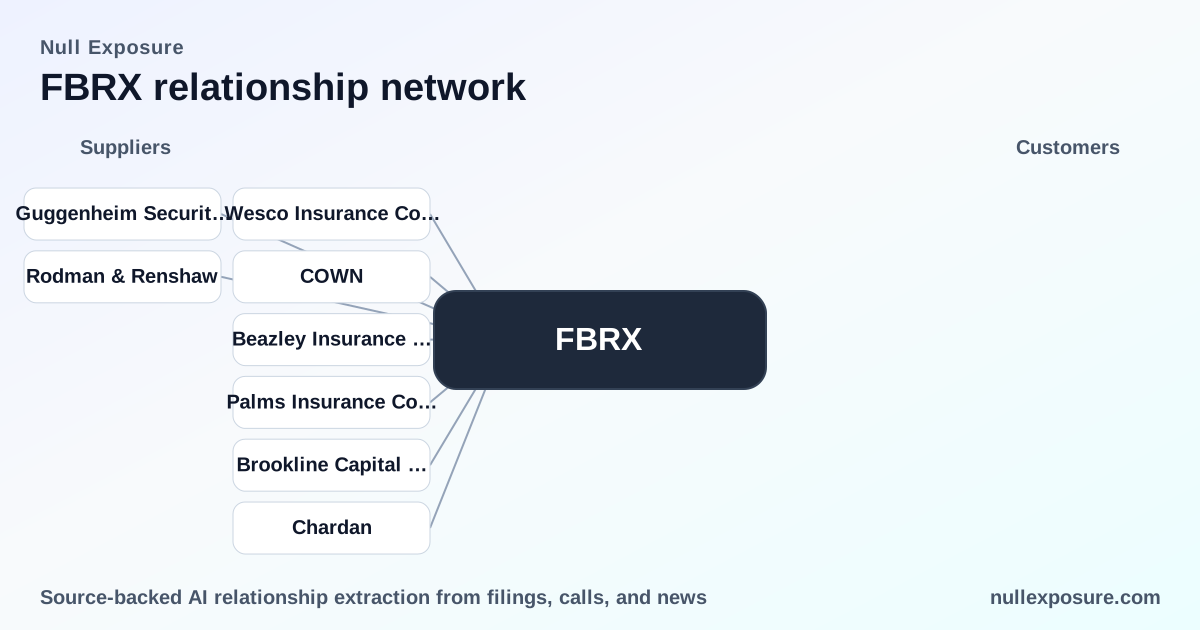
The supplier map — every relationship investors should track
Wesco Insurance Company
A Delaware court matter shows Forte forwarded a demand to Wesco, which accepted it as a notice of circumstances that could lead to a claim; the case context is coverage for a governance suit tied to the company’s insurance program (FY2026). According to Insurance Business (reported March 2026), Wesco accepted notice as part of Forte’s Year 1 coverage sequence—important for how litigation timing interacts with insurance policy periods (https://www.insurancebusinessmag.com/us/news/legal-insights/delaware-court-expands-dando-insurer-liability-through-meaningful-linkage-ruling-561621.aspx).
Beazley Insurance Company, Inc.
Beazley provided subsequent year professional liability coverage; court filings cited in Insurance Business note that Forte’s policy had switched to Beazley for Year 2 (June 2023–June 2024) and that shareholder litigation referenced conduct during that period (FY2026). The Beazley policy is therefore part of the sequence insurers evaluated in the governance suit (https://www.insurancebusinessmag.com/us/news/legal-insights/delaware-court-expands-dando-insurer-liability-through-meaningful-linkage-ruling-561621.aspx).
Palms Insurance Company, Limited
The Superior Court determined that Palms (alongside Wesco) must cover the suit under their Year 1 policies running June 2022–June 2023, even though the complaint was filed after policy expiration; this ruling affects the company’s risk transfer outcomes for governance litigation (FY2026). Insurance Business covered the decision and its implications for pre‑claim notice timing and insurer exposure (https://www.insurancebusinessmag.com/us/news/legal-insights/delaware-court-expands-dando-insurer-liability-through-meaningful-linkage-ruling-561621.aspx).
TD Cowen (COWN)
TD Cowen acted as lead placement agent for a $53 million private placement announced by Forte, a capital markets action that materially extended the company’s cash runway and diluted existing holders in exchange for funding (FY2024). Dallas Innovates reported the financing and TD Cowen’s role in organizing the placement (https://dallasinnovates.com/dallas-forte-biosciences-announces-53m-private-placement-from-leading-healthcare-investors/).
Brookline Capital Markets
Brookline acted as a co‑placement manager on the $53 million financing, supporting distribution to investor groups alongside other boutique managers and helping execute the private placement strategy (FY2024). Dallas Innovates listed Brookline among the co‑placement managers involved in the transaction (https://dallasinnovates.com/dallas-forte-biosciences-announces-53m-private-placement-from-leading-healthcare-investors/).
Chardan
Chardan served as a co‑placement manager for the same $53 million financing, a role that connected Forte to healthcare‑specialist investor pools and helped mobilize the round (FY2024). The participation of Chardan was reported by Dallas Innovates (https://dallasinnovates.com/dallas-forte-biosciences-announces-53m-private-placement-from-leading-healthcare-investors/).
Guggenheim Securities
Guggenheim provided capital markets advisory services to Forte in connection with fundraising activities, supplying strategic advice on deal structure and market positioning rather than placement execution (FY2024). Dallas Innovates named Guggenheim as the firm giving Capital Markets Advisory services (https://dallasinnovates.com/dallas-forte-biosciences-announces-53m-private-placement-from-leading-healthcare-investors/).
Rodman & Renshaw
Rodman & Renshaw acted as a co‑placement manager on the $53 million private placement, joining the distribution syndicate that supported Forte’s equity financing and investor outreach (FY2024). Dallas Innovates documented Rodman & Renshaw’s part in the transaction (https://dallasinnovates.com/dallas-forte-biosciences-announces-53m-private-placement-from-leading-healthcare-investors/).
What investors should watch next
- Operational continuity: With a spot/short‑term contracting posture and critical supplier concentration, any disruption at a CMO/CRO can delay trials and increase cash burn. Monitor service provider capacity and disclosed remaining commitments.
- Insurance and litigation carry risk offsets: The recent court rulings on insurer liability (Wesco, Palms, Beazley) affect Forte’s exposure to governance suits and could influence future D&O premiums and cash requirements.
- Financing channels remain central: Placement agents and advisors (TD Cowen, Chardan, Rodman, Brookline, Guggenheim) are value creators for Forte today; continued access to these relationships will determine dilution dynamics and runway extension.
Actionable next steps
- For underwriting, procurement diligence or portfolio monitoring, map contract terms and lead‑time dependencies against the $7.2M of disclosed remaining commitments and prioritize continuity plans for any single‑source inputs.
- To evaluate financing risk, track engagement and repeat participation from placement agents and advisory firms — the presence of healthcare‑specialists like TD Cowen and Guggenheim reduces execution risk on raises.
For a consolidated supplier intelligence report and alerts on developments at Forte, visit https://nullexposure.com/ to subscribe and set up coverage. If you are assessing counterparty exposure or underwriting supplier credit, begin with a supplier concentration review at https://nullexposure.com/.
Forte’s outsourced model and reliance on equity financing make supplier and capital‑market relationships central to near‑term value creation; investors should treat vendor capacity and financing partners as material drivers of clinical timelines and dilution.