Freeport‑McMoRan (FCX): Supplier posture, contracting signals and the Jetti catalytic tie-up
Freeport‑McMoRan is a vertically integrated copper miner that monetizes ore through a combination of concentrate sales, in‑house smelting/refining and market sales of finished copper products; the company also relies on tolling arrangements and purchased cathode to balance production. Revenue comes from mined commodity sales and value capture in processing and refining, while margin sensitivity is driven by commodity prices, tolling costs and long‑term energy contracts. For a concise supplier‑risk view and relationship mapping, visit the Null Exposure homepage: https://nullexposure.com/.
How Freeport makes money and why supplier posture matters
FCX extracts copper and processes it into marketable products, capturing value at multiple points: mine production, concentrate sales, smelting/refining and finished‑product sales. The firm records revenue from raw commodity sales while bearing sizable operating costs for energy and processing. The company’s TTM revenue is reported at $25.9 billion with EBITDA of $9.1 billion, which underlines the scale of procurement and service spend required to operate global mines and processing facilities.
This operating model explains the dual contracting posture: long‑term contracts for mission‑critical inputs (energy, concessions) coexist with short‑term, price‑provisional commercial contracts for commodity flows and tolling arrangements, creating a hybrid supplier risk profile where scale and continuity are essential but price exposure is often managed on shorter commercial cycles.
Visit the Null Exposure homepage to explore more supplier mappings: https://nullexposure.com/.
The single reported supplier relationship on record
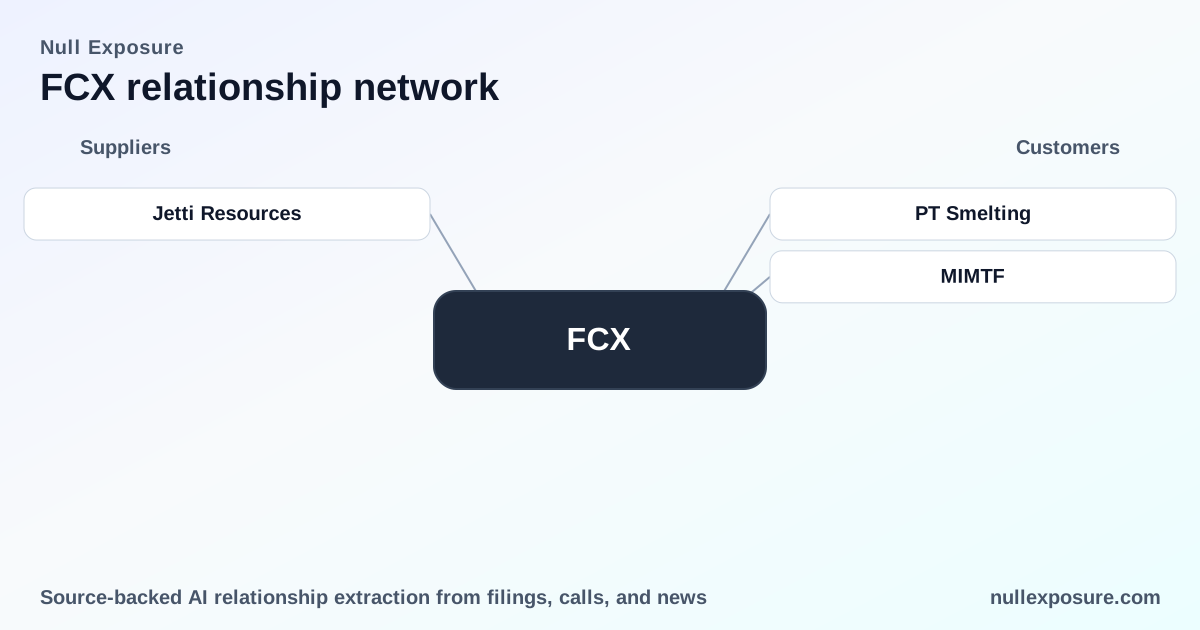
FCX’s supplier relationships in our results include one named partner:
Jetti Resources
- Freeport has partnered with Jetti Resources to deploy a catalytic “leach‑to‑copper” process that uses Jetti’s proprietary catalysts to extract copper via leaching rather than traditional smelting, positioning the company to increase recoveries and potentially reduce smelting dependency. According to a FinancialContent report (Finterra, March 2, 2026), this collaboration is positioned as an operational innovation for Freeport’s processing mix.
What the constraints tell investors about FCX’s supplier and contracting reality
The extracted constraints across FCX filings and disclosures form a coherent company‑level signal about how Freeport manages suppliers and where procurement risk concentrates:
-
Contracting posture — mixed short‑ and long‑term: Filings show short‑term provisional purchase contracts for copper pricing alongside long‑term energy contracts (diesel, electricity, coal, natural gas) used to secure continuous operations. This hybrid posture reduces immediate production disruption risk while maintaining price exposure on the commercial side.
-
Usage‑based economics in processing: PT‑FI’s shift from concentrate sales to a tolling arrangement with PT Smelting (effective Jan 1, 2023) is a model where FCX pays tolling fees and retains title to products, converting certain cash flows into usage‑based operating costs (tolling charges of $326 million in 2024 and $183 million in 2023 by PT‑FI’s reporting).
-
Government counterparty risk is material: Mining and exploration proceed under concessions and contracts with host governments, which are critical and long‑dated relationships that govern tenure, fiscal obligations and local content — a structural supplier/counterparty dynamic for miners.
-
Relationship roles skew to service providers and buyers: FCX functions both as a buyer of processed cathode and energy and as a customer of smelters/tollers and other service providers; filings detail purchases of copper cathode for processing (158 million pounds in 2024) and continued provisional‑pricing purchases.
-
Maturity and active stage: Several relationships are active and long‑running, illustrated by IUPK concessions in Indonesia extended to 2031 with potential extension to 2041 contingent on additional domestic smelting capacity — a signal of deep, mature supplier and host‑government engagements.
-
Scale of spend is high: Capital and operating expenditures tied to environmental compliance and tolling exceeded $100 million annually (environmental capex and other costs: $0.6 billion in 2024; tolling charges in the hundreds of millions), indicating high criticality and concentration of spend with a small set of large service providers.
These company‑level signals collectively describe a procurement profile where operational continuity is controlled through long‑term energy and concession contracts but economic exposure to commodity pricing and processing cost remains concentrated and substantial.
What investors should read into the Jetti tie‑up
The Jetti partnership is a strategic technology relationship rather than a conventional supplier contract. If catalytic leach‑to‑copper scales, Freeport can reduce reliance on high‑cost smelting or tolling volumes, improving margins and lowering exposure to concentrated tolling partners. The FinancialContent piece (Finterra, March 2, 2026) frames this as part of Freeport’s processing innovation agenda; investors should treat the tie‑up as a potential margin lever rather than immediate volume reallocation.
Investment implications and risk checklist
-
Operational resilience: Long‑term energy contracts and mining concessions anchor continuity, reducing near‑term outage risk. This is balanced by heavy usage‑based tolling costs that compress margins if commodity prices swing downwards.
-
Concentration and counterparty exposure: Significant spend with a small number of smelters and host governments elevates counterparty and political risk; environmental and capital obligations are large and recurring ($0.6b environmental spend in 2024).
-
Technology upside: Partnerships like the Jetti catalytic arrangement are value‑creating optionality that can shift processing economics if scaled across operations.
-
Cash‑flow sensitivity: The company’s large commodity revenue base (Revenue TTM: $25.9b) creates earnings leverage to price, but tolling and provisional pricing arrangements mean cash flows incorporate both fixed and variable supplier‑driven costs.
Use Null Exposure to map supplier concentration and quantify supplier risk for operational counterparties: https://nullexposure.com/.
Bottom line and recommended next steps
Freeport operates a hybrid procurement model: long‑term, critical contracts secure energy and tenure while short‑term commercial arrangements and usage‑based tolling determine near‑term margin volatility. The Jetti relationship is a strategic processing partnership that offers margin improvement potential but is not a replacement for established smelting capacity today.
For investors evaluating FCX supplier relationships, prioritize:
- Monitoring tolling spend trends and disclosure of processing‑technology rollouts.
- Tracking energy contract renewal terms and host‑government concession milestones (2031/2041 windows).
- Assessing how catalytic leach pilots scale operationally and economically.
To dive deeper into supplier exposures and relationship intelligence, start at the Null Exposure homepage: https://nullexposure.com/.