4D Molecular Therapeutics (FDMT): Who Supplies the Engine Behind a Clinical‑Stage Gene Therapy Company
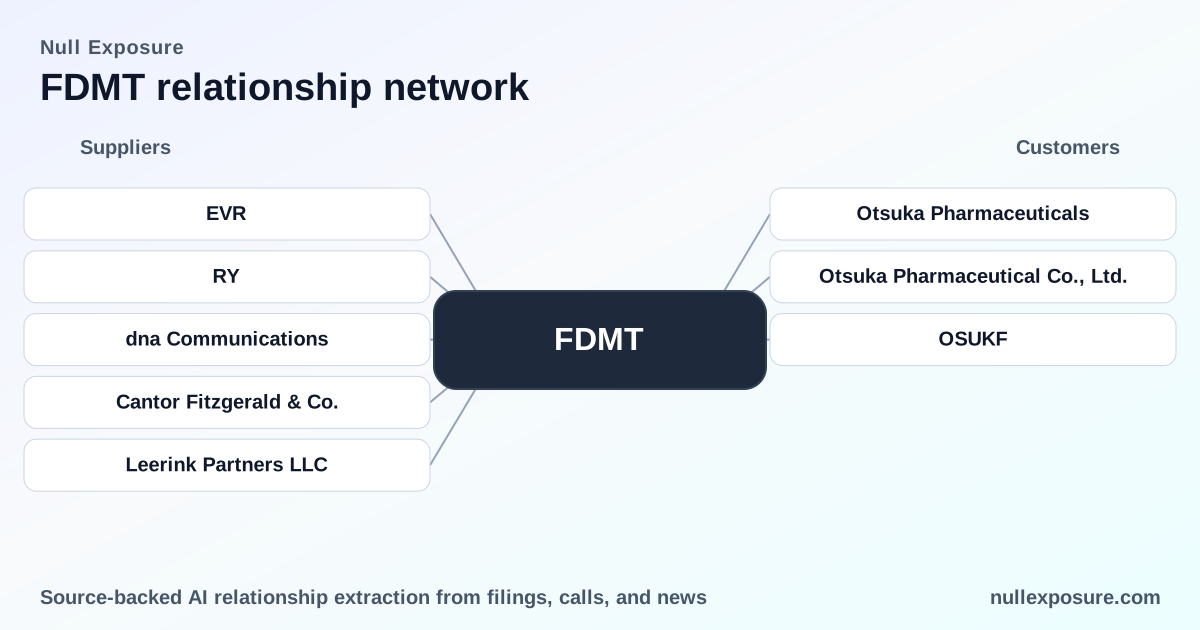
4D Molecular Therapeutics develops adeno‑associated virus (AAV)‑based gene therapies and currently monetizes primarily through capital markets and partnership financing while it advances clinical candidates toward commercialization. The company operates an internal cGMP manufacturing footprint supplemented by contract manufacturing organizations and relies on outside service providers for clinical execution and communications; recent equity raises have been underwritten by a syndicate of investment banks that directly influence FDMT’s liquidity and strategic flexibility. For investors and operators evaluating supplier exposure, the combination of internal manufacturing capacity, long‑term facilities leases and external financial and communications partners defines where operational risk concentrates and how value gets funded. For a concise supplier risk briefing, visit https://nullexposure.com/.
Why this matters: manufacturing relationships and capital markets partners are both operationally critical and commercially material to FDMT’s pathway to revenue.
How FDMT runs its operations and where suppliers fit in
FDMT’s operating model combines in‑house manufacturing with selective outsourcing. The company runs a clinical‑scale cGMP facility for primary manufacturing and testing, then uses contract manufacturing organizations to supplement capacity. It relies on contract research organizations and clinical sites to execute trials, and on investment banks and communications firms to manage financing and market signaling. This hybrid model gives FDMT control over quality and regulatory readiness while leaving it exposed to third‑party capacity constraints and capital markets sentiment. Key business model drivers are internal manufacturing capability, the availability of specialized raw materials, and access to capital through underwriters.
- Contracting posture: FDMT holds long‑term real estate commitments that support manufacturing continuity and planning.
- Concentration and criticality: A small number of specialized suppliers and service providers are material to manufacturing and trial execution.
- Maturity: The presence of internal cGMP operations signals operational maturity relative to peers, but the company remains commercially pre‑revenue and capital dependent.
What the public record says about FDMT’s supplier and partner relationships
Below are the specific external relationships surfaced in recent filings and news releases, followed by concise summaries and sources.
Evercore ISI — joint book‑running manager on equity raise
Evercore ISI acted as a joint book‑running manager for FDMT’s $100 million offering of common stock and pre‑funded warrants, placing the firm among the principal underwriters responsible for pricing and distribution of this capital raise. According to a GlobeNewswire press release dated November 6, 2025, Evercore ISI was named alongside other lead managers for the offering. (GlobeNewswire, Nov 6, 2025)
Cantor Fitzgerald & Co. — joint book‑running manager on the same offering
Cantor Fitzgerald served as a joint book‑running manager on that same $100 million capital transaction, sharing underwriting responsibilities and distribution risk with the syndicate. The company is listed in FDMT’s November 6, 2025 press release as a lead underwriter. (GlobeNewswire, Nov 6, 2025)
Leerink Partners LLC — joint book‑running manager shaping investor demand
Leerink Partners was one of the three joint book‑running managers for the November 2025 equity offering, meaning it coordinated investor outreach and helped set the institutional bid at pricing. FDMT named Leerink as a lead manager in its November 6, 2025 GlobeNewswire announcement. (GlobeNewswire, Nov 6, 2025)
RBC Capital Markets — co‑manager supporting syndicate breadth
RBC Capital Markets acted as a co‑manager for the $100 million financing, expanding syndicate distribution channels and providing additional sales coverage to institutional accounts. The role is documented in the November 6, 2025 company press release. (GlobeNewswire, Nov 6, 2025)
dna Communications — external media and investor relations contact
In a February 9, 2026 GlobeNewswire release announcing enrollment completion in a Phase 3 trial, FDMT listed dna Communications as its media contact, indicating the company outsources at least part of its public communications and media relations functions. This engagement controls messaging around clinical milestones and investor perception. (GlobeNewswire, Feb 9, 2026)
Firm‑level constraints that shape supplier risk and contracting
FDMT’s public disclosures identify several constraints that materially affect supplier posture and operational resilience. Treat these as company‑level signals that define where supplier relationships matter most.
- Long‑term facilities commitments: FDMT leases substantial lab and office space through December 2030 (including the 5858 Horton Lease extended to Dec 31, 2030), which supports manufacturing scale but fixes occupancy costs and locations for the near term. This gives FDMT operational stability while increasing exposure to location‑specific operational disruptions.
- Manufacturing centrality and supplier materiality: The company states that any interruption in raw material supply could “materially harm” manufacturing of product candidates, which makes certain raw‑material vendors and CMOs functionally critical to business continuity.
- Hybrid manufacturing model: FDMT manufactures and tests clinical material internally at its cGMP facility while also maintaining standing relationships with multiple CMOs; this reduces single‑point dependency but preserves reliance on specialized external capacity.
- Service provider dependence for trials and testing: The company contracts CROs and clinical sites for trial conduct and uses third‑party testing labs in addition to internal release testing—exposing FDMT to execution risk outside its direct control.
These constraints imply a contracting posture that is long‑dated, materially concentrated around manufacturing inputs, and operationally critical—yet diversified across internal capability and external suppliers to manage capacity shortfalls.
If you need a tailored supplier risk map for FDMT—showing which relationships are most critical to manufacturing throughput and capital access—start here: https://nullexposure.com/.
Investment implications and operational takeaways
Financially, FDMT remains a clinical‑stage company with minimal product revenue and negative operating margins; the November 2025 equity offering and the involvement of several investment banks show active reliance on public markets to fund operations. Operationally, the most significant supplier risks are upstream raw materials and CMO capacity, while underwriters and communications firms control near‑term liquidity and market reception of clinical news.
- For investors: underwriter composition and communications control the company’s access to capital and narrative; track future financing syndicates and who leads them.
- For operators and procurement leads: prioritize vendor continuity for raw materials and redundancy in CMO partners to reduce single‑point failure risks.
Explore deeper supplier intelligence and relationship scoring at https://nullexposure.com/ to prioritize vendor due diligence and financing counterpart analysis.
Final read
FDMT’s supplier footprint is a study in balanced dependency: internal cGMP operations give regulatory and quality control advantages, while a small set of external financial and communications partners shape funding and perception. Investors should treat underwriting syndicates as part of FDMT’s capital‑management infrastructure, and operators should treat raw‑material and manufacturing partners as mission‑critical. For targeted supplier risk reports or to commission a relationship audit, visit https://nullexposure.com/ and request FDMT coverage.