FactSet (FDS) — supplier relationships, strategic fit, and investor implications
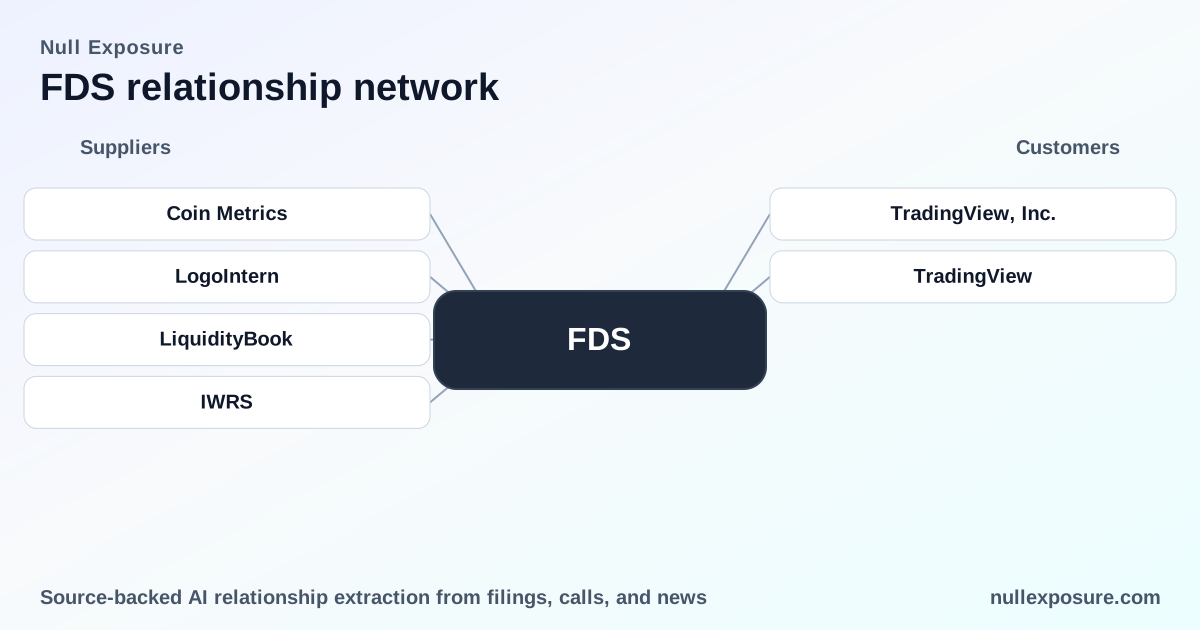
FactSet sells subscription access to integrated financial information and analytics to investment managers, corporations, and advisory firms, monetizing primarily through recurring license fees, modular product add‑ons, and targeted acquisitions that expand addressable content and functionality. High operating margins (≈32.6% TTM) and predictable revenue per user underpin FactSet’s cash generation, while selective M&A and third‑party data partnerships extend product breadth without large incremental fixed cost. For investors assessing supplier exposure, the recent FY2026 relationship disclosures show a mix of content partnerships and small acquisitions that broaden FactSet’s offerings into digital assets, trading infrastructure, workflow automation, and investor relations — all of which change product stickiness and go‑to‑market angles. Explore supplier mappings and deeper exposure analysis at https://nullexposure.com/.
Why these supplier moves matter to portfolio managers
FactSet’s business model is built on recurring revenues and integrated workflows; suppliers and bolt‑on acquisitions therefore influence two levers that drive valuation: content breadth that supports upsell and platform criticality that reduces churn. The FY2026 supplier activity signals FactSet is shifting toward non‑traditional markets (digital assets, cloud trading) while consolidating presentation and investor relations workflows into its Workstation and Pitch Creator products.
- Contracting posture: FactSet discloses third‑party content agreements of varying lengths, including agreements terminable with one year’s notice or on shorter notice, which signals operational flexibility but higher renewal cadence for portions of content spend.
- Materiality and concentration: FactSet reports two data suppliers each represented more than 10% of total data costs in fiscal 2025, and one cloud provider accounted for the majority of cloud computing support in fiscal 2025 — a company‑level concentration that elevates supplier negotiation and operational risk.
These points are company‑level signals drawn from FactSet’s FY2025/FY2026 disclosures and should inform risk premia and scenario analysis for valuations.
The tactical implication for buyers and operators
FactSet’s mix of short‑to‑medium contract terms and concentrated cloud reliance means procurement teams have leverage windows but also face single‑vendor cloud exposure during outages or price shocks. For investors, that translates to measurable upside from successful integrations and contingent downside if key supplier economics shift. For a deeper supplier map, visit https://nullexposure.com/.
How each partnership changes the product set (and revenue pathways)
FactSet is using small acquisitions and partnerships to enter adjacent markets and to layer additional data and workflow automation on top of its core Workstation and portfolio analytics offerings. Below I summarize the relationships reported in FY2026 and what each contributes strategically.
Coin Metrics — adding digital asset price and on‑chain data
FactSet has partnered with Coin Metrics to bring digital asset data into its solutions, enabling clients to monitor and analyze cryptocurrency markets alongside traditional assets. This relationship extends FactSet’s addressable market into institutional digital‑asset workflows and portfolio analytics (Bitget reporting, March 9, 2026; also noted in TradingView commentary, March 2026).
Source: Bitget, Mar 9, 2026 and TradingView/Zacks summary, Mar 2026.
LogoIntern — workflow automation for pitchbooks and branding
FactSet acquired LogoIntern, a workflow automation tool for banking presentations, and integrated it with Pitch Creator to automate logo management and streamline junior bankers’ presentation work. This is a productivity play that increases adoption of Pitch Creator and reduces friction for corporate clients producing client‑facing materials (Bitget, March 9, 2026).
Source: Bitget, Mar 9, 2026.
LiquidityBook — cloud trading and execution infrastructure
FactSet’s 2025 purchase of LiquidityBook, a cloud‑based trading solution, enhances its ability to support front‑to‑back trading workflows and portfolio execution needs, strengthening a path to monetize trading desk budgets and cross‑sell analytics into execution workflows (Bitget, March 9, 2026).
Source: Bitget, Mar 9, 2026.
Irwin — investor relations CRM inside Workstation
FactSet integrated Irwin’s investor relations CRM capabilities into its Workstation offering, delivering a unified IR platform that consolidates investor relationship management and corporate reporting into existing FactSet workflows. This integration raises stickiness for corporate clients who rely on a single pane for both market data and IR operations (Bitget and TradingView coverage, March 2026).
Source: Bitget, Mar 9, 2026 and TradingView/Zacks summary, Mar 2026.
Supplier constraints that shape valuation risk
FactSet’s public disclosures list constraints that investors should model explicitly rather than treat as footnotes:
- Short‑term third‑party content windows exist. FactSet notes some content agreements can be terminated with one year’s notice or shorter, creating a renewal cadence that affects near‑term content cost and revenue continuity.
- Material supplier concentration exists at the company level. Two unknown data suppliers exceeded 10% of data costs in fiscal 2025, and a single cloud provider supplied the majority of cloud computing support in fiscal 2025. This creates a systemic vendor risk that must be stress‑tested in downside scenarios.
Both constraints are company signals that increase sensitivity to supplier price shocks and cloud outages; they also create negotiation opportunities on renewals and potential for contingency procurement.
Mid‑article action: if you want a consolidated view of FactSet’s supplier exposures and how they affect cashflow models, see https://nullexposure.com/.
Investment thesis implications: risks and upside
- Upside: Digital‑asset data (Coin Metrics) and trading infrastructure (LiquidityBook) open adjacent revenue streams and increase enterprise wallet share; workflow automation (LogoIntern) and IR CRM (Irwin) deepen product stickiness and accelerate seat growth. Combined, these moves increase cross‑sell potential and expand monetizable workflows.
- Risk: Shorter‑term content contracts and concentrated cloud dependence elevate the probability of sudden cost escalations or service interruptions; two unnamed data suppliers contributing >10% of data costs signals non‑trivial supplier concentration that must be modeled into EBITDA downside scenarios.
Supplier snapshots — plain English, source‑backed
- Coin Metrics: FactSet partnered with Coin Metrics to integrate digital asset market and on‑chain data into its offerings, enabling institutional monitoring and analysis of crypto markets (Bitget and TradingView coverage, March 2026). Source: Bitget, Mar 9, 2026.
- LogoIntern: FactSet acquired LogoIntern to automate logo management in Pitch Creator, streamlining presentation workflows for banking teams and corporate users (Bitget, March 2026). Source: Bitget, Mar 9, 2026.
- LiquidityBook: The 2025 acquisition of LiquidityBook enhances FactSet’s cloud‑based trading capabilities and helps address front‑to‑back portfolio execution needs (Bitget, March 2026). Source: Bitget, Mar 9, 2026.
- Irwin: FactSet integrated Irwin’s investor relations CRM into Workstation to offer a unified IR workflow for corporate clients, increasing the platform’s utility for corporate communications and investor outreach (Bitget and TradingView, March 2026). Source: Bitget, Mar 9, 2026.
Final take
FactSet’s FY2026 supplier activity is a deliberate blend of content partnerships and bolt‑on acquisitions designed to diversify product lines and deepen platform engagement. For investors, the path to upside runs through successful integration and cross‑sell; the primary risk is supplier concentration and short contract tenors that compress negotiation timelines. Reprice your risk assumptions accordingly and use supplier exposure as an active input to scenario valuations. For a full supplier exposure dashboard and ongoing coverage, visit https://nullexposure.com/.