FEBO: OEM margins, customer concentration risk, and what Spectrum Brands exposure means for investors
Fenbo Holdings Limited manufactures and sells personal-care electric appliances and toys as an original equipment manufacturer (OEM). The company monetizes by contract manufacturing for branded customers and direct shipments under its own channels; revenue recognition is driven by product volume and unit pricing rather than recurring subscription economics. FEBO’s financial profile today is that of a small-cap OEM with negative operating profit, thin gross margins, and client-driven top-line volatility. For a quick gateway to ongoing supplier analysis and alerts, visit https://nullexposure.com/.
How FEBO operates and where profit comes from
FEBO is a manufacturing-first business: it sources components, assembles finished personal-care appliances and toys, and sells finished goods either under customer brands or its own labels. Revenue is concentrated in per-unit sales tied to production runs and branded contracts; profitability depends on utilization, input-cost control, and the stability of large customer orders. Fiscal signals in public filings show trailing revenue of about $108.7 million with gross profit of $16.4 million and negative EBITDA, highlighting a cost structure that requires scale or higher-margin contracts to return to sustained profitability.
What the numbers say about financial health
FEBO’s market capitalization is small (roughly $13.6 million) while the company reports a trailing operating loss and negative return-on-equity. Key financial realities:
- Revenue TTM: $108.7M; Gross profit TTM: $16.4M.
- EBITDA is negative ($14.6M), and the company shows a negative diluted EPS of -$0.20.
- Quarterly revenue dropped significantly year-over-year (-36.2% last quarter), indicating demand or order-flow stress.
These metrics underline high operating leverage and sensitivity to order cancellations, pricing pressure, and production disruptions — typical risks for contract manufacturers operating at low scale. For ongoing monitoring of supplier risk and portfolio exposure, see our homepage at https://nullexposure.com/.
The Spectrum Brands relationship and why it matters
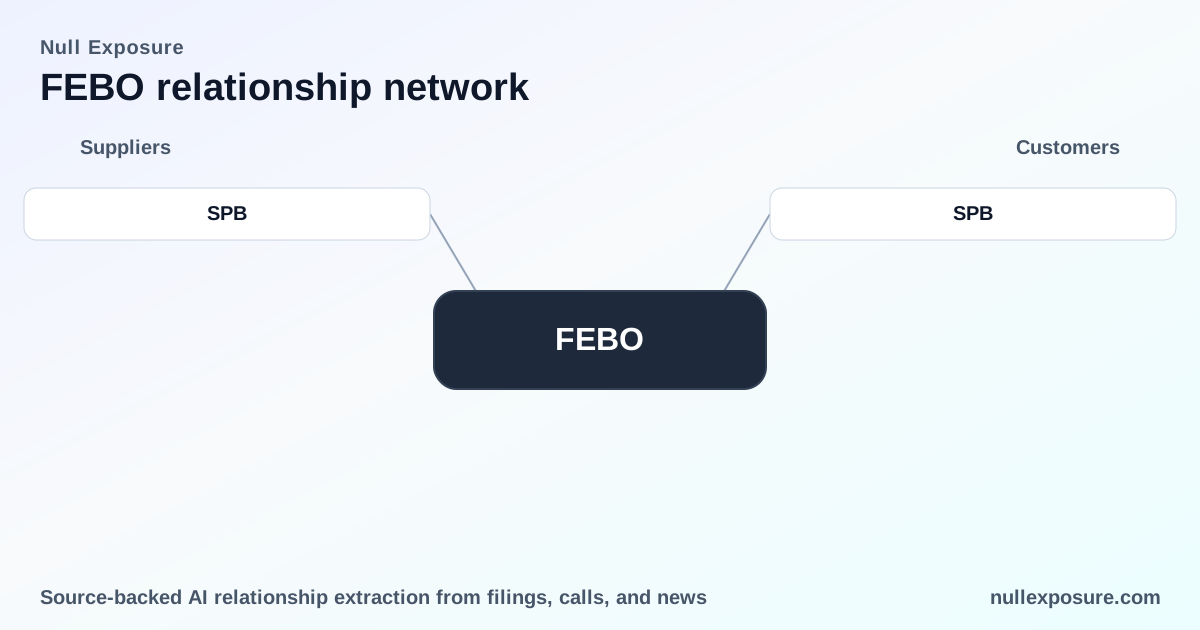
Fenbo is an established OEM for Spectrum Brands, producing electrical hair-styling products under the Remington brand. A company announcement referenced in a QuiverQuant news summary noted this OEM role while also disclosing that FEBO received a Nasdaq notice for non-compliance with the minimum $1 bid price rule. This dual signal — a branded OEM relationship together with a listing compliance notice — highlights both commercial relevance and investor-market stress. Source: QuiverQuant summary of the company's September 12, 2025 announcement and subsequent coverage (reported March 2026).
Relationship detail
- Spectrum Brands (SPB): FEBO is an OEM supplier that manufactures Remington-branded hair styling electrical products for Spectrum Brands, reflecting a customer-supplier manufacturing relationship that drives product revenue. Source: QuiverQuant news summary of FEBO’s September 12, 2025 corporate announcement.
Commercial and operational constraints — company-level signals
Absent formal constraint excerpts, several company-level operational characteristics emerge from FEBO’s profile that are material to supplier risk assessment:
- Contracting posture: FEBO operates primarily as an OEM, which places the company on the supplier side of commercial agreements and typically subjects it to buyer-negotiated terms, seasonal order timing, and quality specifications.
- Concentration: The OEM model combined with FEBO’s small market capitalization and limited institutional ownership suggests revenue concentration risk; single large customers can drive a disproportionate share of volume and working-capital requirements.
- Criticality: For major branded customers, FEBO’s role is critical when it supplies differentiated manufacturing capacity; however, manufacturability is substitutable in the broader market, so customer dependency creates asymmetric bargaining power favoring the buyer.
- Maturity: Financial and operating metrics indicate an early-stage or restructuring profile rather than a mature, cash-generative supplier; negative margins and volatile quarter-on-quarter revenue point to a business still proving scale and margin resilience.
These signals should be treated as strategic risk factors when evaluating FEBO as a supplier or investment target: contracting leverage sits with buyers, revenue is potentially lumpy, and liquidity constraints raise delivery risk under stress.
Investment implications and operational red flags
FEBO’s combination of a branded OEM role and weak market metrics creates a distinct risk/reward profile for investors and operator counterparties:
- Upside is tied to winning and scaling large-volume contracts that improve factory utilization and convert negative EBITDA to breakeven and beyond.
- Downside concentrates on client attrition or order deferral; a loss or reduction in volume from a major partner would quickly amplify losses and liquidity strain.
- Market signal risk: The Nasdaq notice about minimum bid price compliance is a near-term governance and investor-liquidity issue that compounds operational recovery timelines. Source: QuiverQuant coverage referencing company disclosure (Sep 12, 2025).
Consider these tactical steps if you manage supplier relationships or evaluate FEBO for investment:
- Prioritize contract clauses that protect against order cancellations and secure advance payments for bespoke tooling.
- Monitor quarter-to-quarter order flow and SKU concentration to detect client attrition early.
- Stress-test working-capital exposures given negative EBITDA and potential liquidity needs.
Quick checklist for relationship managers
- Confirm the existence and duration of any manufacturing agreements with branded customers.
- Insist on performance-based milestones and payment protections for long-lead tooling and raw materials.
- Track public-market signals (moving averages, share liquidity, listing notices) as proxy indicators for counterparty financial stress.
Closing assessment and next steps
Fenbo is a small-cap OEM with real commercial ties to recognizable brands but structural financial weaknesses and market-listing pressures that elevate supplier and investor risk. The Spectrum Brands/Remington connection demonstrates FEBO’s manufacturing relevance, but the company’s negative EBITDA, falling quarterly revenue, and Nasdaq minimum-bid-price notice demand heightened due diligence from counterparties.
For ongoing coverage and supplier-risk analytics, revisit our hub at https://nullexposure.com/ to subscribe to alerts and supplier dossiers. If you are evaluating contract terms or portfolio exposure to FEBO, use the company-level signals above as the framework for negotiation and monitoring. For continuous supplier monitoring and tailored reports, go to https://nullexposure.com/.