Femasys (FEMY): supplier relationships, operational posture, and what they mean for investors
Femasys develops and sells women’s‑health medical devices and adjacent in‑office kits, monetizing through product sales, targeted partner integrations, and clinical trial activity that supports regulatory approvals and commercial rollout. The company combines in‑house assembly with third‑party suppliers and service providers to deliver minimally invasive solutions (FemaSeed, FemSperm™, permanent birth control systems), and it drives revenue by expanding its product suite via commercial partnerships and clinical programs. For a focused supplier-risk read and partner map, see NullExposure for deeper supplier intelligence: nullexposure homepage.
How Femasys runs its supply chain and why that matters to returns
Femasys operates a hybrid model: internal assembly and product manufacturing paired with reliance on contract suppliers and external service providers. Public disclosures indicate the company does not maintain long‑term, fixed supply contracts for many components; instead, it sources parts on a purchase‑order (spot) basis, which increases flexibility but also raises procurement and continuity risk. The firm also engages third parties for critical services — from clinical trial execution to sterilization — and expenses these relationships as services as work is performed.
These operating choices create a specific investment profile:
- Cost structure sensitivity: spot purchasing preserves capital but exposes gross margin to supplier pricing volatility and short‑term availability shocks.
- Execution dependency: reliance on third‑party sterilizers and contract manufacturers means product safety and time‑to‑market are contingent on vendor performance.
- Revenue staging: monetization is tied to successful clinical programs, regulatory milestones, and partner distribution deals rather than large recurring consumable contracts; this produces stepwise revenue growth rather than steady annuity streams.
The balance of active in‑house assembly and outsourced components suggests Femasys is beyond prototype stage but still in a scaling phase where partner relationships and supplier reliability are critical operational levers.
Supplier and partner map — the direct relationships uncovered
Below are each of the supplier/partner mentions surfaced in public sources, with concise plain‑English summaries and citations.
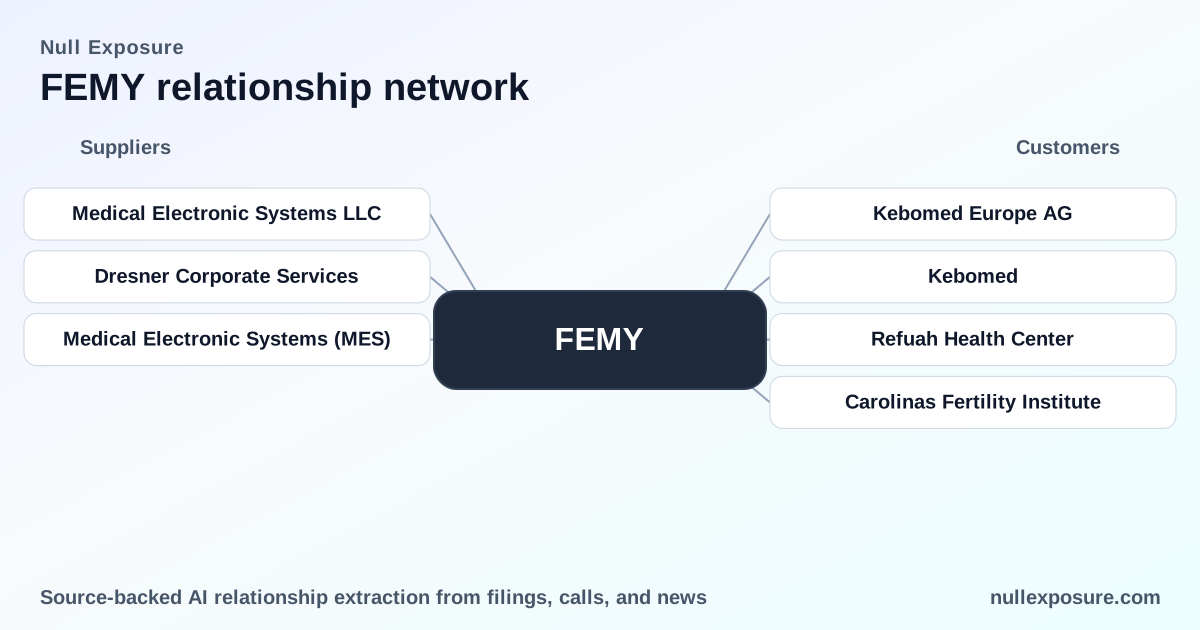
Medical Electronic Systems LLC — FemSperm™ Analysis Kit partnership (GlobeNewswire)
Femasys announced a partnership with Medical Electronic Systems LLC to provide the FemSperm™ Analysis Kit for use with FemaSeed®, positioning the company to complete an in‑office sperm‑prep product suite that supports its fertility offering. According to a GlobeNewswire press release summarizing third‑quarter 2025 results, the agreement expands Femasys’s commercial toolkit for in‑office fertility procedures (GlobeNewswire, Nov 14, 2025).
Medical Electronic Systems (MES) — global product partnership reported (tech press)
Industry reporting reiterated that Femasys teamed with Medical Electronic Systems (MES) in September to launch the FemSperm™ Analysis Kit, noting the deal completes the company’s in‑office sperm preparation capabilities for FemaSeed treatments and supports broader fertility market entry. This commercial context was covered in a market news article summarizing recent FDA and product milestones (TS2.Tech / stocktitan.net style reporting, FY2025 coverage).
Dresner Corporate Services — investor relations / PR contacts tied to Nasdaq filing (SahmCapital)
Dresner Corporate Services is cited in communications connected with Femasys’s Nasdaq compliance filings and investor relations notices, with named contacts provided in a January 14, 2026 bulletin about a 180‑day extension to regain compliance with the minimum bid price requirement. The public release lists Dresner contacts used by management for investor and regulatory outreach (SahmCapital, Jan 14, 2026).
What these relationships reveal about strategic priorities and risk
Femasys’s partner map shows a two‑track commercial approach: expand product functionality through tactical partnerships (MES) while outsourcing specialist functions (sterilization, trial operations, IR/PR). That combination speeds time to market but concentrates operational risk in suppliers and service providers.
Key operational signals:
- Spot‑purchase contracting is a company‑level posture that increases procurement flexibility but makes gross margins and delivery schedules sensitive to vendor markets.
- Service provider reliance is material: the company uses third parties for clinical trial administration and sterilization, and it expenses these services as incurred — an indicator of ongoing cash‑flow pressure from trial and regulatory costs.
- Manufacturer reliance on external raw materials and components means any supplier disruption can directly affect production cadence and product availability.
- Active relationship stage indicates these supplier arrangements are operational now, not theoretical — supply continuity and vendor quality control are immediate priorities for management.
Together, these constraints translate into execution risk that is more operational than market‑demand driven: product acceptance is important, but near‑term returns hinge on supplier performance, regulatory progress, and the success of partnerships to extend capabilities.
For direct tracking of these supplier signals and how they evolve, visit nullexposure homepage.
Investment implications — risk‑reward and what to monitor
Femasys is an early commercial medical‑technology company where revenue growth is nascent (FY‑TTM revenue ~ $2.06m) and losses persist (negative EBITDA). The MES partnership enlarges the commercial offering for fertility clinics, which is a positive tactical revenue driver; however, corporate reliance on short‑term purchase orders and third‑party services elevates operational volatility.
Watch these specific indicators:
- Regulatory or FDA milestones that unlock wider reimbursement or clinic adoption.
- Any shift from spot purchase orders to longer‑term supply contracts, which would materially reduce procurement risk.
- Performance and capacity updates from sterilization and contract manufacturing partners.
- Nasdaq compliance developments and investor‑relations cadence tied to Dresner Corporate Services.
A focused checklist for operators and due‑diligence teams:
- Verify contract length, exclusivity, and backup suppliers for MES‑related components.
- Audit sterilization and quality‑assurance agreements that underpin product safety.
- Monitor cash flow timing associated with expensed clinical trial payments and PR/IR vendor fees.
For a concentrated supplier intelligence briefing and to track contract shifts in real time, consult nullexposure homepage.
Bottom line — where supplier relationships fit into the investment case
Femasys’s partnerships are strategically accretive — the MES collaboration fills a product gap in fertility treatment and Dresner’s involvement signals active investor‑communications discipline — but the company’s operating model is supply‑sensitive and still reliant on outside service providers for critical functions. For investors, the upside is tied to successful commercialization of the expanded product suite and smoother vendor execution; the downside is driven by procurement volatility, sterilization or QA failures, and any regulatory setbacks.
Monitor partner contract terms and the company’s progress in converting spot purchases into more stable supplier arrangements. Those shifts will meaningfully alter the risk profile and the path to scalable margins.