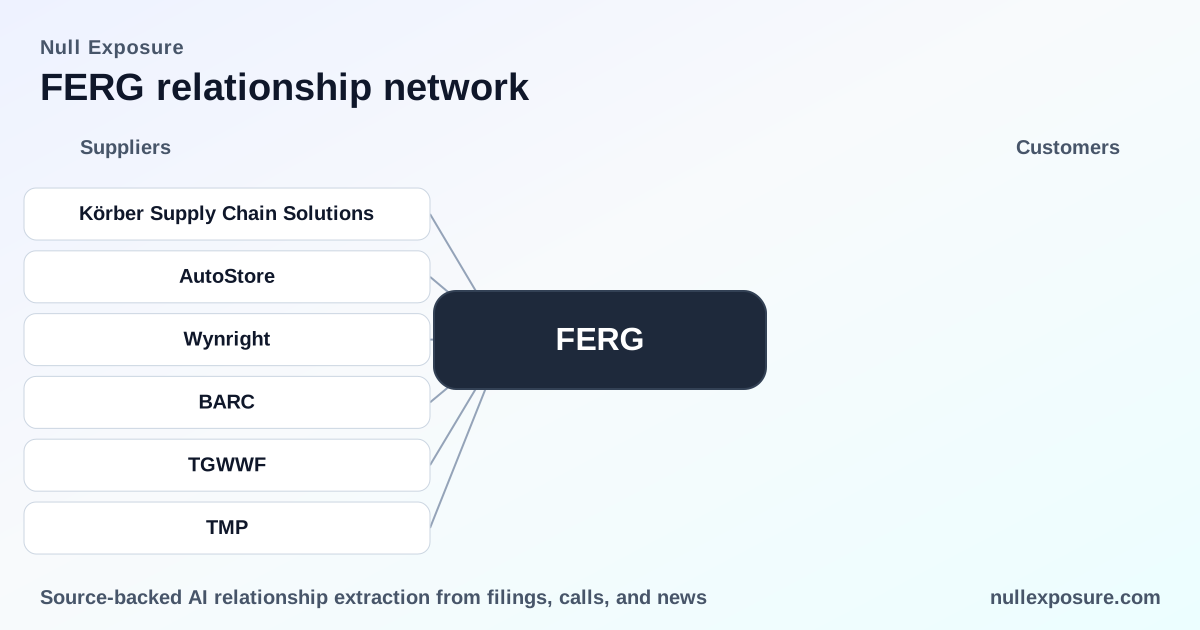
Ferguson Plc (FERG) — Supplier Landscape and Strategic Implications
Ferguson operates as the dominant North American distributor of plumbing, heating and related products, monetizing through large-scale product distribution, localized inventory deployment, value-added services and supplier-financing arrangements that accelerate working capital conversion. The company’s economics depend on high inventory velocity, scale-driven purchasing, and an increasingly automated distribution footprint that reduces fulfillment costs and supports margin durability. For primary research and supplier intelligence on Ferguson, visit https://nullexposure.com/.
Why suppliers are an active lever on Ferguson’s P&L
Ferguson’s business model is distribution-first: it converts capital into stocked product across a dense branch and fulfillment network, then monetizes through product margins, installation services and financing. That model creates four visible supplier dynamics:
- Low concentration, high breadth. Ferguson sources from roughly 37,000 suppliers, and no single supplier accounts for more than 5% of inventory purchases, which reduces single-vendor risk but raises procurement complexity.
- Regional sourcing tilt. Approximately 95% of U.S. sold products are sourced domestically, and roughly 90% of Canadian products sourced in Canada, driving resilience in North American operations while maintaining global sourcing reach for specialty items.
- Maturing automation and systems layer. Ferguson is actively deploying robotics and warehouse control systems to increase throughput and reduce footprint per SKU — a strategic investment that alters supplier integration and fulfillment cost curves.
- Financial plumbing for the supply chain. The company operates a supplier financing program and maintains a long-term revolving credit facility maturing in 2030, which supports liquidity and predictable contracting posture across procurement.
These signals combine into a contracting posture that favors long-term, low-concentration supplier relationships and active investment in automation, while preserving the flexibility to source globally for differentiated products. For vendor diligence and monitoring, see https://nullexposure.com/.
Who Ferguson is working with — the complete roll call
Below are every supplier or supplier-adjacent relationship identified in public reporting and press coverage, with concise, plain-English descriptions and source notes.
Körber Supply Chain Solutions
Ferguson uses Körber’s warehouse management system (historically HighJump) as a core layer of its distribution software, supporting inventory tracking and order orchestration across fulfillment centers. Source: Logistics Viewpoints feature on Ferguson’s supply-chain investments (April 29, 2024), https://logisticsviewpoints.com/2024/04/29/fergusons-commitment-to-supply-chain-excellence-drives-customer-satisfaction/.
AutoStore
Ferguson evaluated and implemented AutoStore robotic goods-to-person technology to pick roughly 60% of daily order lines within compact footprints, improving space utilization and operator ergonomics in selected facilities. Source: Logistics Viewpoints (April 29, 2024), https://logisticsviewpoints.com/2024/04/29/fergusons-commitment-to-supply-chain-excellence-drives-customer-satisfaction/.
Wynright
Ferguson operates a Wynright warehouse control system as part of its fulfillment orchestration stack, integrating controls with upstream WMS and robotic subsystems. Source: Logistics Viewpoints (April 29, 2024), https://logisticsviewpoints.com/2024/04/29/fergusons-commitment-to-supply-chain-excellence-drives-customer-satisfaction/.
TGW
Ferguson is evaluating or deploying a TGW shuttle system as a second level of robotics in Nashville, expanding throughput density and multi-tier automation capability. Source: Logistics Viewpoints (April 29, 2024), https://logisticsviewpoints.com/2024/04/29/fergusons-commitment-to-supply-chain-excellence-drives-customer-satisfaction/.
Tompkins
Tompkins provides distribution and fulfillment center design services to Ferguson, underpinning the company’s layout, workflow and automation integration strategy. Source: Logistics Viewpoints (April 29, 2024), https://logisticsviewpoints.com/2024/04/29/fergusons-commitment-to-supply-chain-excellence-drives-customer-satisfaction/.
Barclays Capital Securities Limited
Barclays acted as broker in Ferguson share transactions disclosed in corporate filings and press releases (Accesswire reports in 2021), reflecting capital markets activity rather than a product-supply relationship; these entries show broker engagement in equity transactions. Source: Accesswire / FinancialContent (May 2021) reporting on Ferguson transactions in own shares, https://markets.financialcontent.com/dailynews/article/accesswire-2021-5-7-ferguson-plc-announces-transaction-in-own-shares and https://markets.financialcontent.com/sgvtribune/article/accesswire-2021-4-30-ferguson-plc-announces-transaction-in-own-shares.
How these relationships change the operating profile
Ferguson’s supplier mix demonstrates a deliberate tilt toward service providers and automation partners that reduce marginal fulfillment cost while keeping product sourcing broad and regionally anchored. Key operating-model implications:
- Concentration: The no-single-supplier-above-5% rule is a structural guardrail; supply concentration is immaterial at the company level, reducing vendor-specific negotiation risk but increasing reliance on systems and integration partners.
- Criticality: Automation vendors (AutoStore, TGW, Körber, Wynright) are operationally critical because failures or integration issues affect order throughput; vendor-criticality is higher for systems than for product suppliers.
- Contracting maturity: Ferguson’s supply financing program and its $1.5bn revolving facility (maturing 2030) indicate long-term financial commitments and a stable contracting posture that supports larger automation and fulfillment contracts.
- Relationship maturity: Public disclosures show the supplier finance program is active with confirmed outstanding balances (small-scale reported ending balance in the rollforward), signaling ongoing, operationalized supplier financing arrangements rather than pilot-stage experiments.
These characteristics position Ferguson as a low-concentration, highly automated distributor financed through established credit facilities and supplier-financing mechanisms — a combination that preserves margin leverage while raising operational dependency on integration and robotics vendors. For deeper supplier mappings and alerts, check https://nullexposure.com/.
Investment implications and risk factors
- Upside: Automation partners improve throughput, reduce real estate intensity per order and support margin expansion as same-store growth scales. Ferguson’s scale and regional sourcing tilt create a defensible distribution moat.
- Downside: Operational disruption from warehouse software or robotic integration faults would be disproportionate because those vendors are functionally critical; systems vendor outages represent concentrated operational risk even when product-supplier concentration is low.
- Balance-sheet posture: The $1.5bn revolving facility to 2030 and an active supplier-finance program provide liquidity flexibility; credit profile supports capital expenditure for automation but requires ongoing covenant and liquidity monitoring.
- Strategic watch points: Track automation rollouts, supplier-finance exposure, and any changes in sourcing concentration or vendor exclusivity clauses that could shift the risk profile.
Verdict and next steps for investors
Ferguson’s supplier relationships reflect a strategic, deliberate move to blend broad product sourcing with concentrated systems partners that materially increase operational efficiency. Investors should prioritize monitoring automation deployment milestones, supplier-finance rollforwards and any vendor performance disclosures that affect fulfillment. For continuous supplier intelligence and updates on FERG, visit https://nullexposure.com/ and subscribe to coverage.
Bold takeaway: Ferguson’s low supplier concentration protects procurement risk, but reliance on a small set of systems and robotics vendors elevates operational criticality — monitor integration outcomes and financing metrics closely before sizing large positions.