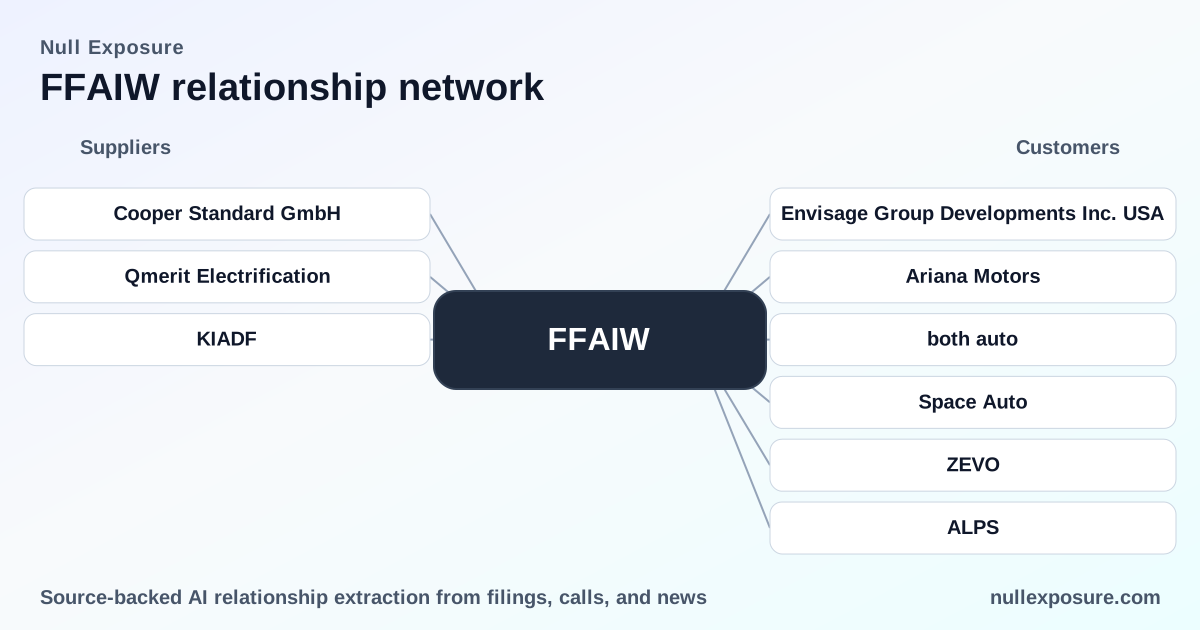
Faraday Future (FFAIW) — supplier map and what it means for investors
Faraday Future designs, develops, manufactures and distributes electric vehicles and related products in the United States, monetizing primarily through vehicle sales, parts and related services (including home charging partnerships). The company generates negligible revenue relative to reported operating losses — trailing twelve‑month revenue is $642k while gross profit and EBITDA are deeply negative — creating a supplier exposure profile that is both operationally critical and financially constrained. For investors evaluating counterparty risk and supplier relationships, the essential question is how Faraday Future’s commercial ambitions reconcile with its stretched balance sheet and documented supplier frictions. Learn more at https://nullexposure.com/.
Quick take: what matters for a supplier relationship investor
Faraday Future operates with a global sourcing footprint and a mix of short‑term and long‑term contracts that together shape counterparty risk:
- Global reach: The company runs a United States‑and‑China dual‑home market strategy and explicitly partners with suppliers across North America, Europe and Asia, so geopolitical and logistics exposure matter.
- Contract mix: There is evidence of both long‑dated manufacturing commitments (through at least 2028) and numerous short‑term, renewable service agreements — a structure that concentrates manufacturing dependency while keeping many services flexible.
- Financial strain: With negative gross profit and EBITDA and historical supplier terminations and disputes, supplier leverage is elevated and Faraday’s ability to meet payment obligations is a material business risk. These dynamics are central to any evaluation of supplier credit, performance guarantees, and operational continuity. For a more detailed supplier intelligence view, visit https://nullexposure.com/.
The supplier and partner relationships disclosed in the FY2024 filing
Cooper Standard GmbH — dispute over alleged unpaid tooling and parts
Cooper Standard GmbH filed a lawsuit in Los Angeles alleging non‑payment of approximately $1.5 million tied to purchase orders, a Letter of Tool Acceptance, and invoices for supply of automotive products and services for the FF 91 vehicle. According to Faraday Future’s FY2024 Form 10‑K, this legal claim reflects direct supplier payment friction connected to vehicle tooling and component supply.
Qmerit Electrification — home charging installation alliance
Faraday Future has an alliance with Qmerit Electrification to launch a home charging installation program, integrating a supplier‑facing consumer service into the vehicle ownership experience. The FY2024 10‑K describes the partnership as the launch vehicle for home charger installation support tied to Faraday’s product offering.
Kia — competitive benchmarking inside the filing
The FY2024 10‑K positions Faraday’s product set in direct competition with vehicles such as the Kia EV6, indicating that Kia is referenced as a competitive benchmark rather than a supplier. Faraday lists the Kia EV6 alongside other contemporary EVs to define the market set against which it competes.
What the constraints reveal about Faraday Future’s operating model
The company‑level constraint signals in the filing describe a supply and contracting posture that influences all supplier interactions:
- Contracting posture: mixed and tactical. Evidence shows both long‑term manufacturing commitments (a manufacturing facility and commitments extending to October 19, 2028) and short‑term service contracts (a Gardena headquarters/operations term to September 30, 2025 and consulting agreements with 12‑month renewable terms). This mix indicates Faraday is locking in critical manufacturing capacity while keeping many advisory and support services on flexible terms.
- Geographic dispersion but dual‑home focus. The company explicitly operates a United States and China dual‑home market strategy and procures across North America, Europe and Asia, raising logistics, compliance and supplier concentration questions in both APAC and EMEA markets.
- Criticality and material exposure. The filing declares supplier delivery failures could have a material adverse effect on the company, signaling supplier inputs are mission‑critical and that downstream production is vulnerable to single‑source failures.
- Relationship roles: contract manufacturing and outsourced services. The company both relies on third‑party contract manufacturers (contract manufacturing agreements are cited) and retains external service providers for capital raising and advisory work, indicating operational dependence on suppliers for both production and non‑production functions.
- Maturity and termination risk. The filing documents a history of suppliers ceasing supply and initiating legal claims when payments were not made; this terminated relationship signal elevates counterparty risk and suggests suppliers have previously exercised leverage through cessation of supply.
Collectively, these constraints paint a picture of a company with strategic manufacturing dependencies, dispersed sourcing, short-term service flexibility, and elevated supplier credit risk due to a strained financial profile.
How the disclosed relationships translate into investment risks and opportunities
- Operational continuity is the principal risk. The Cooper Standard claim illustrates that even relatively modest invoice sizes (~$1.5M) can escalate into legal disputes that disrupt tooling and component pipelines for a small producer. Suppliers with tooling or WIP exposure hold leverage in the event of payment distress.
- Service partnerships can mitigate customer experience risk. The Qmerit alliance demonstrates that Faraday is outsourcing consumer services (home charger installation) to established players, which protects the post‑sale customer experience while keeping capital and execution risk off the balance sheet.
- Competitive positioning is referenced, not supplied. The Kia mention is a market benchmark and does not indicate a supplier relationship, but it highlights that Faraday must align its supply chain to deliver product attributes competitive with established OEMs.
- Contract structure matters for counterparty selection. Long‑term manufacturing commitments create locked‑in dependencies that are critical if suppliers hold unique tooling or IP, while short‑term service contracts allow the company to pivot if a vendor relationship deteriorates.
Strategic takeaways for investors and operators
- Prioritize counterparties with low working capital exposure (vendors that do not hold large tooling deposits or inventory on Faraday’s balance) and seek contractual protections such as escrowed tooling, advance payment limits, and step‑in rights.
- Monitor legal and payment disputes closely; a small number of escalated supplier claims can cascade to production stops given the company’s limited revenue base and negative profitability.
- Use partnerships like Qmerit as a playbook: outsource customer‑facing, capital‑light services to mitigate fixed‑cost strain while preserving operational focus on core manufacturing.
For a consolidated view of supplier risk and contractual exposures across emerging EV manufacturers, explore our analysis hub at https://nullexposure.com/.
Final investment orientation
Faraday Future is a capital‑constrained EV OEM with material supplier risk driven by critical tooling dependencies, a mixed contract portfolio (long manufacturing commitments versus short service terms), and a documented history of supplier disputes. Investors evaluating supplier counterparty exposure should demand clarity on tooling ownership, payment terms, and continuity plans for any supplier with manufacturing or WIP exposure. Operators and procurement teams should prioritize contractual remedies and partner selection that reduce payment leverage and protect production continuity.
If you want ongoing supplier intelligence and structured visibility into contract risk for automotive suppliers and emerging OEMs, visit https://nullexposure.com/ to subscribe and deepen your due diligence.