FG Merger II Corp (FGMC) — How its supplier and advisor relationships shape a SPAC outcome
FG Merger II Corp is a classic blank‑check vehicle that monetizes through capital markets activity: it raises IPO proceeds, pays transactional and administrative providers to support a business combination, and realizes value when a target company is taken public through the SPAC. Revenue from sponsors, underwriter fees, advisor payments and contingency equity issuances are the operational levers that determine how much cash reaches the post‑combination company and how remaining economics accrue to public shareholders and insiders. For investors and operators assessing counterparty risk or commercial exposure, the profile of FGMC’s suppliers—legal counsel, underwriters, financial advisors and sponsor service providers—directly affects cost structure, execution risk and timetable. Learn more at https://nullexposure.com/.
Why supplier relationships matter for a SPAC like FGMC
SPACs are transaction-driven entities: their principal asset is capital in trust and their primary activity is executing a timely merger. That makes third‑party suppliers both operationally critical and episodically high‑spend. In FGMC’s case, public disclosures and press coverage show the company actively engaged external counsel and financial partners to consummate a combination.
- Short, transactional contracts dominate. The SPAC lifecycle concentrates procurement around the IPO and the subsequent business combination, creating a short‑term, event‑driven contracting posture rather than long, recurring vendor commitments.
- Service providers carry execution risk and cost. Legal, underwriting and advisory fees are cash outflows that reduce the trust balance available for the target. FGMC’s disclosures show material one‑time payments and equity issued to advisors and underwriters.
- Concentration and timing matter. A handful of counterparties handle the legal, underwriting and sponsor functions; failure or disputes with any of them create outsized programmatic risk given the compressed timeline of a SPAC transaction.
Contracting posture, concentration and maturity — constraints‑driven signals
Company‑level disclosures and filings reveal a consistent profile for FGMC’s supplier relationships:
- Contract type: short‑term. The company granted underwriters a 45‑day over‑allotment option at IPO, signaling transactional, time‑bounded contractual arrangements (company filing; IPO documentation).
- Relationship role: service providers. The company explicitly expects the Sponsor to provide administrative services for a monthly fee of $15,000 and discloses payments to financial advisors and underwriters—an operational model built on external service providers (company filings, FY2025).
- Relationship stage: active. Payments and outstanding promissory balances indicate the sponsor/advisor/underwriter relationships are live and consequential as of the last filings (as of December 31, 2024, $125,000 outstanding under promissory notes).
- Spend band: meaningful but concentrated. Disclosed transaction costs include a $750,000 underwriter discount and a $250,000 payment to a financial advisor — placing major single commitments in the $100k–$1M band rather than de minimis levels (company filings, FY2025).
These constraints together create a business model where supplier costs are sizable, front‑loaded, and concentrated among a few providers, and where the firm’s ability to complete a business combination hinges on timely performance by those providers.
Supplier roster and the single relationship in the public record
FGMC’s public relationship records that are currently visible list one named law firm engagement tied to the announced transaction with Boxabl.
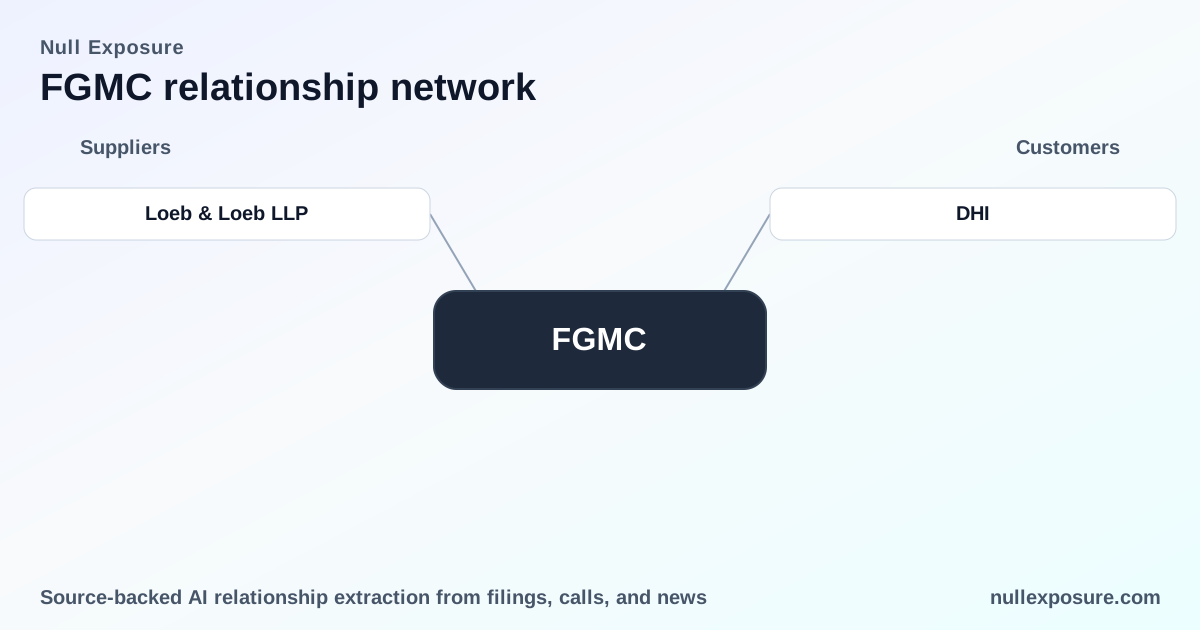
Loeb & Loeb LLP — transaction counsel to FG Merger II
Loeb & Loeb LLP is acting as transaction counsel to FG Merger II Corp in the announced merger that would take Boxabl public through FGMC. The firm’s role centers on drafting and negotiating the business combination and ancillary agreements (PR Newswire release, March 9, 2026).
This is the only explicitly named supplier relationship surfaced in the press release trail for the announced deal; other providers are referenced in company filings as payments or agreements but are not named in the press item covering the Boxabl transaction (PR Newswire; company filings, FY2025).
How the supplier mix influences execution and valuation
FGMC’s supplier profile creates several investor‑grade implications:
- Cost leakage before value realization. The disclosed one‑time fees and equity issuances to underwriters and advisors reduce the cash available to the combined entity and dilute post‑transaction shareholder economics (company filings, FY2025).
- Concentrated counterparty risk. A small number of providers handle legal, underwriting and administrative tasks; friction with any single party could delay closing, increasing the risk of sponsor‑funded bridge financing or redemptions that compress returns.
- Short lifecycle, high intensity. The 45‑day over‑allotment option and other IPO mechanics underscore a limited window for renegotiation or replacement of key suppliers, which magnifies the importance of proven, high‑quality partners.
Key takeaway: FGMC’s financial outcomes are tightly coupled to successful, timely performance by a few high‑impact suppliers; investors should treat supplier due diligence and contingency planning as central to valuation workstreams.
Read more about supplier risk and SPAC mechanics at https://nullexposure.com/.
Practical next steps for investors and counterparties
Investors and potential counterparties should focus on three actions:
- Confirm counterparties beyond press releases. Public filings identify payments to a sponsor, underwriter and financial advisor; follow‑up with counsel and the underwriter for named counterparty confirmation and fee schedules.
- Stress‑test timelines and fee sensitivity. Model the impact of the disclosed $750k underwriter discount and $250k advisor payment on the trust balance under different redemption scenarios.
- Monitor closing conditions and counsel engagement. The named role of Loeb & Loeb as transaction counsel is a positive signal of experienced legal representation; ensure any material legal exceptions or unusual indemnities in the merger agreement are surfaced prior to voting.
For a deeper read on supplier exposures and SPAC counterparty analysis, visit https://nullexposure.com/.
Bottom line
FG Merger II Corp is operating as a transaction‑oriented SPAC where short‑term contracts, concentrated supplier spend, and active service providers determine execution risk and net value capture. The only publicly named supplier tied to the Boxabl transaction is Loeb & Loeb LLP acting as transaction counsel (PR Newswire, March 9, 2026). Company filings disclose meaningful transactional payments to the underwriter and a financial advisor and a routine administrative services agreement with the Sponsor, which together create predictable cost pressure and concentrated operational reliance (company filings, FY2025).
Investors should prioritize verification of all named and unnamed counterparties, quantify the cash impact of disclosed fees, and incorporate supplier continuity scenarios into any valuation or diligence models. For ongoing intelligence and updated supplier relationship profiles, consult https://nullexposure.com/.