FG Merger II Corp. Rights (FGMCR): supplier relationships and what they signal for investors
FG Merger II Corp. is a blank‑check (SPAC) vehicle whose rights trade under the ticker FGMCR; the company monetizes primarily through sponsor arrangements, underwriting proceeds at IPO, and the operational mechanics that govern unit separation and post‑IPO servicing. Revenue is currently not material from operations — the firm’s economics are driven by sponsor fees, underwriting discounts, and trust or escrow mechanics surrounding the public listing and unit structure. For investors evaluating supplier exposure, the supplier list shows a classic SPAC operating posture: outsourced administration, an identified transfer agent, and an underwriter/book‑runner relationship that determined initial distribution economics. Visit the Null Exposure homepage for more supplier intelligence: https://nullexposure.com/
Company snapshot: FGMCR is headquartered in Itasca, Illinois, trades rights on NASDAQ, and carries minimal operating revenue or earnings metrics; book value per share is reported at 0.022 and float is roughly 10.3 million shares. There is no company website listed in filings.
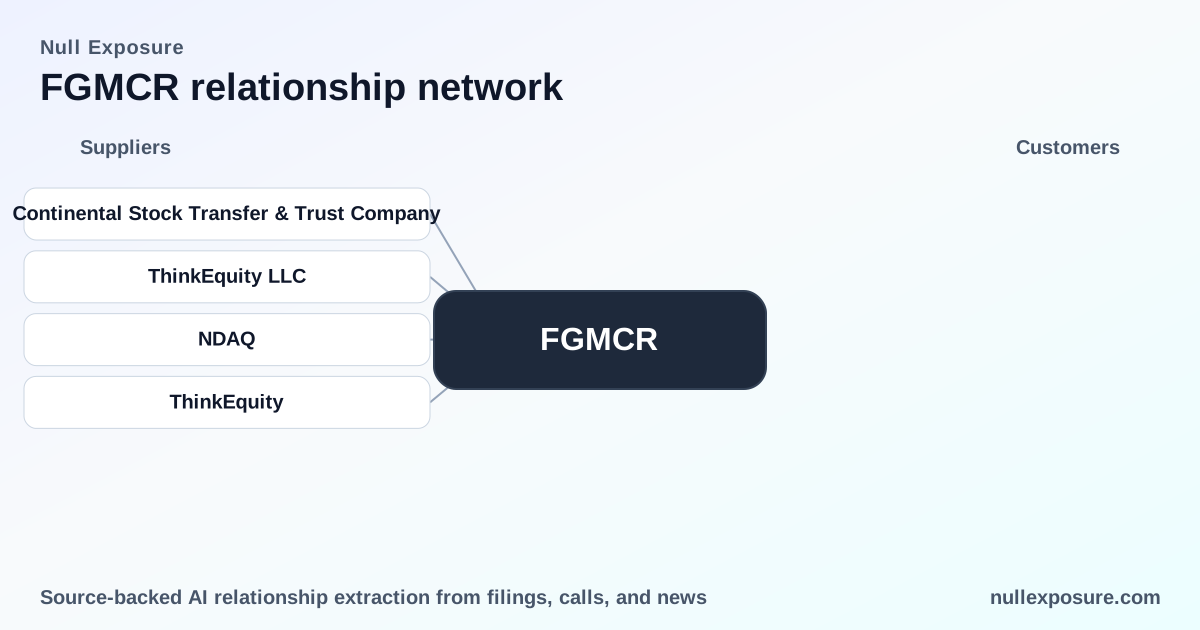
How the suppliers fit together: the public record identifies three external counterparties involved in distribution and post‑IPO servicing. Below I cover every relationship surfaced in the reporting and what each means for investors.
Continental Stock Transfer & Trust Company — the transfer agent handling unit separation
Continental Stock Transfer & Trust Company is the company’s transfer agent; holders of units are instructed to have brokers contact Continental to separate units into common shares and rights, a routine but operationally critical task for retail and institutional holders who need liquidity or to exercise rights. This is reported in the company announcement on Yahoo Finance (reported March 9, 2026). Source: company press release on Yahoo Finance (Mar 9, 2026).
ThinkEquity LLC / ThinkEquity — the sole book‑running manager at IPO
ThinkEquity LLC acted as the sole book‑running manager for the offering and is identified as the underwriter that handled pricing and distribution of units. The firm received the customary underwriting discount at IPO and was named in the company’s offering announcement; ThinkEquity’s role is central to initial market placement and the allocation that created the public float. Source: ThinkEquity referenced in the company press releases on Yahoo Finance (Mar 9, 2026 and related offering disclosure).
(Note: the reporting lists ThinkEquity in two closely related notices—both the pricing announcement and the offering announcement—confirming consistent underwriting and book‑running responsibilities across IPO communications.)
Nasdaq Global Market (NDAQ) — the exchange venue for the units
The units were expected to begin trading on the Nasdaq Global Market under the ticker FGMCU on January 29, 2025; Nasdaq’s market venue selection determines trading rules, listing fees, and the market microstructure that governs liquidity for the units and subsequent separation into shares and rights. This was described in the pricing announcement included in the company’s public disclosure (reported via Yahoo Finance). Source: pricing notice published on Yahoo Finance (Mar 9, 2026).
Operational signals and contractual posture
FGMCR’s supplier footprint and the constraints extracted from filings point to a small, outsourced operating model typical of SPACs:
-
Subscription/administrative contracting posture. The company intends to enter into an Administrative Services Agreement with the Sponsor to provide day‑to‑day administrative services for a fixed monthly fee of $15,000; this is a subscription‑style commitment that fixes a recurring cash outflow and centralizes operational control with the Sponsor rather than internal staff. Evidence for this is included in the offering/administrative disclosures cited in company filings.
-
Heavy reliance on service providers. Filings show the company used external advisors and underwriters and paid conventional IPO compensation: a $250,000 payment to an unnamed financial advisor and $750,000 in underwriter discount, plus issuance of advisor and underwriter units. This indicates cost‑of‑entry economics dominated by third‑party providers rather than in‑house capabilities.
-
Low operating maturity and limited revenue streams. With virtually no reported revenue, EBITDA, or operating margins, the company’s operations are not yet mature; the supplier relationships therefore are critical to maintaining listing status, processing shareholder actions, and executing any potential business combination.
These items function as company‑level signals: they show the firm’s contracting style (outsourced, subscription fees), cost structure (upfront underwriting payments and recurring sponsor fees), and operational fragility (critical reliance on a handful of external suppliers).
What investors should focus on
-
Operational concentration is high. A single transfer agent and a single book‑runner reduce redundancy; any dispute or operational failure at Continental or ThinkEquity would materially impede unit separation, trading continuity, or future financing. Source references: company notices on Yahoo Finance (Mar 9, 2026).
-
Cost structure is front‑loaded and predictable. Underwriting discounts and advisor payments are typical but reduce the SPAC’s net cash available for a deal; the fixed monthly sponsor fee ($15,000) is modest but persistent. These contractual terms imply predictable, low recurring overhead but meaningful near‑term cash outflows.
-
Liquidity and listing mechanics are controlled by venue and transfer agent processes. Nasdaq listing rules and the operational capacity of Continental to process separations and transfers will determine how quickly rights convert to tradable securities and therefore the practical liquidity for holders. Source: Nasdaq pricing disclosure in the company announcement (Jan 29, 2025 reference; reported via Yahoo Finance).
For quick scannability, the three most important takeaways are:
- ThinkEquity controlled the IPO book‑running and therefore initial distribution economics.
- Continental Stock Transfer manages unit separation — an operationally critical service.
- An Administrative Services Agreement with the Sponsor creates a recurring fee structure and centralizes operations externally.
If you want supplier‑level analytics for other SPACs or a deeper supplier risk profile, explore our portal: https://nullexposure.com/
Investment implications and risk checklist
FGMCR’s supplier setup is standard for newly listed SPACs but raises specific questions for valuation and risk management:
- Does the Sponsor’s administrative agreement create alignment or dependency risk?
- How concentrated is operational risk around Continental and ThinkEquity, and what are contingency plans?
- Will underwriting concessions and advisor unit issuances impair the cash available to consummate a business combination?
Short, targeted due diligence steps for operators and allocators:
- Confirm the exact terms and termination provisions of the Administrative Services Agreement.
- Verify transfer agent SLAs for unit separation and error remediation.
- Review ThinkEquity’s distribution allocations to understand holder composition and potential block trades.
For a deeper supplier mapping and vendor risk scoring across listed vehicles, visit Null Exposure and request a tailored report: https://nullexposure.com/
Bottom line
FGMCR’s external relationships are lean and focused: a single transfer agent, one book‑runner, and a sponsor‑provided administrative arrangement drive both operations and costs. That configuration delivers low fixed overhead but concentrates operational risk in a few vendors — a classic SPAC tradeoff that investors must price into both liquidity assumptions and the mechanics of any future combination. For ongoing tracking of supplier changes and contractual signals, see our platform: https://nullexposure.com/
Sources referenced include the company’s public announcements as published on Yahoo Finance (reported March 9, 2026) and the offering/pricing notices that detail listing and underwriting arrangements.