FHN-P-C: Preferred stock relationships that matter to investors
First Horizon’s FHN-P-C is a fixed-rate cumulative preferred issued by First Horizon Corporation that monetizes through predictable dividend payments backed by the bank’s capital structure and market access. For investors and operators evaluating supplier and service relationships tied to the preferred instrument, the relevant signals are not earnings metrics but who handles distribution, redemption, and investor communications—functions that determine execution risk, creditor servicing, and regulatory standing.
If you evaluate preferred instruments for portfolio allocation or counterparty risk, start by profiling the service partners that touch cash flows and investor notices. For a practical, consolidated view of supplier ties for FHN-P-C, see Null Exposure’s research platform: https://nullexposure.com/
The supplier list you need to read
Below is every relationship found in the source set for FHN-P-C, described plainly and referenced to the original public reporting.
-
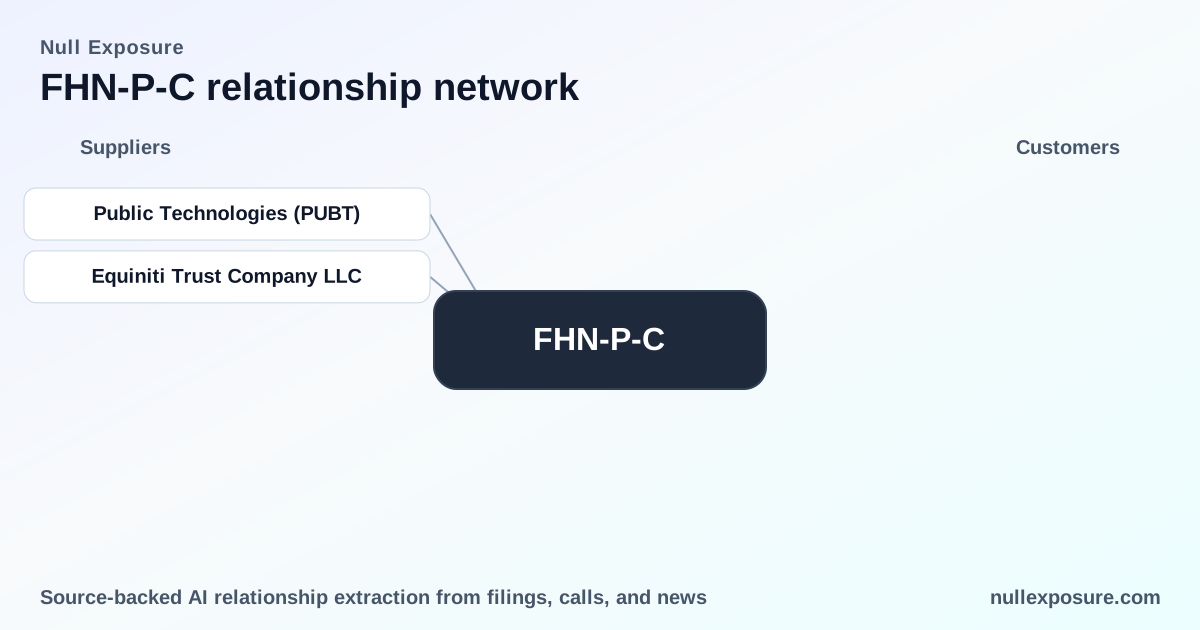
Public Technologies (PUBT): First Horizon’s Q3 2025 earnings presentation was distributed via Public Technologies on October 15, 2025, indicating the company uses third‑party distribution channels for investor materials and slide decks. This is documented in the MarketScreener posting of First Horizon’s 3Q25 earnings slides (distributed via Public Technologies) published October 15, 2025: https://www.marketscreener.com/news/first-horizon-third-quarter-2025-earnings-presentation-3q25-earnings-slides-final-ce7d5aded180f320
-
Equiniti Trust Company LLC: Equiniti is named as the redemption agent for a preferred redemption notice, with contact information provided for holders seeking redemption details—evidence that First Horizon employs an external transfer/redemption agent for at least some series of preferred stock. See the PR Newswire release announcing the redemption of Series B preferred stock and identifying Equiniti Trust Company LLC as the redemption agent (FY2025): https://www.prnewswire.com/news-releases/first-horizon-corporation-announces-redemption-of-series-b-preferred-stock-and-corresponding-series-b-depositary-shares-302496068.html
What those relationships mean for investors and operators
The two supplier ties above are functionally distinct but jointly important. Distribution partners like Public Technologies manage investor communications and disclosure dissemination, which affects the timeliness and fidelity of slide decks and presentation materials used by analysts and investors. Redemption and transfer agents such as Equiniti handle operational execution for preferred holders—including payments, notices, and recordkeeping.
-
Operational maturity and formality: The use of established third‑party distributors and a professional redemption agent signals that First Horizon’s preferred share programs follow standardized, institutional operating practices. This reduces ad‑hoc operational execution risk and supports predictable servicing of preferred instruments.
-
Execution criticality: These relationships are high‑impact on investor experience. A breakdown in distribution or redemption processes directly affects holders’ ability to receive notices and exercise rights. For preferred stock investors, operational partner reliability is a material underwriter of credit and liquidity risk.
-
Contracting posture and centralization: Repeated use of specialized vendors suggests First Horizon centralizes treasury and investor servicing functions through third‑party contracts rather than handling them entirely in‑house. Centralized contracting simplifies oversight but places concentration risk on the selected vendors.
For access to a consolidated view of these and additional supplier signals, visit Null Exposure: https://nullexposure.com/
How to translate these signals into portfolio decisions
Treat supplier relationships as an operational overlay to credit analysis for FHN-P-C.
- If you prioritize operational certainty, the presence of a named redemption agent and a formal distributor reduces executional doubt and supports holding preferreds through structural events (redemptions, calls).
- If counterparty concentration is a concern, evaluate whether the vendor set is diversified across episodes; two partners listed here indicate a service model leaning on third‑party specialization rather than a fragmented vendor base.
- For activist or operational due diligence, request recent service agreements and SLAs for investor communications and redemption mechanics; the vendor names provide direct targets for document requests.
Practical risk vectors and mitigants
- Operational disruption: Delays or errors from a distributor or redemption agent can impair dividend payments or redemption processing. Mitigate by verifying agent processes, audit histories, and contingency plans.
- Contract concentration: Reliance on a small set of specialized vendors concentrates operational exposure. Mitigate by confirming backup arrangements and examining whether responsibilities can be shifted to alternate agents.
- Compliance and reputational risk: Third‑party handling of investor notices must align with securities disclosure rules; vendor noncompliance escalates issuer liability. Mitigate by reviewing the issuer’s vendor management and oversight practices.
Quick recaps of each relationship (one more time for clarity)
-
Public Technologies (PUBT) distributed First Horizon’s Q3 2025 earnings slides on October 15, 2025, indicating use of third‑party channels for investor communications; see MarketScreener’s posting of the earnings presentation: https://www.marketscreener.com/news/first-horizon-third-quarter-2025-earnings-presentation-3q25-earnings-slides-final-ce7d5aded180f320
-
Equiniti Trust Company LLC is identified as the redemption agent in a PR Newswire release announcing the redemption of a series of preferred stock, with agent contact information provided for holders; see the PR Newswire release (FY2025): https://www.prnewswire.com/news-releases/first-horizon-corporation-announces-redemption-of-series-b-preferred-stock-and-corresponding-series-b-depositary-shares-302496068.html
Final, actionable takeaways
- Operational suppliers matter as much as credit metrics for preferred instruments. For FHN-P-C, named partners cover distribution and redemption—two core investor touchpoints.
- Vendor reliability and contract design are material risks and levers. Confirm SLAs, backup providers, and audit histories before allocating material capital.
- Monitor public communications for changes in vendor names and processes; changes in distributor or redemption agent signal shifts in operational posture that affect servicing risk.
For a consolidated supplier-risk dashboard and to track changes to issuer service relationships for FHN-P-C and other instruments, visit Null Exposure: https://nullexposure.com/