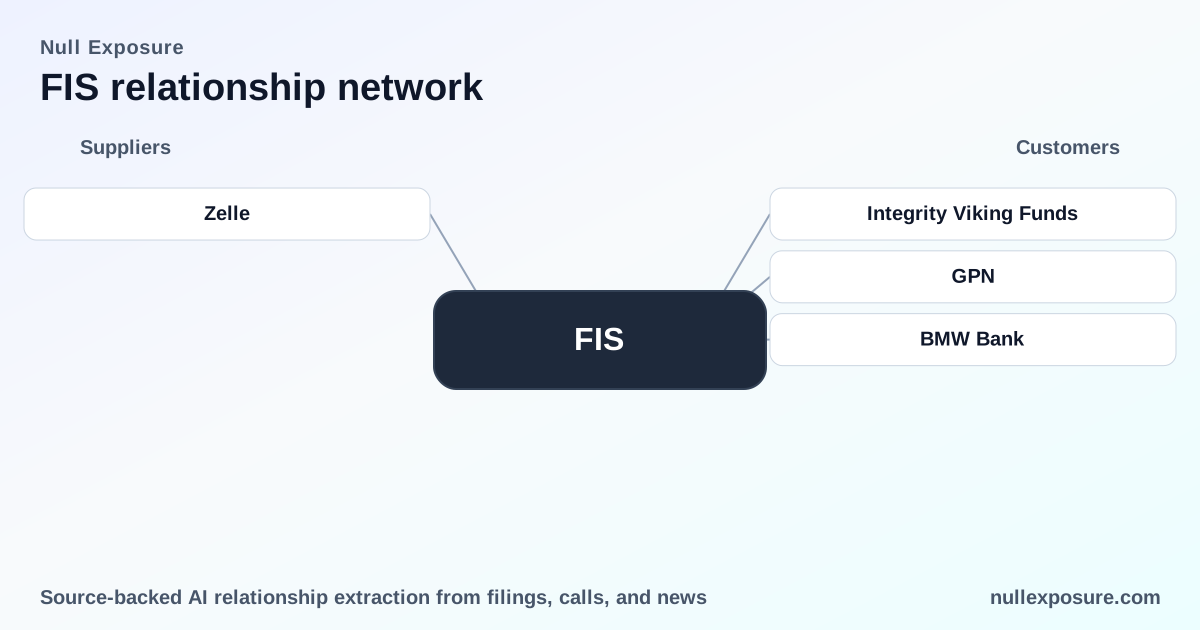
FIS: Infrastructure scale, vendor posture, and what Zelle exposure tells investors
Thesis: Fidelity National Information Services Inc (FIS) operates as a global payments and banking infrastructure provider, monetizing through recurring software licensing, transaction processing fees, and outsourced services across Merchant, Banking and Capital Markets lines. FIS’s commercial model is driven by scale-dependent transaction economics, multi-year yet generally short-duration vendor contracts, and high enterprise spend on cloud and maintenance services; these characteristics shape supplier risk and opportunity for counterparties and investors.
Explore supplier relationship intelligence and implications for portfolio due diligence at https://nullexposure.com/.
How FIS makes money and why supplier posture matters
FIS generates revenue from a mix of recurring software licensing, maintenance, and transaction-based processing fees, plus professional services and hosted/cloud outsourcing. The company’s revenue base of roughly $10.7 billion TTM and a market capitalization around $26.1 billion (company latest reporting) make it a large, integrated vendor to banks, merchants and fintech partners. Profitability depends on steady transaction volumes, broad platform adoption, and the cost structure of third-party hosting and software inputs.
For investors, the supplier ecosystem matters because it affects margins, service continuity and upgrade cadence. FIS discloses material vendor obligations and licensing practices that indicate a managed but active procurement posture. If you are evaluating FIS as a supplier partner or as a holding, those procurement signals shape both operational risk and opportunities for margin expansion.
Find deeper supplier and exposure analysis at https://nullexposure.com/.
Public-facing supplier relationships: what’s on the record
Below I cover every supplier relationship surfaced in the available public results and translate the signal into investor-relevant language.
Zelle — visibility into U.S. payments rails
A March 9, 2026 industry write-up noted that “Every time you tap your card, fire off a Zelle transfer, or buy something online in the US, there is a high chance Fidelity National Info (FIS) is in the background making it work.” This highlights FIS’s operational role across payment rails and peer-to-peer transfers, confirming the company’s deep integration into U.S. payments flow (ad-hoc-news, 2026-03-09: https://www.ad-hoc-news.de/boerse/news/ueberblick/fidelity-national-info-why-fis-just-flipped-the-script-for-us-fintech/68629101).
Contracting posture and vendor constraints — what the disclosures signal
FIS’s own disclosures and the constraint evidence present a clear profile of how the company approaches supplier relationships:
- Licensing-first approach: The company explicitly states it licenses items from third parties under arms‑length agreements, including open-source licenses, indicating reliance on licensed software rather than bespoke in-house builds.
- Short-to-medium contract durations: Vendor arrangements are generally one- to five-year terms for software, maintenance, consulting and outsourced/cloud hosting, which yields predictable renewal cycles and frequent renegotiation points.
- Limited single‑vendor dependency: FIS discloses it is not materially dependent on any single third-party technology component, signalling a diversified supplier base and reduced single-point-of-failure risk.
- Service provider posture: FIS engages with hardware and software vendors in a manner consistent with evaluating and integrating vendor technology into its platforms, rather than acting purely as a systems integrator.
- Large aggregate vendor commitments: The company reports approximately $696 million of estimated contractual obligations remaining under these agreements as of December 31, 2024, which places vendor spend squarely in the >$100 million band and highlights material procurement scale.
These constraints together create a company-level signal: FIS runs a mature procurement program with frequent contract refreshes, material but diversified vendor spend, and a licensing model that stabilizes recurring cost-of-revenue but keeps negotiating leverage dynamic at renewal.
Investment implications and operational risk map
- Margin sensitivity to hosting and maintenance costs: Given significant contractual obligations for cloud hosting and maintenance, margins will be sensitive to vendor price inflation and contract renewal outcomes; active vendor management is a critical value driver.
- Upgrade and integration cadence: Shorter contract durations (1–5 years) force periodic platform refresh decisions, which create both upside (new revenue from upgrades) and execution risk (integration outages, migration costs).
- Low vendor concentration reduces catastrophic dependency risk: The company’s explicit disclosure of immaterial dependence on any single component is a risk mitigant for downtime or supplier failure scenarios.
- Strategic positioning in payments rails: Relationships like the one referenced with Zelle underscore FIS’s embeddedness in U.S. payment flows, translating to resilient transaction volumes and pricing power in the merchant and banking verticals.
Key takeaway: Investors should treat FIS as a high-scale, transaction-platform business with material vendor spend and recurring licensing economics; the firm’s procurement posture reduces single-vendor concentration risk but elevates importance of renewal negotiating cycles.
Practical checks for investors and operators
- Monitor quarterly commentary and SEC filings for changes in aggregate contractual obligations and any named vendor concentration disclosures; a substantial increase in committed spend beyond the reported ~$696 million (Dec 31, 2024) would alter the vendor risk profile.
- Track renewal windows for major platform modules and cloud-hosting contracts—these are primary inflection points for margin and service-level outcomes.
- Assess transaction velocity trends in Merchant and Banking segments to validate the economics implied by payment-rail roles (e.g., Zelle exposure).
For a consolidated view of supplier exposures and to compare FIS against peer procurement postures, visit https://nullexposure.com/.
What to watch next and a final verdict
Watch for (1) contract renewals and commentary around cloud-hosting costs in earnings calls, (2) any vendor-specific outages or migration disclosures, and (3) filings that name critical third-party suppliers. FIS’s model combines scale economics, recurring licensing, and significant outsourced services spend; that mix supports durability but creates near-term sensitivity to vendor negotiations.
Final verdict: FIS is an infrastructure-centric fintech incumbent with diversified supplier relationships and meaningful contracted spend; its procurement posture reduces single-point dependency but makes earnings and margins contingent on successful contract management and platform continuity.
If you are conducting counterparty diligence or building a supplier risk thesis around FIS, start with a structured review of contract renewal timing and aggregate committed obligations at https://nullexposure.com/.