FLG-P-A: Supplier Map and What It Means for Investors
FLG-P-A operates as an asset manager focused on long-term value creation through a diversified portfolio and disciplined risk controls, monetizing primarily via management and performance fees and capital appreciation in its holdings. For investors and operators assessing supplier exposure, the available supplier signals show targeted outsourcing across customer-facing operations, cybersecurity remediation, and physical client experience—each relationship shaping operational resilience and client trust. For a quick look at broader supplier intelligence and comparative supplier scoring, visit https://nullexposure.com/.
Why suppliers matter for an investment-focused firm like FLG-P-A
Operational partners are strategic levers for firms that monetize through asset management and client relationships. Third-party vendors touch customer retention, regulatory exposure, and brand presentation, meaning supplier choices influence both cost structure and reputational risk. The relationships documented for FLG-P-A indicate deliberate outsourcing where scale or expertise is required rather than in-house development.
If you want a consolidated supplier risk profile and sourcing playbook tailored to funds and investment managers, see more at https://nullexposure.com/.
What the reported supplier relationships reveal at a glance
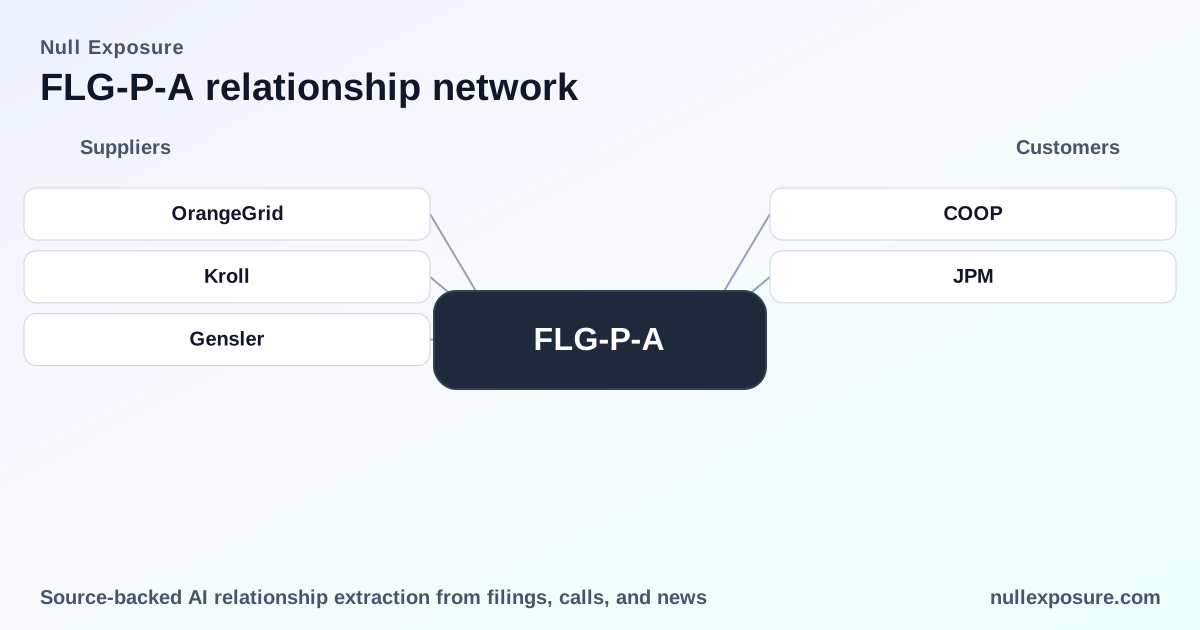
The supply footprint visible in public reporting is concentrated in three categories: loan-servicing systems, consumer remediation/cybersecurity services, and professional services for client-facing spaces. That mix points to a business model that outsources specialized capabilities (technology operations, incident response, experiential design) while keeping portfolio strategy in-house. This is consistent with firms that prioritize scalability and client experience over vertical integration.
Below I cover each reported relationship and its direct implication for investors.
OrangeGrid — servicing software adopted to improve loss-mitigation workflows
According to a HousingWire report (FY2023), FLG-P-A implemented OrangeGrid’s mortgage servicing software to manage loss mitigation processes and increase internal efficiencies. This is a functional adoption likely aimed at reducing operational friction and loss severity in mortgage servicing operations, with potential productivity and cost benefits as primary outcomes. (Source: HousingWire, FY2023 — https://www.housingwire.com/articles/flagstar-bank-adopts-orangegrid-mortgage-servicing-software/)
Kroll — consumer remediation and credit-monitoring services after a breach
National Mortgage News reported (FY2022) that FLG-P-A provided impacted customers with two years of complimentary credit monitoring through Kroll following a security incident. Engaging Kroll signals a high-priority remediation posture to contain reputational and regulatory fallout and demonstrates willingness to retail consumer remediation at direct cost. (Source: National Mortgage News, FY2022 — https://www.nationalmortgagenews.com/news/flagstar-bank-says-hack-impacted-1-5-million-customers)
Gensler — design partnership to reimagine private client spaces
MarketScreener coverage (FY2026) describes a partnership with design firm Gensler to reimagine a private client office on Park Avenue, indicating investment in premium client experience and brand positioning. This relationship highlights capital allocation toward physical client touchpoints and high-end experiential design as part of wealth or private-client growth strategy. (Source: MarketScreener, FY2026 — https://www.marketscreener.com/news/flagstar-bank-opens-private-client-office-on-park-avenue-in-new-york-city-ce7e5bdbdd8bf521)
Operational constraints and what they signal about FLG-P-A
There are no explicit contractual constraint excerpts in the public feed, so the following are company-level operating signals derived from the supplier mix rather than from documented restrictions:
- Contracting posture: FLG-P-A behaves as a selective outsourcer, commissioning specialized vendors for discrete capabilities rather than building in-house platforms. That posture reduces fixed-cost burdens but increases vendor governance requirements.
- Concentration: Supplier types are diversified across technology, remediation, and professional services; no single vendor dominates the visible footprint. This reduces single-point supplier risk but shifts importance to vendor-management practices.
- Criticality: The servicing platform and remediation capabilities are operationally critical — disruptions to those suppliers directly affect customer outcomes and regulatory exposure. Design and experiential partners are commercially important for client acquisition/retention but are lower operational-urgency items.
- Maturity: The vendor choices reflect a mix of established players (e.g., Kroll, Gensler) and niche fintech providers (OrangeGrid), suggesting a balance between proven mitigation partners and newer efficiency-enhancing technology.
Investment implications: risks and upside summarized
- Operational risk: Outsourcing of mortgage-servicing and remediation functions concentrates execution risk in third parties; investors should demand evidence of vendor governance, SLAs, and contingency plans.
- Regulatory/reputational risk: The prior engagement of a credit-monitoring provider after a breach underscores ongoing regulatory and reputational sensitivity; proactive remediation spending reduces near-term liability but does not eliminate long-term brand effects.
- Efficiency upside: Adoption of modern servicing software like OrangeGrid can reduce servicing friction and cost-to-serve, improving margins on mortgage-related assets if implementation succeeds.
- Client experience as a growth lever: Investment in high-end client spaces via Gensler is an explicit bet on premiumization and can support fee expansion in private-client segments if executed alongside asset growth.
Key action points for investors and operators:
- Request vendor governance documentation and recent service-level performance metrics.
- Prioritize visibility into breach response playbooks and customer-remediation cost estimates.
- Evaluate the expected ROI and implementation timeline for any servicing-platform rollouts.
For a deeper, comparative supplier-risk analysis across peers and a tailored due-diligence checklist, visit https://nullexposure.com/.
Final read: synthesize supplier signals into a portfolio viewpoint
The supplier relationships tied to FLG-P-A portray a firm that outsources critical operational tasks to specialists while investing selectively in client-facing brand assets. That combination supports scalable asset-management economics but creates execution-dependent risk concentrated in vendor performance and cyber resilience. For investors, the priority is not whether vendors exist — it is how well those vendor relationships are governed and how contingencies are funded.
If you want to convert these supplier signals into an actionable risk score or integration checklist for diligence, head to https://nullexposure.com/ for more resources and supplier intelligence tools.