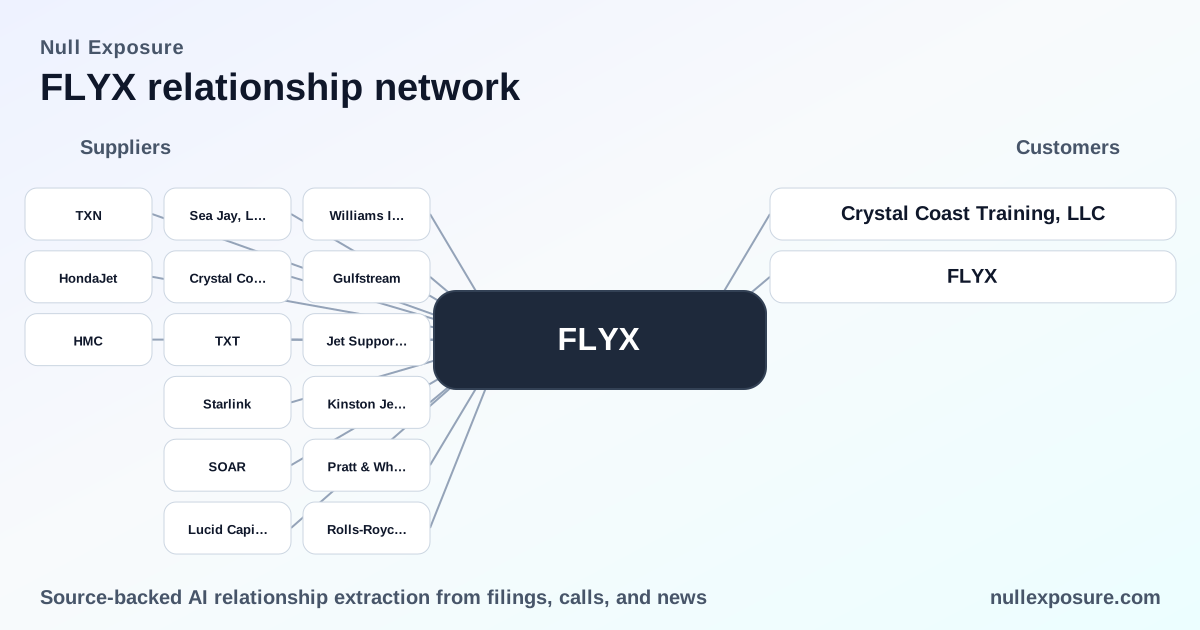
flyExclusive (FLYX) — supplier map and operating constraints for investors
flyExclusive operates as a vertically integrated private-jet operator and MRO/repair business: it generates revenue from on-demand and fractional flight hours, aircraft leasing and rental, maintenance services as a Part 145 repair station, and incremental asset sales, while expanding via targeted acquisitions and dealer agreements that add service and connectivity capabilities. The company reported revenue of $362.96M and negative EBITDA of $34.83M on a trailing basis, and its supplier footprint is concentrated in engine and airframe OEMs, MRO partners, and several captive affiliates that provide facilities and fuel. For a deeper supplier-risk picture, visit https://nullexposure.com/.
Executive takeaways for portfolio managers
- Operational model is asset-heavy and supplier-critical: the business depends on OEM engine suppliers and a small set of maintenance providers to keep aircraft airworthy and available for customers. According to flyExclusive’s FY2024 10‑K, the company “historically relied on Pratt & Whitney Canada Corp., Williams International, and Rolls‑Royce plc aircraft engines to power substantially all of our owned and leased aircraft.”
- Lease and facility profile is long-term and related-party heavy: the firm leases headquarters and hangars under multi-year arrangements and reports material payments to affiliates for facilities and fuel. These contractual structures create both stability and related-party concentration.
- Spend concentration is visible at the mid-size level: multiple counterparty payments fall in the $100k–$1m band, while fuel purchases from related parties sit in the $1m–$10m band—enough to move margins in a downturn.
- Strategic moves extend service capability: recent acquisitions and dealership agreements (Starlink, Volato, Jet.AI/Jet.AIS) expand revenue levers beyond flight hours into connectivity, sales, and software-enabled services.
Learn more about supplier risk modeling and how this influences valuation at https://nullexposure.com/.
Supplier map — every named relationship and what it means
Pratt & Whitney Canada Corp.
flyExclusive lists Pratt & Whitney Canada among the principal engine suppliers powering substantially all of its owned and leased aircraft, underlining direct operational dependence on OEM engine support and parts. (Source: flyExclusive FY2024 10‑K.)
Williams International
Williams International is named alongside Pratt & Whitney and Rolls‑Royce as a key engine supplier for flyExclusive’s fleet, indicating multiple OEM engine dependencies across aircraft types. (Source: flyExclusive FY2024 10‑K.)
Rolls‑Royce plc
Rolls‑Royce appears in the FY2024 10‑K as one of the engine manufacturers flyExclusive historically relied on, reinforcing engine-manufacturer concentration as a material operational risk. (Source: flyExclusive FY2024 10‑K.)
Gulfstream
flyExclusive sources parts and services from Gulfstream with warranties applying to those parts and services, which signals standard OEM after-sales relationships for select airframes or components. (Source: flyExclusive FY2024 10‑K.)
Jet Support Services, Inc. (JSSI)
The company reports engine program agreements with third‑party providers including Jet Support Services, Inc., which flyExclusive relies on for engine-related maintenance and services—a critical outsourced maintenance relationship. (Source: flyExclusive FY2024 10‑K.)
Textron / Textron Aviation / Cessna (including Cessna Citation fleet references)
flyExclusive negotiates preferred rates with Textron for line maintenance, component repair and parts exchanges, and the company operates one of the world’s largest fleets of Cessna Citation aircraft; Textron and Cessna references appear in both the FY2024 10‑K and multiple news releases about fleet purchases and strategic deals. This indicates deep commercial and operational ties to a single airframe OEM family, affecting maintenance cost and fleet commonality economics. (Sources: flyExclusive FY2024 10‑K; Textron/Textron Aviation purchase and fleet news, FY2022–FY2025.)
HondaJet
Multiple news items tied to flyExclusive’s 2025 acquisition of Jet.AIS and related comments reference HondaJet aircraft as part of fleet commonality and growth plans, demonstrating cross-manufacturer fleet diversification linked to acquisitions. (Source: aviation news coverage, FY2025.)
Kinston Jet Center, LLC
Kinston Jet Center, a wholly owned subsidiary of LGM Ventures (an affiliate), leases hangars and headquarters space to LGM (flyExclusive’s subsidiary) under multi‑year leases, and the company records substantial annual payments—an explicit related‑party facilities arrangement that is contractually long-term and financially material. (Source: flyExclusive FY2024 10‑K.)
Crystal Coast Training, LLC
flyExclusive rents aircraft from Crystal Coast Training, LLC and paid $67,000 in 2023 for aircraft usage, indicating small-scale, operational leasing relationships for fleet flexibility. (Source: flyExclusive FY2024 10‑K.)
Sea Jay, LLC
flyExclusive is guarantor to a term note between Sea Jay, LLC and a financial institution (initial principal $11.9M), showing financial linkages to third-party lessors or affiliates that have balance-sheet implications. (Source: flyExclusive FY2024 10‑K.)
Jet Support Services, Inc. (listed again)
(See above.) The FY2024 10‑K lists engine program agreements with JSSI as part of continued engine maintenance strategy. (Source: flyExclusive FY2024 10‑K.)
Starlink
In January 2026 flyExclusive signed an authorized dealership and installer agreement with Starlink to offer high‑speed in-flight connectivity, representing a strategic vendor relationship that extends services to passengers and MRO clients. (Source: Company press release / Markets.FinancialContent and news coverage, FY2026.)
Volato Group, Inc.
flyExclusive entered into an agreement to acquire Volato’s aircraft sales division (structured acquisition for stock consideration), expected to contribute near-term profit, illustrating an inorganic growth move that brings aircraft-sales capability in-house. (Source: press coverage and company announcement, FY2025.)
Lucid Capital Markets
In February 2026 flyExclusive executed ATM and underwriting agreements with Lucid Capital Markets to enable potential equity sales under its shelf registration, reflecting capital markets relationships used to manage liquidity and fund growth initiatives. (Source: TradingView / news reports, FY2026.)
What the constraints tell investors about business model characteristics
- Contracting posture — long-term, related-party leases: flyExclusive discloses multiple long-term leases for headquarters and hangars, some with terms greater than ten years; these are anchor commitments that stabilize fixed costs but create exposure to related-party governance and concentration. (Company-level disclosure.)
- Concentration and criticality — engine OEMs are material: the company explicitly flags significant reliance on engine manufacturers and engine management companies as a material operational risk, which elevates single‑supplier and spare‑parts exposure. (Company-level disclosure.)
- Relationship roles — mix of manufacturer and service provider: constraints indicate suppliers cover both manufacturing (OEM engines / airframes) and services (cybersecurity consultants, MRO providers), so supplier risk is operational rather than purely transactional. (Company-level disclosure.)
- Maturity and activity — relationships are active and transactional in mid-range spend bands: many supplier payments are in the $100k–$1m band, while fuel purchases from affiliates are in the $1m–$10m band; several leases and payments are recurring and continue on active terms. (Company-level disclosure.)
- Related-party exposure is explicit: multiple payments to subsidiaries of LGM Ventures (hangars, fuel, autos, house leases) show revenue and cost flows significantly intertwined with affiliates, which is important for governance and minority investor scrutiny. (Company-level disclosure referencing Kinston Jet Center and LGM entities.)
If you want a structured supplier-risk scorecard for flyExclusive that translates these qualitative constraints into exposure bands for portfolio stress-testing, see the research toolkit at https://nullexposure.com/.
Investment implications and action points
- Operational continuity is tied to a limited set of OEMs and MRO partners—investors should price in elevated replacement and spare-part risk in scenarios of supply-chain disruption or OEM warranty disputes.
- Related-party lease and fuel flows create governance questions that can affect free cash flow and working capital; monitor disclosures around affiliate transactions and any changes in lease terms.
- Strategic additions (Starlink dealership, Volato acquisition) increase service revenue optionality and could improve margins if integrated effectively, but they also raise integration and capital needs, underscoring the significance of recent equity financing agreements with Lucid.
For more tailored supplier exposure analytics and operational risk benchmarking for your holdings, visit https://nullexposure.com/ — our reports translate filings and news into investable intelligence.