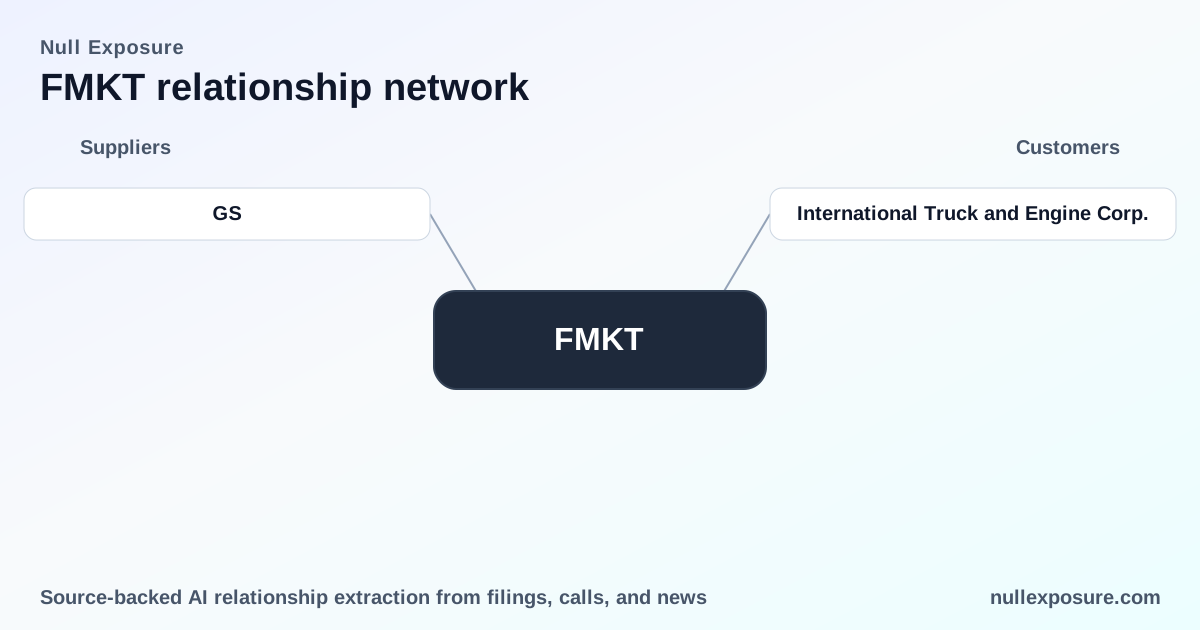
FMKT supplier relationships — what investors need to know
FMKT operates as a business-to-business supplier that earns revenue through contractual engagements with enterprise buyers and one‑off transaction events such as advisory-driven dispositions or asset transfers. The commercial model is driven by vendor contracts, project fees, and event-based monetization tied to M&A and sourcing activities; cash flow sensitivity centers on contract renewal cadence and the frequency of transaction events that generate advisory or facilitation fees. For investors, the key questions are counterparty concentration, the criticality of each supplier relationship to core revenue, and the maturity and contractual exposure of those ties. Learn more about mapping supplier exposure at https://nullexposure.com/.
What the recorded relationship is — Goldman, Sachs & Co. (GS)
Goldman, Sachs & Co. acted as exclusive financial advisor to FreeMarkets and provided a fairness opinion in connection with the transaction covered in the source report. This is a direct advisory engagement tied to an acquisition event rather than an ongoing operational supplier contract. According to an MHLnews article covering Ariba's acquisition of FreeMarkets, Goldman, Sachs & Co. was the exclusive financial advisor and provided a fairness opinion (source: MHLnews article "Ariba acquires FreeMarkets"; data tag FY2019; published URL: https://www.mhlnews.com/technology-automation/article/22046856/ariba-acquires-freemarkets).
Takeaway: this is an advisory relationship tied to an M&A event — important for historical transaction context but not, on its face, evidence of a recurring revenue supplier arrangement.
How that single recorded relationship shapes your view of FMKT
The dataset for FMKT contains a single, transaction‑oriented relationship. From a commercial and risk perspective, this yields several company‑level signals investors must treat as material inputs to diligence:
- Concentration of visible relationships is low. With only one recorded counterparty, public visibility into FMKT’s supplier network is limited; this increases the importance of off‑record contracts and direct verification.
- Contracting posture is event-driven rather than subscription-based. The single entry documents an advisory role surrounding a change-of-control event, not a multi-year supply contract or embedded supplier dependency.
- Operational criticality is likely limited for this relationship. Advisory engagements contribute to strategic outcomes but do not indicate ongoing operational dependency for goods or services.
No explicit contractual constraints were captured in the dataset for FMKT. Because the constraints list is empty, there are no documented encumbrances, exclusivity clauses, or mandatory minimum commitments reported here as company-level signals. This absence is itself a data point: no recorded contractual constraints increases the need for primary diligence to validate counterparty risk and supplier continuity.
Explore supplier mapping and constraint analysis tools at https://nullexposure.com/.
Risk profile investors should weigh
Two categories of risk stand out from the available record:
- Visibility risk. With only one public relationship recorded, FMKT presents limited transparency into supplier dependence, vendor concentration, and contract maturity profiles. Investors should treat the present dataset as incomplete until corroborated with contract-level review.
- Event-concentration risk. The recorded relationship is tied to an acquisition advisory engagement, which signals episodic, event-driven revenues rather than recurring supplier income; this produces volatility in transaction-derived cash flows.
Operational and counterparty risks to monitor in diligence:
- Confirm the existence and terms of any recurring supplier contracts not recorded in the public relationship index.
- Validate the degree to which advisory or transaction revenue is a component of reported earnings.
- Seek representations on exclusivity, termination rights, and revenue concentration in management disclosures.
Major relationship takeaway: Goldman Sachs’ role is advisory and historical contextually relevant for transaction chronology, not a red flag for operational supply dependency.
Practical next steps for investors and operators
Given the sparse public relationship record, pursue these concrete diligence actions:
- Request executed supplier agreements, including renewal terms and termination clauses, to detect hidden concentration and lock‑ups.
- Obtain a counterparty ledger and accounts payable aging to quantify dependence on top suppliers.
- Conduct targeted reference checks with counterparties listed by management and review regulatory or press coverage tied to transactional events.
For a more systematic supplier-risk assessment and to accelerate contract-level discovery, investors can start with Null Exposure’s supplier mapping service: https://nullexposure.com/.
Bottom line and recommended posture
FMKT’s recorded supplier footprint in this dataset is narrow and transaction-oriented. Investors should treat the current record as an incomplete view that warrants primary diligence to confirm operational supplier exposure, contract maturity, and revenue concentration. The Goldman, Sachs & Co. entry provides useful historical context about a past M&A advisory role, but it does not substitute for contract-level visibility into supply continuity and commercial terms.
If you are structuring follow-up diligence or preparing a supplier-risk memo, begin with contract requests and counterparty confirmations. For portfolio screening and supplier-relationship intelligence, visit https://nullexposure.com/ for tailored mapping and verification services.