First Northwest Bancorp (FNWB): Supplier relationships that shape an auto‑loan driven small bank
First Northwest Bancorp is a regional bank holding company centered on the First Federal Savings and Loan Association of Port Angeles. The franchise monetizes through traditional banking flows—interest margin on loans and deposits—augmented by a sizable program of purchased auto loans and selective branch acquisitions that expand deposits and local lending capacity. For investors and operators, the economics are anchored to asset purchase programs (notably auto loans), branch consolidation, and third‑party operational outsourcing that together determine credit, liquidity and operational risk exposure. Learn more about supplier and counterparty footprints at https://nullexposure.com/.
A single visible partner in the news — what it means
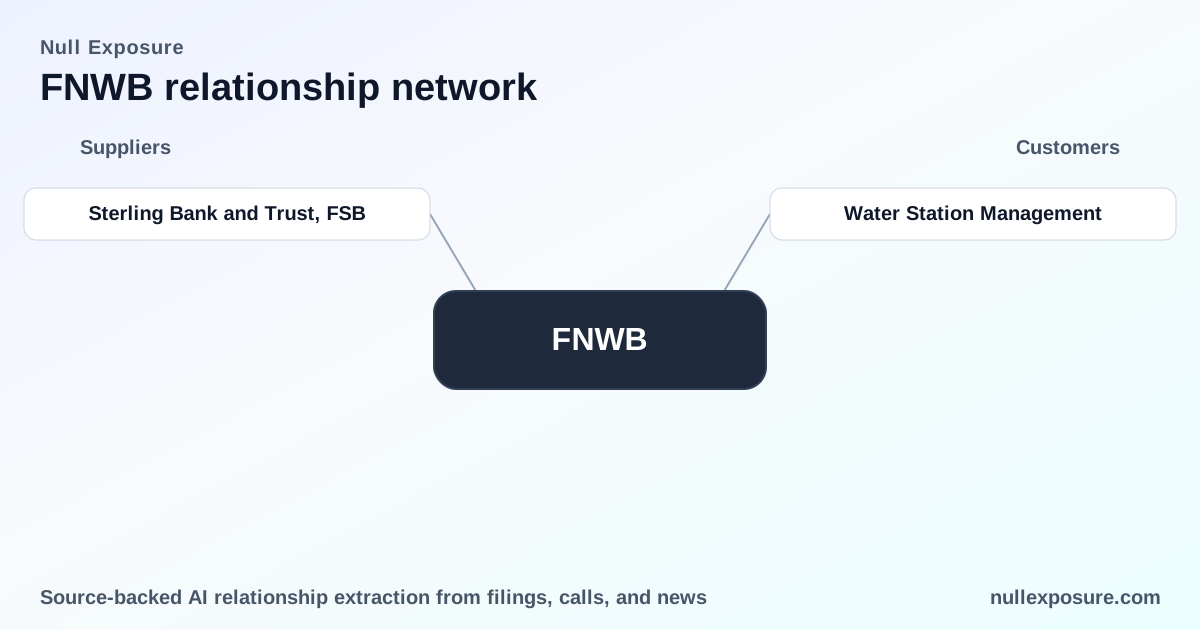
First Northwest disclosed a discrete, archival transaction: the Bellevue branch purchase from Sterling Bank and Trust, FSB (closed July 2021). According to a GlobeNewswire release republished by The Manila Times on January 29, 2026, First Fed acquired the Bellevue branch from Sterling Bank and Trust, FSB. This is a strategic branch acquisition rather than an ongoing vendor relationship, but it signals inorganic growth behavior and a willingness to consolidate local retail footprint through purchases.
Other supplier signals in company disclosures
The company’s own disclosures reveal material third‑party relationships and procurement scale that are central to how the bank operates.
- First Northwest purchases auto loans through a relationship with Woodside Credit, LLC, a loan originator that operates across all 50 states and underwrites and funds classic and collector vehicle loans. This relationship is described in the company’s disclosures and positions First Northwest as a buyer of loans sourced by a national originator. (Company disclosure referencing activity through December 31, 2024.)
- First Northwest outsources certain data processing and operational functions to third‑party providers, per its filings; that outsourcing is a standing operational arrangement rather than a one‑off purchase. (Company disclosure.)
- The company reports auto loans of $133.9 million at December 31, 2024, of which $132.3 million were purchased and $0.45 million were originated through indirect dealer programs, establishing purchased paper as the dominant component of the auto‑loan book. (Company disclosure referencing year‑end 2024.)
- Purchase activity is recurring and sizable: the company purchased $88.9 million, $83.1 million and $96.1 million of loans in 2024, 2023 and 2022, respectively, reflecting a multi‑year purchasing program at meaningful scale. (Company disclosure.)
These disclosures are corporate signals about how the bank sources consumer assets and structures operations; they are not line‑item supplier invoices but they demonstrate concentration of spend and embedded operational dependencies.
What the constraints tell investors about operating posture and risk
The disclosures create several actionable operational inferences:
- Contracting posture — buyer of paper, not a pure originator. The bank acts as a purchaser of loans from originators such as Woodside Credit, which implies contracts governed by purchase agreements, repurchase triggers and credit warranty clauses rather than the warranties typical of retained‑originator portfolios.
- Spend concentration — large, repeatable purchase programs. With purchased auto loans totaling $132.3 million of a $133.9 million auto book and annual purchases in the tens of millions, purchasing is a core, high‑dollar activity that likely dominates vendor negotiations and credit exposure.
- Criticality — third‑party providers are material to operations. Outsourced data processing and operational functions create operational dependency and escalation paths that are critical to uptime, regulatory compliance and loan servicing.
- Maturity — established, multi‑year programs. Recurring purchase volumes across three years indicate a mature purchase pipeline and embedded processes for underwriting, settlement and servicing that extend beyond ad hoc buying.
These are company‑level signals drawn from the firm’s own disclosures rather than a single vendor note; they should guide due diligence and contract review priorities.
Relationship list (complete) and direct source notes
Below is every relationship surfaced in the supplier results and the supporting source context.
- Sterling Bank and Trust, FSB — First Northwest purchased the Bellevue branch from Sterling Bank and Trust, FSB in July 2021, a transaction referenced in a GlobeNewswire release cited by The Manila Times on January 29, 2026. This was an acquisition of branch infrastructure rather than an ongoing procurement contract. (GlobeNewswire / The Manila Times, January 29, 2026.)
In the company’s regulatory and annual disclosures the following counterparties and arrangements are additionally named or otherwise documented and should be treated as part of the supplier ecosystem:
- Woodside Credit, LLC — First Northwest purchases auto loans through a relationship with Woodside Credit, which underwrites and funds classic and collector vehicle loans across all 50 states; disclosed activity as of December 31, 2024 indicates this is the primary origination channel for purchased auto paper. (Company disclosures, year‑end 2024.)
- Third‑party data processors and operational service providers — the company explicitly outsources certain data processing and other operational functions, indicating ongoing vendor relationships that support core systems. (Company disclosures.)
Key investment takeaways and operational actions
- Auto‑loan purchasing is a strategic driver. Purchased paper dominates the auto book and is a recurring high‑value spend line: investors must treat originator contracts and credit warranty terms as material to credit and capital modeling.
- Branch acquisitions are used tactically to expand deposit and lending reach. The Sterling Bank and Trust Bellevue branch purchase is an example of inorganic expansion that directly affects local deposit mix and market share.
- Operational outsourcing is material. Data processing and vendor operations are critical to servicing, regulatory reporting and loan performance monitoring; vendor stability and contract terms are non‑trivial risk factors.
Recommended next steps for investors and operators:
- Request copies of the loan purchase agreements and repurchase warranty language with Woodside Credit and any other originators to assess credit transfer mechanics and indemnification.
- Review service level agreements and business continuity plans with data processors to evaluate operational resilience and regulatory compliance posture.
- Model sensitivity of net interest margin and credit losses to purchased‑loan performance given the >$100 million scale of purchased auto assets.
Explore a broader supplier risk profile and comparative benchmarks at https://nullexposure.com/ — see how these supplier relationships sit alongside peers.
Final recommendation
First Northwest’s business model is small‑cap, regionally focused banking supplemented by a national auto‑loan purchase channel and selective branch acquisition. For investors, the linchpin risks are concentrated vendor‑sourced credit exposure and outsourced operational dependencies; for operators, the priority is tight contract governance and active vendor monitoring. Conduct targeted contract reviews and ask for vintage‑level performance metrics on purchased paper before underwriting valuation or strategic commitments. For deeper supplier mapping and to compare counterparty footprints across regional banks visit https://nullexposure.com/.