FONAR’s supplier map: what investors need to know now
FONAR Corporation designs, manufactures and sells MRI scanners and monetizes through product sales, service contracts and facility operations tied to long-term leases; the company generates most of its revenue from equipment and services while corporate legal and financial advisers support strategic transactions. For investors, the supplier profile is notable for concentrated vendor spending and long-duration facility commitments, and for operators the active use of external advisors during a take‑private process signals elevated governance and transaction costs.
Explore deeper supplier intelligence at https://nullexposure.com/.
Quick take: the business model drivers that matter
FONAR’s core economics are product sales and recurring service revenue from installed MRI systems, while operating overhead is amplified by long-term property leases and episodic advisory fees tied to corporate transactions. Revenue of ~$105m (TTM) and operating margins above 12% reflect a capital‑intensive, niche equipment manufacturer with stable gross margins but vendor concentration risk. The company’s current strategic activity — a take‑private agreement led by management — elevates the role of external legal and financial suppliers in the near term.
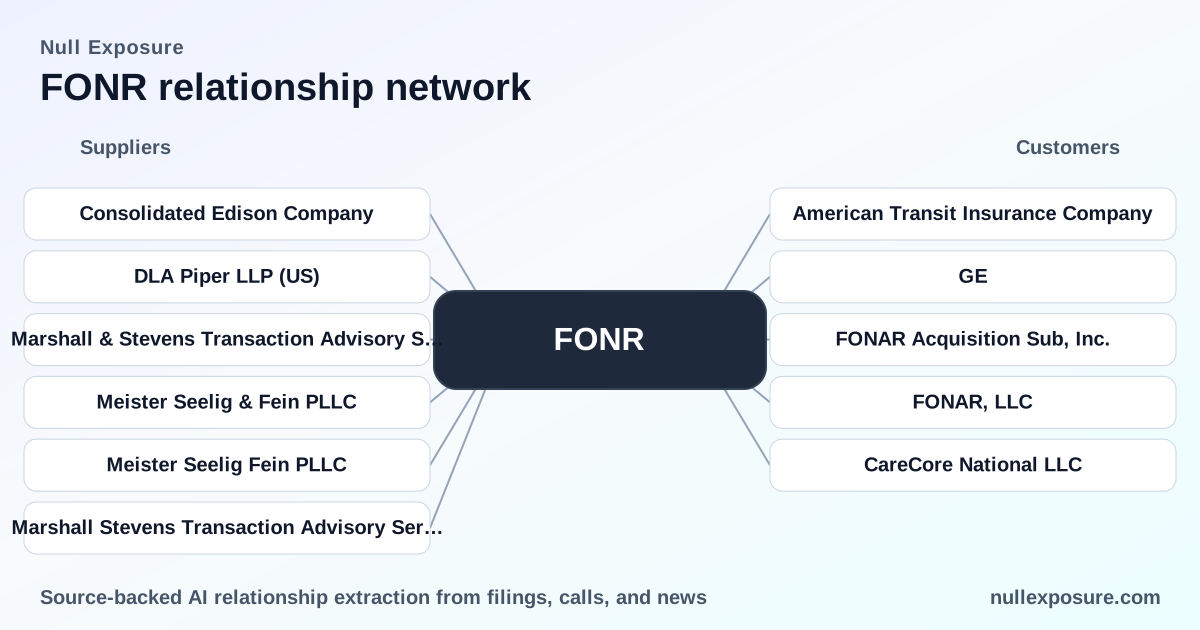
All documented supplier and advisory relationships (source-by-source)
-
Consolidated Edison Company — FONAR recorded a $206,000 expense tied to unreported electricity bills at a Midtown Manhattan location caused by faulty meter reading over multiple years; this is disclosed in the FY2025 Form 10‑K. This is an operational cost item that reflects utility vendor risk for its leased facilities (FONAR FY2025 10‑K).
-
DLA Piper LLP (US) — DLA Piper is serving as legal counsel to the company in connection with the definitive agreement for a take‑private sale announced late 2025; that engagement is noted in news reports covering the transaction (Reuters report published via TradingView, Dec 29, 2025; corporate press release distributed on Newsfile, Dec 29, 2025).
-
Marshall & Stevens Transaction Advisory Services LLC — Marshall & Stevens is serving as financial advisor to the Special Committee overseeing the proposed transaction; the firm’s role is reported in the same transaction coverage and the company press release (Reuters/TradingView, Dec 29, 2025; Newsfile release, Dec 29, 2025).
-
Meister Seelig & Fein PLLC / Meister Seelig Fein PLLC — The Special Committee’s legal counsel is listed as Meister Seelig & Fein (also referenced as Meister Seelig Fein) in transaction disclosures and the company’s press release; the firm is advising the Special Committee on the proposed take‑private sale (Reuters/TradingView, Dec 29, 2025; Newsfile release, Dec 29, 2025).
Note: the above advisory relationships are referenced multiple times across trading press and the company’s press release; I list each adviser with the source context for clarity.
What these relationships reveal about FONAR’s operating posture
-
Contracting posture — long-term, fixed-location exposure. FONAR leases facilities under arrangements that commonly run for multi‑year terms; the 10‑K states initial terms range broadly and renewal options extend occupancy durations. This creates predictable occupancy cost profiles but reduces flexibility to quickly exit underperforming locations (company FY2025 10‑K).
-
Supplier concentration — a material company-level signal. For the year ended June 30, 2025, two vendors accounted for 36% of total purchases, highlighting procurement concentration that elevates supplier risk and negotiating leverage for those vendors (company FY2025 10‑K).
-
Criticality and cost volatility. The Consolidated Edison billing adjustment is small in absolute terms versus revenue (~$206k vs ~$105m TTM) but it illustrates that utility and facilities vendors are operationally critical and can generate unexpected expenses if oversight or metering fails (company FY2025 10‑K).
-
Maturity and governance at transactional peaks. The engagement of premier law and advisory firms for a take‑private transaction signals that FONAR’s governance and capital structure decisions are being handled with heavy external support, which increases near‑term non‑operating costs while reducing execution risk on the deal (transaction press, Dec 29, 2025).
Investment implications — risk and value drivers
-
Concentration risk is real and quantifiable. A single or small group of suppliers represented a large share of purchases in FY2025, so any supplier disruption or pricing pressure could compress margins disproportionately. Investors should monitor supplier payment terms, alternate sourcing options and inventory buffers.
-
Lease rigidity limits operational agility. Long lease terms lock FONAR into fixed-cost commitments; this supports planning for capital deployment but reduces the ability to downsize physical footprint if demand softens.
-
Transaction-driven cost volatility is near term. The take‑private process explains the presence of high‑caliber legal and financial advisers; expect elevated advisory fees and one‑time costs while the transaction completes, offset by potential private‑market re‑capitalization benefits for long‑term value capture.
-
Operational exposures are manageable in scale. The Consolidated Edison expense is a modest hit relative to annual revenue and gross profit, but it is symptomatic of facility-level oversight gaps that operators should address to avoid recurring small losses aggregating into material impacts.
If you are evaluating counterparty risk or preparing diligence for a relationship with FONAR, get a structured supplier risk brief at https://nullexposure.com/.
What operators and procurement teams should act on
- Reassess lease portfolios for sublease and exit flexibility and consider contingency plans for high‑concentration suppliers.
- Centralize utility and facilities metering audits to prevent repeat billings and to capture potential recoveries.
- For large one‑off projects or strategic changes, budget advisory spend as a deliberate line item rather than an ad‑hoc cost.
Conclusion — the investor verdict
FONAR runs a capital‑intensive, margin‑sensible business with material supplier concentration and long‑term lease commitments that shape both downside risk and predictability. The company’s current use of leading legal and financial advisers for a take‑private sale increases near‑term costs but reduces deal execution risk; utility billing issues highlight operational control areas for management. Investors should weigh the concentrated procurement footprint and lease rigidity against steady service revenues and the potential upside of a privately executed restructuring.
For a deeper supplier and counterparty risk profile tailored to investors and procurement teams, visit https://nullexposure.com/.