Fox Factory Holding Corp (FOXF): Supply relationships that shape margin and execution risk
Fox Factory monetizes a specialized manufacturing and branded-components business by selling suspension and related components to OEMs and the performance aftermarket, capturing margin through proprietary finishes and engineering (notably the Kashima coating) and recurring orders from vehicle and bike manufacturers. Revenue is primarily manufactured product sales with concentrated supplier and geographic touchpoints that directly affect margin and production continuity. For a focused supplier-risk view, review Fox’s supplier relationships and operating constraints at https://nullexposure.com/.
Why supplier relationships matter to investors now
Fox Factory is trading with $1.47B in trailing revenue and roughly $659M market capitalization, while showing negative diluted EPS and modest operating margins, making supplier disruptions a lever that can move profitability quickly. According to company filings through FY2025, gross profit stands at $443M with EBITDA of $155M; these economics create sensitivity to raw material duties, single-source coatings, and manufacturing location concentration. Investors should weight supplier counterparty risk alongside traditional demand and margin drivers.
Who Fox Factory is doing business with — the relationships that matter
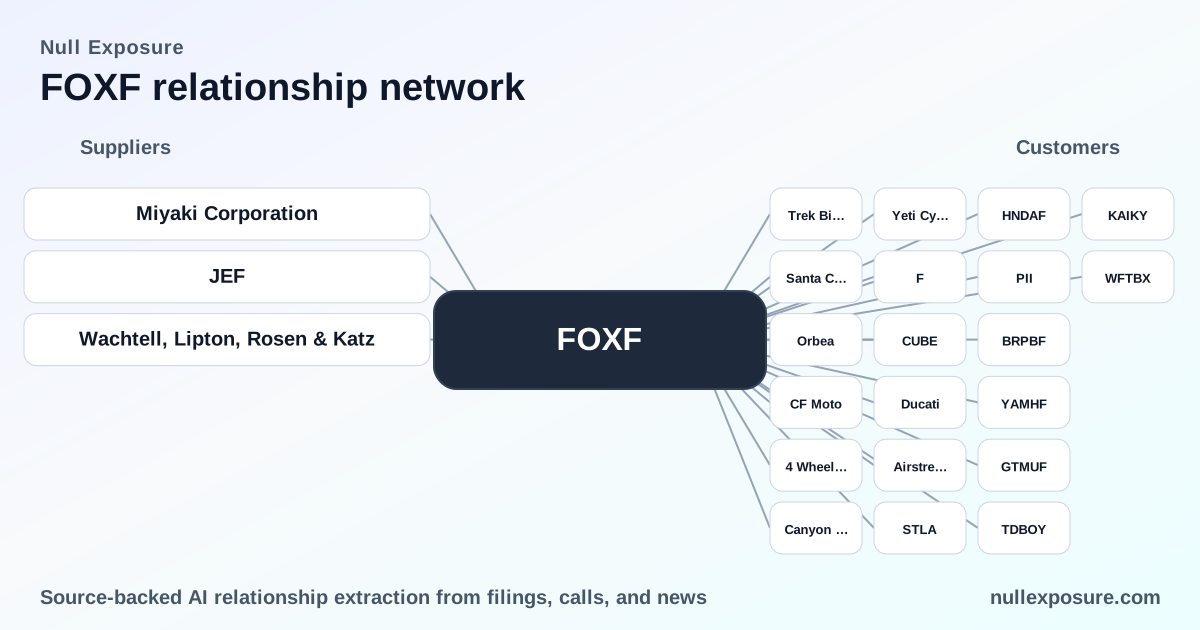
Below are every relationship called out in the available reporting and reporting-period news, with plain-English takeaways and source references.
Miyaki Corporation
Miyaki is the exclusive producer of the Kashima coating used on Fox’s suspension component tubes, and Fox holds an exclusive right to use the “KASHIMACOAT” trademark on aluminum suspension parts worldwide, subject to minimum annual orders and certain exclusions. This is a single-source, product-critical supplier relationship disclosed in Fox’s FY2025 10‑K. (Source: Fox Factory FY2025 10‑K.)
Jefferies LLC / Jefferies, LLC
Jefferies has been engaged as financial advisor to Fox Factory in the context of board refresh and governance actions reported in early 2026, supporting strategic review and adviser-led options under activist pressure. News outlets covering the March 2026 board changes report Jefferies as lead financial advisor. (Source: TheShopMag and SGBOnline, March 2026.)
Wachtell, Lipton, Rosen & Katz
Wachtell, Lipton, Rosen & Katz is acting as legal counsel to Fox Factory in connection with the same board refresh and transformation committee matters in early 2026, providing high‑end corporate and governance legal services. (Source: TheShopMag and SGBOnline, March 2026.)
What the constraints say about Fox’s operating model
The disclosed constraints deliver a concise picture of how Fox sources, contracts, and faces concentration risk. Treat these as company-level signals except where a constraint explicitly names a counterparty.
-
Single-source criticality (company + counterparty): The Miyaki exclusivity for Kashima coating is explicitly called out in the FY2025 10‑K and represents a critical, single-source input with trademark and minimum order obligations; the relationship is both strategic and operationally constraining. (Company-level signal with Miyaki named in the constraint excerpt.)
-
Geographic concentration in APAC: The company notes that the majority of bike component manufacturing occurs in Taiwan, introducing regional concentration risk for logistics, workforce, and geopolitical disruption. This is a company-level operating constraint that raises relocation and supplier‑qualification costs.
-
Counterparty sizing and regulatory exposure: Narrative evidence flags exposure to very large enterprise suppliers and to U.S. government trade or labor restrictions (the DHS UFLPA expansion referenced in company materials). Regulatory listing or trade-restriction actions affecting large suppliers can transmit through Fox’s supply chain.
-
Manufacturing and raw-material risk: Fox called out aluminum extrusions and the possibility of duties or trade litigation as a factor that could materially affect costs and timing. Raw-material duty risk and import timing are recurring operating constraints for a manufacturing-intense business.
-
OEM contracting posture and maturity: Fox documents relationships with OEMs for chassis and other vehicle components, signaling contracted, commercial relationships with large manufacturers that are important for revenue consistency but can impose terms and cadence that constrain pricing flexibility.
Risk profile and investor implications
-
Concentration risk is tangible and actionable. The exclusive Kashima coating arrangement creates a narrow failure point; an operational break, price squeeze, or termination would impair product differentiation and could pressure gross margins.
-
Geopolitical/regulatory exposure amplifies supplier risk. Taiwan manufacturing concentration and references to UFLPA-related supplier listings mean Fox’s sourcing is vulnerable to trade-policy shifts and labor‑compliance enforcement.
-
Advisory and legal engagements indicate strategic change. The addition of Jefferies and Wachtell in early 2026 coincides with board refresh and a transformation committee; this signals management openness to structural change or monetization options that can reprice risk premia for investors. (Source: TheShopMag and SGBOnline, March 2026.)
Key financial context: EV/Revenue ~0.88 and EV/EBITDA ~16.8 reflect a valuation that prices moderate growth with margin vulnerability; Forward P/E of 10.9 suggests analysts expect recovery in earnings power, even as trailing EPS are negative. Analyst consensus target near $22.83 should be interpreted against the supplier and manufacturing constraints described. (Source: company financial summary through FY2025.)
For a deeper supplier-risk analysis and to map counterparty concentration across Fox’s vendor base, see the supplier intelligence tools at https://nullexposure.com/.
Practical next steps for investors and operators
- Stress-test scenarios where Kashima supply is interrupted and quantify margin and revenue impacts given minimum-order commitments to gauge liquidity and covenant risk.
- Reevaluate sourcing concentration by region and component category and model duty or labor‑compliance shocks to aluminum and coatings supply.
- Monitor developments from Jefferies and Wachtell engagements for announcements on strategic alternatives, governance changes, or capital allocation shifts that change supplier leverage.
If you want an immediate, vendor-focused risk brief tied to Fox’s filings and market signals, request a tailored supplier exposure report at https://nullexposure.com/. For portfolio managers, include supplier-concentration scenarios in next quarter planning and coordinate with corporate governance teams ahead of any board-driven strategic moves.
Bottom line
Fox Factory operates a specialized manufacturing model where a small number of critical suppliers and APAC manufacturing concentration materially affect margins and execution. Miyaki’s exclusive coating relationship is a high‑impact supplier dependency; regulatory and trade dynamics add an extra layer of volatility. Active investors should combine the financial view with supplier mapping and follow advisory/legal engagement announcements to time catalyst-driven revaluation. Explore supplier-focused intelligence for Fox at https://nullexposure.com/ to convert these qualitative risks into actionable scenarios.