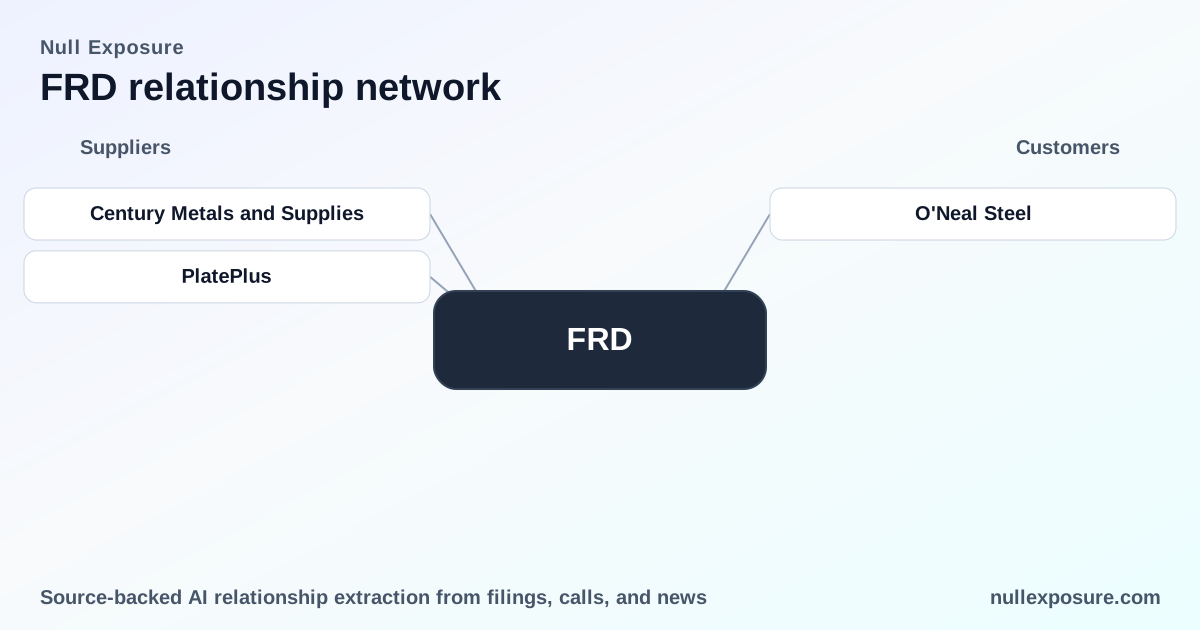
Friedman Industries (FRD): Supplier relationships that reshape scale and risk
Friedman Industries operates as a vertically integrated steel processor and distributor: it buys flat-rolled steel and pipe, converts product through processing and fabrication, and sells finished plate, coils and pipe to industrial and construction end markets. The company monetizes by capturing conversion margins (processing and cut-to-length services) and distribution spreads, while growth comes from targeted acquisitions that add capacity and regional market access. For investors, the key questions are how recent bolt-on deals change Friedman’s supply footprint and whether supplier concentration in flat-roll inputs creates asymmetric operational risk.
Explore more supplier intelligence on our homepage: https://nullexposure.com/
What Friedman’s operating model really means for suppliers and buyers
Friedman’s economics depend on three linked mechanics: procurement of flat-roll inputs, processing capacity utilization, and regional distribution networks. With TTM revenue of $584.4 million and an operating margin near 21.6% on processing lines, Friedman earns most of its incremental profit from converting raw coil into higher-value plate and fabricated product for local customers. However, EBITDA of roughly $23.2 million and slim overall profit margins (about 2.7%) indicate conversion margins are valuable but exposed to supply cost swings and working capital.
- Concentrated procurement is a structural risk: company disclosures flag that the flat-roll business sources inventory from a limited set of suppliers, and loss of a supplier could have a material adverse effect. This gives suppliers leverage in periods of tight coil markets or disruptions.
- Bolt-on M&A is the preferred growth lever: acquisitions expand capacity and shorten distribution routes, effectively converting purchased tonnage into higher-margin finished goods.
Recent relationship moves that change the map
The relationships reported in market coverage for FY2025 illustrate the company’s roll-up strategy and how supplier links translate to new capacity.
Century Metals and Supplies — geographic expansion through acquisition
Friedman acquired Florida-based Century Metals and Supplies in early September of FY2025, a transaction that contributed to record sales and volume for the year and expands Friedman’s reach into the Southeast distribution market. According to a Steel Market Update report from November 2025, this acquisition is presented as a growth and volume driver for Friedman’s distribution footprint.
Source: Steel Market Update, Nov 2025 (reporting FY2025).
PlatePlus — capacity added via plant conversion and prior purchase
Friedman’s Granite City operations include a temper-passed cut-to-length line located next to a plant it acquired from PlatePlus in 2022; the FY2025 reporting notes the new line and the adjacency as part of factory rationalization to maximize throughput. The Steel Market Update coverage highlights how the physical proximity and equipment additions are being integrated to raise processing capacity.
Source: Steel Market Update, Nov 2025 (reporting FY2025).
What these supplier and acquisition moves imply for concentration and contracting posture
Company-level disclosures and the recent transaction activity together indicate a clear operating posture:
- Contracting posture: Friedman relies on a mix of spot purchases and contractual relationships for input coil, but the firm’s disclosures emphasize a limited supplier set for flat-roll inventory, implying concentrated vendor exposure rather than highly diversified procurement.
- Concentration: The mention of a limited number of suppliers is a company-level signal that procurement concentration is meaningful and material to operations; when paired with regional acquisitions, Friedman’s bargaining power can improve in localized markets but overall supplier concentration remains a structural constraint.
- Criticality: Flat-roll inputs are critical to the conversion business—any supply disruption hits both throughput and margins quickly given working capital and capacity utilization dynamics.
- Maturity: The company’s strategy shows operational maturity: using targeted acquisitions (Century Metals, PlatePlus facility) to fold capacity and distribution into an integrated processing-distribution footprint rather than relying solely on organic growth.
Company filings explicitly note the risk tied to the limited supplier base for the flat-roll segment, a material-level constraint on operations and earnings.
Financial sensitivity and what to watch next
Friedman’s valuation and margins incorporate modest scale and concentrated supply dynamics. With a market capitalization near $122.6 million, a trailing P/E of 7.7, and EV/EBITDA around 7.8x, the market prices a cyclical, lower-margin industrial with upside tied to operational leverage and successful integration of acquisitions.
Key monitoring points for investors and operators:
- Supplier continuity and contract terms for flat-rolled coil: any supplier disruption will have an outsized impact on volume and margins given the stated concentration.
- Integration milestones from Century Metals (Florida footprint) and continued optimization of the Granite City/PlatePlus asset: look for throughput and cost synergies that convert acquired tonnage into margin expansion.
- Working capital and inventory turns: acquisition-driven growth can strain cash conversion cycles if purchased inventories come with longer payables or seasonal mismatches.
For deeper coverage of how supplier links affect industrial margins and risk, visit https://nullexposure.com/ to view our supplier intelligence hub.
Bottom line for investors and counterparties
Friedman is a small-cap processor-distributor that grows through selective acquisitions while remaining exposed to supplier concentration in flat-rolled steel. The Century Metals purchase expands regional distribution and helps drive sales growth; the Granite City asset (originating with PlatePlus) increases processing capacity and manufacturing flexibility. These are positive operating moves, but the company-level disclosure about a limited supplier base is a persistent counterweight: supply disruptions or supplier pricing actions can materially affect Friedman’s margins and utilization.
If your investment thesis relies on margin expansion from acquisitions, demand clear, time-bound integration metrics from management. If you are a counterparty or operator, prioritize contractual clarity around supply continuity and pricing.
Continue evaluating Friedman's supplier relationships and risk profile on our homepage: https://nullexposure.com/
Final note: the company’s FY2025 results and market commentary demonstrate both the upside of acquiring local distribution assets and the downside of concentrated procurement; position sizing and contract diligence should reflect that duality.