Flexible Solutions International (FSI): supplier links, short-term sourcing, and what lenders tell investors
Flexible Solutions International sells specialty chemicals—principally evaporation suppressants and related dispensers—into agriculture and water-management markets and monetizes through product sales spread across subsidiaries (including ENP and NCS) and aftermarket consumables. The company runs a lean manufacturing and sourcing model with modest margins and concentrated insider ownership, supplemented by short-term financing arrangements to manage working capital. For investors evaluating supplier and counterparty risk, the combination of short-term supplier contracts and explicit lines of credit is the most important operational signal to watch.
Explore deeper profiles and monitoring tools at https://nullexposure.com/.
How Flexible Solutions makes money and why vendors matter
Flexible Solutions is a specialty-chemicals manufacturer headquartered in Taber, Canada, with FY‑TTM revenue of about $38.6 million and an EBITDA of roughly $6.5 million. The business model is straightforward: develop and sell HEATSAVR® and other formulatory products that slow water evaporation, plus related dispensers and services. That commercial simplicity gives the company pricing leverage on specialty formulations, but it also makes the firm sensitive to raw-material cost swings and working-capital cycles because the firm does not lock many inputs into long-term contracts.
Key commercial characteristics to internalize:
- Contracting posture: short-term purchasing. FSI discloses that many components and raw materials are bought on a non‑contracted basis, which provides sourcing flexibility but exposes margins to spot-price inflation.
- Supplier diversity for active ingredients. The company indicates raw materials for TPA production are sourced from a range of manufacturers, reducing single‑vendor concentration for that input.
- Liquidity support is explicit and subsidiary-level. Financing lines exist for operating subsidiaries, which is consistent with a working-capital-driven cash profile rather than a capital-intensive manufacturing build-out.
All disclosed counterparties in the record
Below are the specific counterparties and the textual disclosures available in public transcripts. Every relationship returned in the supplied results is included.
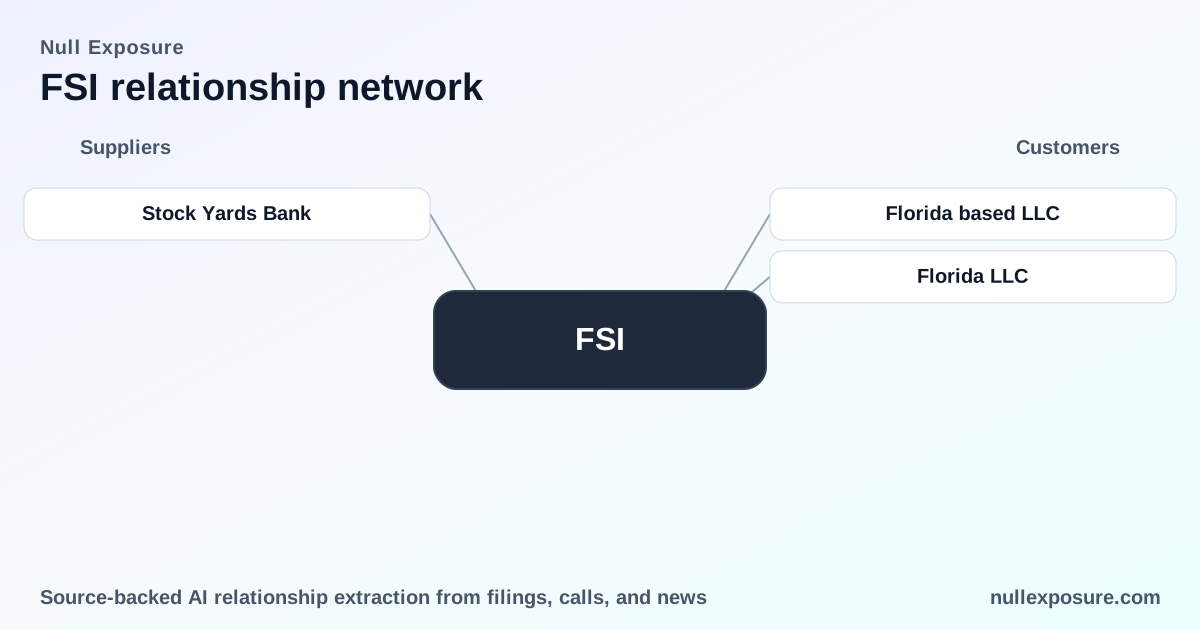
- Stock Yards Bank — Flexible Solutions disclosed that it maintains lines of credit with Stock Yards Bank covering its ENP and NCS subsidiaries, as stated in an earnings-call transcript for Q3 2025. This is a lender relationship used to support subsidiary working capital needs (InsiderMonkey, Q3 2025 earnings transcript: https://www.insidermonkey.com/blog/flexible-solutions-international-inc-amexfsi-q3-2025-earnings-call-transcript-1647544/).
- Stock Yards Bank — The company repeated the disclosure of lines of credit with Stock Yards Bank for ENP and NCS in a Q4 2024 earnings-call transcript, confirming that the financing arrangement spans reporting periods (InsiderMonkey, Q4 2024 earnings transcript: https://www.insidermonkey.com/blog/flexible-solutions-international-inc-amexfsi-q4-2024-earnings-call-transcript-1500860/).
Together these two disclosures establish a persistent lender relationship (Stock Yards Bank) that underpins operating liquidity for named subsidiaries rather than serving as a long-term capital partner.
What the financing and sourcing picture implies for operations and risk
The combined facts—short-term supplier contracts and explicit lines of credit—create a recognizable operating profile:
- Operational flexibility with financial sensitivity. The lack of long-term procurement contracts for HEATSAVR® components grants the company the ability to shift vendors quickly, supporting agility in cost management and product continuity. At the same time, this structure increases exposure to commodity-price volatility and seasonal demand swings, which is likely why the company keeps committed credit lines with Stock Yards Bank for subsidiary liquidity. Company disclosures state that HEATSAVR® parts are sourced without long-term contracts and have not experienced historical shortages, signaling an intentional short-term procurement posture.
- Supplier concentration is low for key chemicals but overall criticality is moderate. FSI reports that raw materials for TPA production are sourced from multiple manufacturers worldwide, which reduces single‑source concentration for that specific input and supports scalability of sales. However, because several product lines are manufactured from common specialty chemicals and plastics, any industry-wide raw-material shock would still translate into margin pressure across the portfolio.
- Maturity and counterparty exposure. The financing arrangement is operational (working-capital) rather than strategic equity. That indicates the company operates within a mature, narrow-margin specialty-chemical niche where working-capital management and reliable short-term credit facilities are essential.
These are company-level constraints pulled from public disclosures: the firm explicitly characterizes procurement as short-term and sourcing for TPA as multi‑manufacturer, so these should be treated as company-wide operating signals rather than characteristics tied to a single vendor.
Explore more supplier and counterparty intelligence at https://nullexposure.com/.
Investor-focused takeaways and what to monitor
For investors and operators assessing supplier relationships and counterparty risk, the following points are actionable and high-impact:
- Liquidity is operational, not transformational. Stock Yards Bank lines of credit support subsidiaries’ working capital rather than funding a growth capex program; monitor covenant language and utilization rates in future filings and call transcripts to understand stress points.
- Procurement flexibility reduces single-vendor risk but increases margin volatility. Because the company explicitly avoids long-term supply contracts for HEATSAVR® components, cost inflation can be passed through only if the market tolerates price moves or if the company maintains margin discipline. Watch raw-material price trends and gross-margin trajectory.
- Supplier diversification is a strength for key inputs. The stated multi-source approach for TPA reduces the probability of a total supply disruption but does not eliminate exposure to industry-wide shocks (transportation, regulatory changes on chemical inputs).
- Ownership and governance signals matter for risk appetite. With a high insider ownership stake (reported at roughly 46%), strategic decisions on contracting and capital structure reflect management preferences; institutional ownership is small, which concentrates influence at the insider level.
Final recommendation
For investors and operators, treat Flexible Solutions as a specialty-chemical business whose near-term performance is driven by working-capital management, short-term procurement dynamics, and the availability of committed credit lines. Maintain close quarterly monitoring of financing disclosures, supplier-cost commentary in earnings calls, and gross-margin changes as the early indicators of stress or opportunity.
For continuous coverage and to integrate supplier intelligence with financial signals, visit https://nullexposure.com/.
If you want a focused dossier on FSI counterparties or an ongoing alert on supplier‑side risk triggers, explore services and tools at https://nullexposure.com/—our coverage aggregates call transcripts, filings, and counterparty linkages to keep investors and operators ahead of the next supply or liquidity inflection.