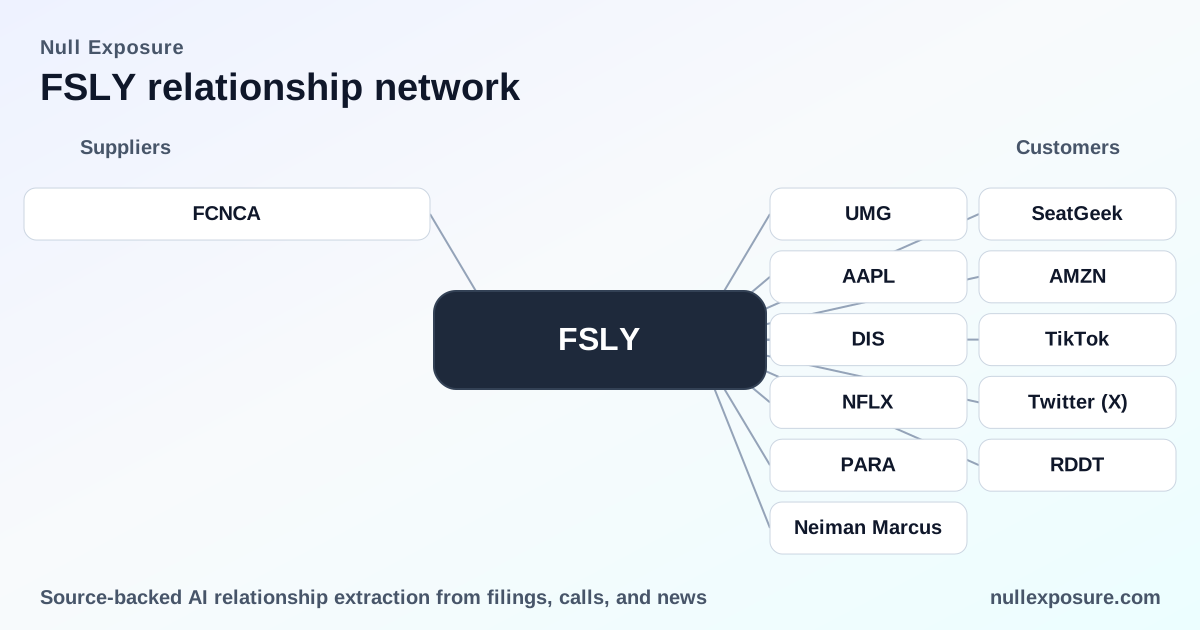
Fastly (FSLY) — supplier relationships and what they mean for investors
Fastly operates an edge cloud platform that processes, serves, and protects customer applications globally and monetizes through usage-based delivery, subscription services for CDN and edge compute, and security add-ons. The company reports $624.0M in trailing twelve‑month revenue and a large installed customer base that drives variable consumption billing, so supplier arrangements that affect capacity, uptime, and balance‑sheet flexibility are direct drivers of revenue delivery and margin stabilization.
If you want a concise registry of Fastly’s supplier signals and how they map to investor risk, see more at https://nullexposure.com/.
A single visible supplier relationship — what the record shows
Fastly’s public supplier relationships in the supplied results include an amendment to its credit facility with First‑Citizens Bank & Trust Company.
- First‑Citizens Bank & Trust Company (FCNCA): A March 2026 news notice flagged an amendment to Fastly’s Senior Secured Credit Facilities Agreement with First‑Citizens, disclosed in a 10‑Q covering FY2024 details. This is a creditor relationship tied to Fastly’s capital structure and liquidity management. (Source: a March 2026 QZ note summarizing Fastly’s 10‑Q.)
This relationship is financial and contractual, not an operational CDN or data‑center vendor; it affects Fastly’s contracting posture and financing flexibility rather than edge routing or hardware choices. The cited item was captured in March 2026 referencing FY2024 disclosures. (Source: https://qz.com/fastly-inc-class-a-fsly-quarterly-10-q-report-1851692437)
What the constraints reveal about Fastly’s supplier model
Public excerpts captured as constraints provide company‑level signals about how Fastly engages suppliers and evaluates hardware, and they should be read as broad operating characteristics rather than relationship‑level facts unless the text names a counterparty.
-
Fastly tests hardware from leading server, network, and component manufacturers to meet performance and repair targets. That language signals a high bar for supplier technical validation and criticality of hardware performance to product delivery — edge platforms require low latency and predictable failure recovery, so hardware standards are operationally central. (Company‑level signal from constraint excerpts.)
-
Fastly uses third‑party service providers for cloud infrastructure, hosting, application delivery, and data center hosting. This is an explicit admission of dependency on external hosting and CDN‑adjacent services, which creates concentration risk when a small number of service providers or geographies handle a material portion of edge capacity. (Company‑level signal from constraint excerpts.)
Taken together, these constraints describe a hybrid supplier posture: aggressive in‑house validation of hardware and deliberate outsourcing of certain hosting and delivery functions. That posture implies higher procurement maturity on technical selection, coupled with residual concentration and operational dependency that require contractual protections and contingency planning.
How the First‑Citizens credit amendment changes the angle for investors
A lender amendment is not a vendor agreement for software delivery, but it directly affects Fastly’s runway, covenant headroom, and capital allocation. For investors focused on supplier risk, this matter reframes priorities:
-
Liquidity and financing stability affect vendor negotiations: strong creditor terms preserve the ability to invest in redundancy, multi‑region capacity, and hardware upgrades that reduce operational supplier risk. The reported amendment therefore is material for supplier strategy because it conditions Fastly’s ability to pay for redundancy and third‑party capacity. (Source: QZ coverage of Fastly’s 10‑Q, March 2026.)
-
The existence of a senior secured facility indicates Fastly leverages secured credit to manage working capital and capex, aligning supplier payments with structured financing rather than purely operating cash flow.
If you want an independent view of supplier exposures and contractual levers, visit https://nullexposure.com/ for deeper supplier mapping and contract summaries.
Practical takeaways for procurement and risk diligence
Investors and operators evaluating Fastly supplier relationships should prioritize a small set of practical checks:
- Verify redundancy: confirm that capacity is multi‑vendor and multi‑region to reduce single‑point‑of‑failure risk from third‑party hosting relationships (company signal indicates third‑party hosting is in use).
- Examine contractual protections: ensure SLAs, termination rights, and service credits are aligned with the company’s revenue concentration and customer SLAs.
- Link financing to operational resilience: review recent credit amendments and covenant language to understand whether funding constraints could limit investment in hardware or multi‑vendor capacity.
These steps are consistent with the company’s explicit practice of rigorous hardware evaluation and its use of external service providers for hosting. That combination demands both technical procurement discipline and financial flexibility.
Risk factors that materially affect the supplier thesis
- Concentration risk: reliance on a small number of hosting or cloud partners increases the impact of outages and contractual disputes. This is especially relevant given Fastly’s use of third‑party service providers. (Company‑level signal.)
- Operational criticality: hardware performance and mean‑time‑to‑repair are called out in corporate language, signaling that supplier quality can materially affect uptime and customer retention. (Company‑level signal.)
- Financing constraints: amendments to secured credit facilities, such as the one with First‑Citizens, affect capital allocation decisions and the company’s ability to invest in redundancy or absorb supplier pricing shocks. (Source: QZ summary of Fastly 10‑Q, March 2026.)
Bottom line — where investors should focus
Fastly runs a technically demanding edge platform that depends on both internally validated hardware and external hosting services. Supplier risk is therefore dual: technical supplier quality is mission critical, and financial supplier relationships (creditors) shape the company’s ability to mitigate operational exposure.
- Key investor takeaways: validate redundancy across hosting suppliers, review contractual rights and SLAs, and monitor financing amendments for constraints on capital spending.
- Primary evidence: corporate language on hardware testing and hosting roles (company excerpts), and a March 2026 news summary of a 10‑Q amendment to the Senior Secured Credit Facilities with First‑Citizens Bank & Trust Company. (Source: https://qz.com/fastly-inc-class-a-fsly-quarterly-10-q-report-1851692437)
For a fuller supplier map and targeted diligence briefs that link contractual language to operational risk, explore practical investor tools at https://nullexposure.com/.
If you want a tailored review of Fastly’s supplier agreements and a concise risk score for portfolio position sizing, return to https://nullexposure.com/ for service options and supplier coverage models.