FTPA: The Franklin Pennsylvania Municipal Income ETF — who runs it and what that means for investors
FTPA is a state-specific municipal bond ETF that delivers tax-exempt income to investors while capturing fee income for its sponsor and managers. The fund is structured with an internal portfolio manager and multiple sub-advisors; revenue is generated through the fund’s management/expense structure and ancillary services such as securities lending and distribution arrangements. For investors and counterparties evaluating supplier relationships, the critical facts are who controls portfolio decisions, how authority is split across sub-advisors, and the commercial and operational dependence this creates.
For a quick look at supplier exposure and relationship context, visit https://nullexposure.com/.
Who actually manages FTPA — the named parties and what they do
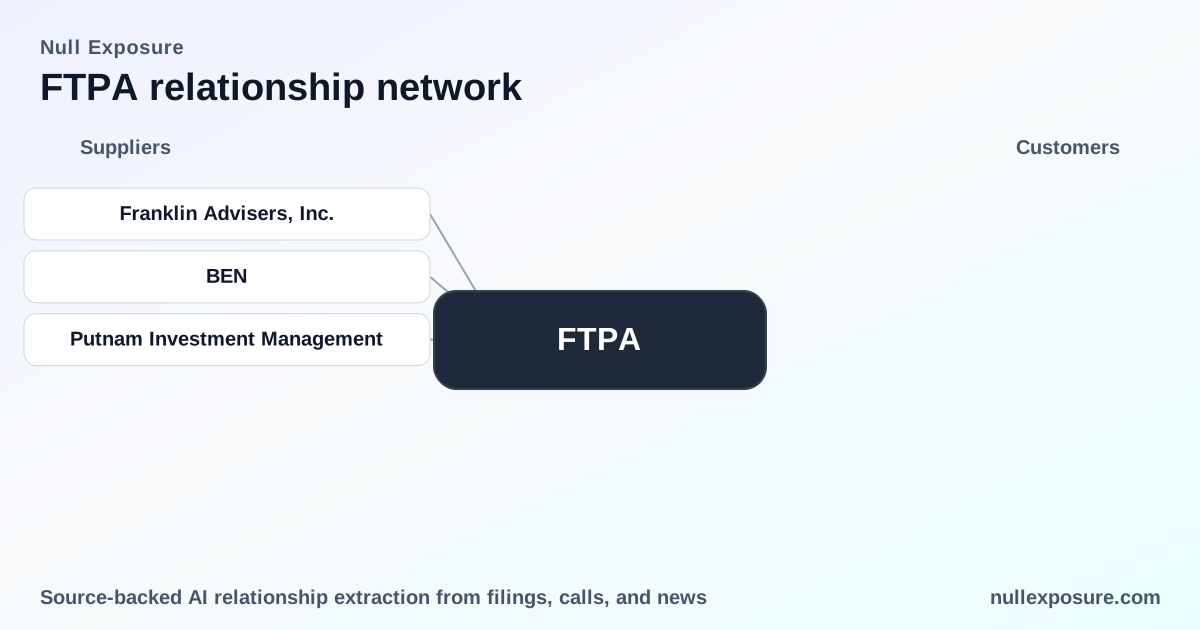
Franklin Advisers, Inc. is the primary portfolio manager named for the state municipal series that includes FTPA. Franklin Advisers is responsible for the suite’s day‑to‑day portfolio management and investment decisions. According to a report on the funds’ launch, Franklin Advisers will handle portfolio management across the new state municipal income ETFs (Nov 11 launch date). (Source: Sahm Capital news report, Nov 13, 2025 — https://www.sahmcapital.com/news/content/franklin-templetons-state-municipal-bond-etfs-hit-the-market-offering-tax-free-income-low-fees-2025-11-13)
Franklin Templeton Investment Management Limited acts as a sub‑advisor on the suite, supporting portfolio management and potentially providing regional or market-specific execution and research capabilities. The same launch coverage lists Franklin Templeton Investment Management Limited among the sub‑advisory providers for the municipal income ETFs. (Source: Sahm Capital news report, Nov 13, 2025 — https://www.sahmcapital.com/news/content/franklin-templetons-state-municipal-bond-etfs-hit-the-market-offering-tax-free-income-low-fees-2025-11-13)
Putnam Investment Management is also listed as a sub‑adviser on the fund family, providing complementary portfolio resources and sub‑advisory services for the series that includes FTPA. The launch note describes Putnam’s role as sub‑advisory support alongside Franklin Templeton. (Source: Sahm Capital news report, Nov 13, 2025 — https://www.sahmcapital.com/news/content/franklin-templetons-state-municipal-bond-etfs-hit-the-market-offering-tax-free-income-low-fees-2025-11-13)
What these supplier relationships imply about FTPA’s operating model
-
Contracting posture and governance: The fund uses a multi‑party operating model — a named portfolio manager plus multiple sub‑advisors — which spreads execution and research responsibilities across established asset managers. This structure creates clear lines of delegated authority for investment decisions while centralizing fund-level responsibilities (compliance, distribution, custody) at the sponsor or fund administrator level.
-
Concentration and criticality: Dependence on Franklin Advisers as the primary manager is a concentrated control point for FTPA’s investment strategy and intraday decision-making. Sub‑advisors such as Putnam and Franklin Templeton Investment Management Limited reduce single‑point risk for specialty capabilities but do not eliminate the criticality of the lead manager for unified portfolio execution.
-
Maturity and supplier pedigree: All named suppliers are established asset managers with institutional operations, which signals operational maturity and standardized outsourcing practices (sub‑advisory agreements, compliance frameworks, reporting lines). That pedigree reduces execution risk compared with nascent managers, but does not remove counterparty risk or strategic alignment considerations.
-
Commercial model: Monetization flows to the sponsor and the managers through the fund’s expense structure; sub‑advisory agreements typically include fee splits that affect net economics to the sponsor and to each manager. For investors, that means performance and fee pressure directly influence supplier economics.
There are no constraint excerpts in the available data that flag contractual issues or special limitations on these relationships; the absence of explicit constraints in the record is itself a company‑level signal that there were no public supplier constraints captured in the dataset.
For supplier mapping and deeper counterparty exposure analytics, visit https://nullexposure.com/.
Operational and investment risks that matter for counterparties and allocators
-
Concentration risk around the lead manager. While sub‑advisors diversify skill sets, Franklin Advisers’ role as lead manager concentrates decision authority and creates a single escalation path for performance issues.
-
Sub‑advisor alignment and mandate drift. Multiple managers require robust governance to keep the fund’s risk profile consistent; differences in trading style or tax‑aware municipal structuring can produce intra‑party friction if not tightly specified in the sub‑advisory agreements.
-
Fee and competitive pressure. State municipal ETFs compete on fee and tax efficiency; sponsors and sub‑advisors must coordinate to sustain net economics without eroding margins or introducing execution slippage.
-
Operational continuity and reputational risk. All named managers are established, reducing near‑term operational continuity risk, but transitions between managers or changes in sub‑advisory scope are material events for the fund and its counterparties.
Practical monitoring checklist for investors and operations teams
- Confirm the lead manager agreement terms and escalation procedures; prioritize review of decision rights and termination clauses.
- Review fee allocation across sponsor and sub‑advisors and model how fee compression would affect each supplier’s incentives.
- Validate reporting cadence and granularity from each sub‑advisor to ensure consistent risk and performance attribution.
- Monitor regulatory filings and launch disclosures for any changes to sub‑advisory roles or stated investment objectives.
Bottom line: what to watch and the investor action plan
FTPA is managed within a multi‑advisor framework that centralizes portfolio authority at Franklin Advisers while leveraging Putnam and Franklin Templeton Investment Management Limited for sub‑advisory support. That structure offers institutional depth and operational maturity, but creates a concentrated control point at the lead manager that investors and counterparties must monitor.
If you evaluate supplier risk as part of portfolio allocation or vendor diligence, prioritize contractual terms, fee splits, and governance mechanisms that govern the lead‑sub advisor relationship. For a broader supplier map and comparative exposure analytics, visit https://nullexposure.com/.
Contact NullExposure through the site to schedule a supplier risk briefing or to access tailored counterparty exposure reports.