Fortive (FTV): Supplier posture after the EA Elektro-Automatik acquisition — what investors and operators should know
Fortive operates as a diversified industrial-technology conglomerate that monetizes through product sales, aftermarket services, and targeted acquisitions that expand addressable markets and recurring revenue pools. The company grows by buying specialty instrumentation and software businesses, integrating them into a high-margin industrial portfolio, and capturing service, consumables and software-enabled recurring revenues while tightening operational leverage across the group. For investors and procurement-focused operators, the important signals are Fortive’s acquisition-driven revenue mix, its binding purchase obligations, and a supplier landscape that the company reports as broadly de‑concentrated. Learn more at https://nullexposure.com/.
One acquisition that changes the supply map: why EA Elektro-Automatik matters
On January 3, 2024 Fortive acquired EA Elektro-Automatik Holding GmbH, a supplier of high-power electronic test solutions used in energy storage, automotive electrification, hydrogen, and renewables test environments. According to Fortive’s 2024 Form 10‑K, the deal brings capability in high-power testing and aligns with Fortive’s strategy to target growth end markets where electrification and decarbonization drive instrument demand.
This acquisition is strategically consistent with Fortive’s roll-up model: add a niche, high-technical-margin business addressing secular tailwinds, and then scale commercial channels and aftermarket services. For operators, the immediate implications are an expanded vendor base for high-power test equipment and potential cross-selling into Fortive’s existing channels; for investors, EA increases Fortive’s exposure to high-growth segments of electrification and energy storage.
All disclosed supplier relationships (complete list)
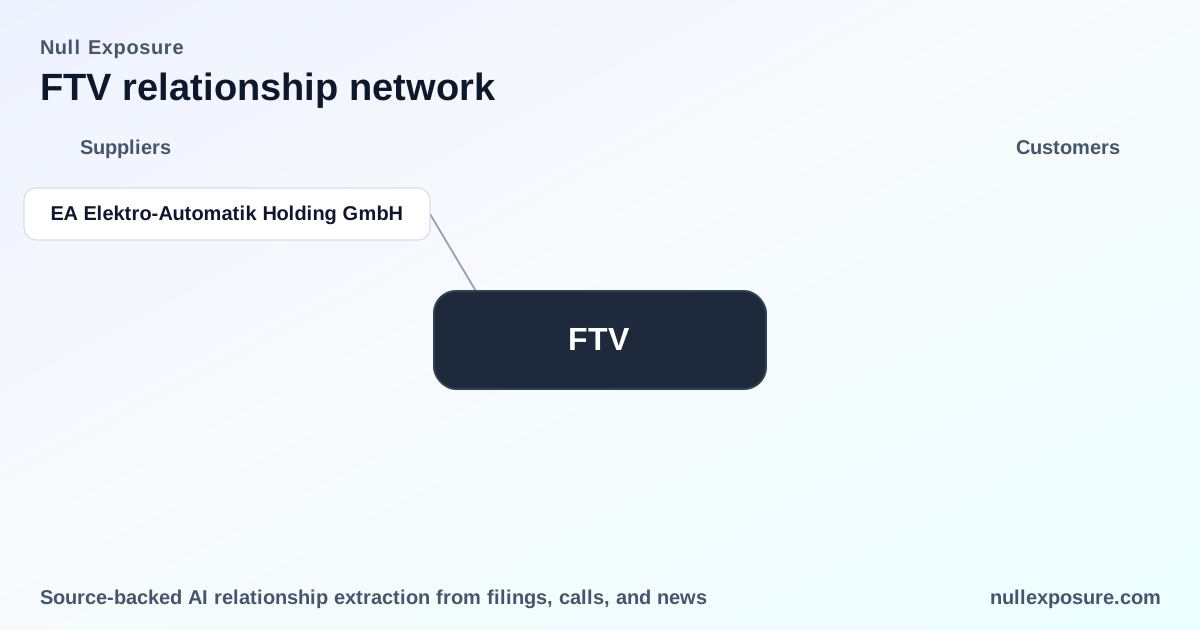
- EA Elektro-Automatik Holding GmbH — Fortive disclosed the January 3, 2024 acquisition of EA, describing it as a leading supplier of high-power electronic test solutions for energy storage, mobility, hydrogen, and renewable energy applications. This is recorded in Fortive’s 2024 Form 10‑K and reflects a deliberate step into electrification test markets. (Source: Fortive 2024 Form 10‑K filing.)
What the disclosure constraints tell you about Fortive’s operating model
Fortive’s supplier-related disclosures provide clear, company-level operating signals:
-
Supplier concentration is low. Fortive states that “based on allocation of annual spend among our various suppliers, no single supplier is material,” signaling a procurement posture that avoids dependency on any single external vendor and reduces single-point supply disruption risk. This is a company-level disclosure rather than a comment on any single supplier.
-
There are material contractual commitments at the company level. Fortive reports aggregate purchase obligations of $446 million as of December 31, 2024, with roughly $366 million expected to settle within one year. Those are enforceable purchase obligations with fixed/minimum quantities or price provisions, indicating Fortive uses binding supplier contracts to secure supply and pricing for near-term needs.
-
Guarantees exist but are not balance-sheet critical. Fortive disclosed approximately $61 million of guarantees (standby letters of credit, bank guarantees, performance and bid bonds) at year‑end 2024, and the company characterizes those instruments as not material to consolidated financials. That indicates contingent exposures are monitored and capped relative to corporate scale.
Collectively, these constraints indicate a structured contracting posture: Fortive pursues binding, short-term purchase commitments to control supply and price, spreads supplier exposure across many vendors, and keeps contingent guarantees at manageable levels.
Strategic implications for investors and operators
Fortive’s supplier posture and the EA acquisition produce several actionable implications:
-
Revenue and margin upside from electrification exposure. EA expands Fortive’s addressable market into high-power test systems, where product ASPs and aftermarket/service attach rates typically exceed commodity instrument lines. This supports higher-margin growth if integration preserves technology and customer relationships.
-
Integration and execution are the near-term risk vector. Acquisitions bring execution risk: cultural integration, cross-sell effectiveness, and retention of engineering talent. Monitor Fortive’s post-close integration commentary and cost-synergy cadence in subsequent quarters.
-
Committed spend cushions supply but raises cost exposure. The $446 million of purchase obligations gives Fortive predictable supply flow and bargaining power, but it also means Fortive carries exposure to input-cost inflation or demand shifts in the short term given that most obligations settle within a year.
-
Low single-supplier concentration reduces catastrophic supply risk. The company’s explicit statement that no single supplier is material reduces the risk of outsized disruption from one counterparty, which is important for industrial instrumentation companies reliant on specialized components.
Key risk checklist for investors and procurement teams:
- Integration success metrics for EA (customer retention, margin preservation, cross-sell uptake).
- Monitor quarterly disclosures for any movement in purchase obligation totals or guarantee levels.
- Watch supplier lead times and input-cost pass-through capability; committed spend amplifies exposure to inflation for the near term.
- Evaluate whether Fortive preserves the specialized engineering autonomy that makes acquired platform companies valuable.
Where to look next and practical steps
For investors evaluating Fortive’s supplier exposure and acquisition effectiveness, prioritize the following:
- Review the company’s quarterly commentary for integration milestones tied to EA and other acquisitions.
- Track purchase obligation trends in subsequent Form 10‑Q/10‑K filings to see whether committed spend increases or contracts are renegotiated.
- For operators, map cross-sell opportunities from EA into existing Fortive channels and validate aftermarket service economics.
If you want deeper supplier-level visibility and ongoing monitoring of Fortive’s procurement posture, visit https://nullexposure.com/ for structured supplier intelligence and continuous tracking.
Bottom line — what to remember
Fortive is executing a classic industrial-platform strategy: acquire specialty instrumentation assets (like EA Elektro-Automatik), fold them into a larger commercial and services engine, and monetize through product sales plus recurring aftermarket streams. Company disclosures signal low supplier concentration but significant near-term purchase commitments and modest contingent guarantees, which together imply a disciplined contracting posture that reduces single-supplier risk while creating short-term committed exposure. For investors, the scorecard is straightforward: growth via targeted acquisitions with operational execution and procurement cost dynamics as the principal value drivers.
For ongoing monitoring of Fortive’s supplier relationships and acquisition outcomes, explore additional resources at https://nullexposure.com/.