Fulcrum Therapeutics (FULC): What the underwriter roster and supplier footprint tell investors
Fulcrum Therapeutics operates as a clinical‑stage small‑molecule biopharma that monetizes through licensing, strategic partnerships, and capital markets financing. The company advances assets through early clinical trials while relying on in‑licensing (notably GSK and CAMP4 agreements) for programs, and on third‑party contract manufacturers and CROs to supply and run trials — creating a supplier‑centric operating model that drives both cost structure and execution risk. For deeper supplier analytics and counterparty mapping, visit https://nullexposure.com/.
Why the recent financing is a strategic signal
Fulcrum’s December 2025 / March 2026 equity activity — an offered and then priced public equity transaction — confirms capital markets are presently the primary monetization lever for near‑term operational runway. The company named a clear syndicate of underwriters for the offering, which indicates market access and institutional distribution capacity to place shares with investors.
- Funding channel: The public offering priced and upsized across December 2025 into March 2026, reflecting management’s reliance on equity issuance to fund trials and operations (news coverage in December 2025 and March 2026).
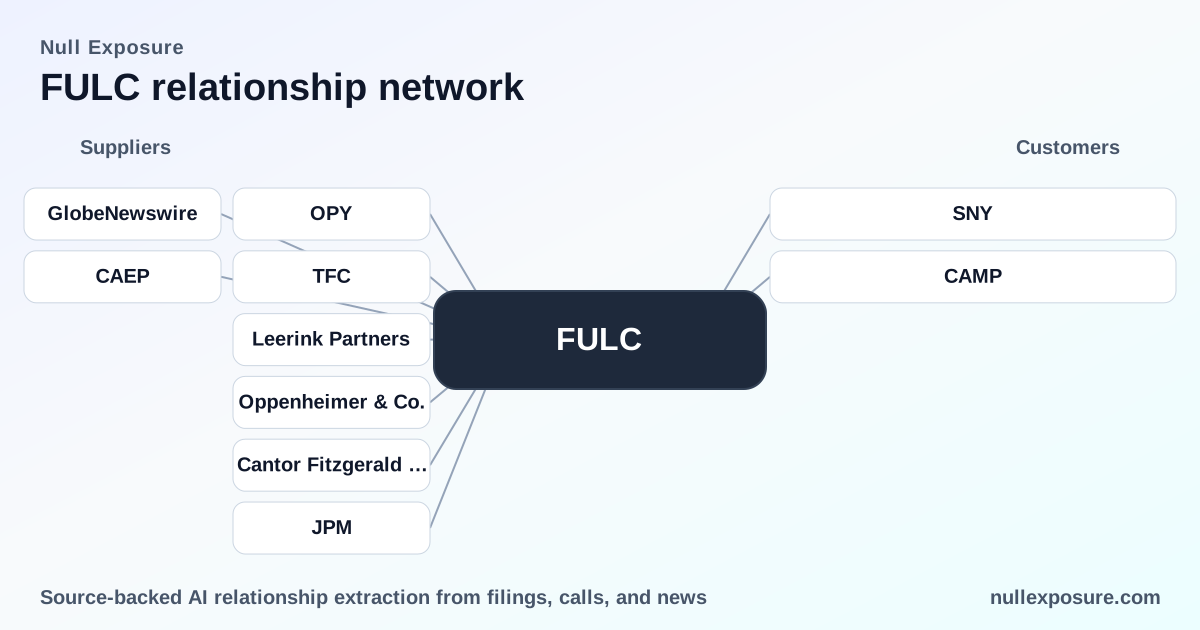
- Institutional distribution: Book‑running managers include J.P. Morgan, Leerink Partners and Cantor; additional underwriters include Oppenheimer & Co. and Truist Securities — an institutional roster that supports broad retail and institutional distribution.
If you want a full, auditable mapping of Fulcrum’s counterparties and the documents that name them, explore the supplier intelligence hub at https://nullexposure.com/.
Counterparty-by-counterparty: the complete roster investors should note
Below are each of the counterparties captured in public reporting on Fulcrum’s financing and communications, with concise descriptions and source context.
- J.P. Morgan — Named as a book‑running manager and underwriter for Fulcrum’s public offering. This places JPM in a lead distribution role for the transaction (coverage of the offering in December 2025 and March 2026, including Yahoo Finance and QuiverQuant summaries).
- Leerink Partners — Identified as a book‑running manager and book‑runner on the offering, signaling institutional biotech syndication expertise on the deal (Yahoo Finance and GlobeNewswire, Dec 2025 / Mar 2026).
- Cantor Fitzgerald & Co. — Listed as a book‑running manager and underwriter for the proposed and priced offering, reflecting participation in the institutional sell‑side syndicate (GlobeNewswire and QuiverQuant coverage, Dec 2025 / Mar 2026).
- Cantor (CAEP) — Cited in reporting as one of the book‑running managers; public reporting distinguishes Cantor in both abbreviated and full firm naming conventions across outlets (Yahoo Finance, Mar 2026).
- Oppenheimer & Co. — Named among the underwriters and book‑running managers for the equity offering, representing an active role in placement and distribution (QuiverQuant and GlobeNewswire, March 2026 / December 2025).
- Truist Securities — Cited as an underwriter and book‑running manager for the offering, providing regional and institutional distribution support (QuiverQuant and GlobeNewswire, Dec 2025 / Mar 2026).
- GlobeNewswire — Served as the distribution channel for Fulcrum’s press release announcing the proposed offering and clinical updates; several summaries and downstream outlets reference the GlobeNewswire release (GlobeNewswire press release, Dec 8, 2025).
Each statement above is drawn directly from public reporting around Fulcrum’s December 2025 proposed offering and the March 2026 pricing announcement as distributed through GlobeNewswire and summarized by outlets including Yahoo Finance and QuiverQuant.
What the supplier constraints reveal about Fulcrum’s operating model
Fulcrum’s public filings and press releases collectively describe an outsourced operating posture with several defining characteristics:
- Contracting posture: outsourced and partner‑centric. Fulcrum explicitly discloses no internal manufacturing facilities and dependence on contract manufacturing organizations (CMOs) and contract research organizations (CROs) for clinical supplies and trial execution. That creates a procurement focus on CMO/CRO relationships and commercial‑scale transfer planning.
- Concentration and criticality: manufacturing and CROs are single points of execution. Reliance on third parties for manufacturing, packaging, sterilization, storage and distribution makes those suppliers mission‑critical; any disruption to a CMO or a CRO could materially affect timelines and costs.
- Maturity: clinical‑stage, scale‑up risk. The company is in early clinical development (Phase 1b activity cited, including trials in Africa), meaning suppliers are handling small‑batch clinical supply now and will need to support scale‑up for later‑stage trials or commercial manufacture. That creates execution and capacity risk during the next funding and clinical milestones.
- Role diversity: licensing + service mix. Fulcrum functions as both licensor (holding and receiving exclusive licenses such as those from GSK and CAMP4) and a buyer of manufacturing and services, which aligns its commercial model to capture value through IP and partnerships while outsourcing physical product obligations.
These operating signals translate to procurement priorities: contract terms that protect supply continuity, scalable quality agreements, and contingency manufacturing plans are essential.
If you want a mapped view of these supplier roles and the underlying filings that generate them, start here: https://nullexposure.com/.
Investment implications — risks, optionality, and monitoring priorities
- Near‑term financing risk is real but manageable. Equity issuance is the primary runway lever; the underwriter syndicate improves access but dilutes equity. Investors should track cadence of follow‑on financing and covenant/timing language from these transactions.
- Execution risk is concentrated in CMOs/CROs. Any delay in third‑party manufacturing or trial execution will compress timelines and raise cash burn. Active supplier oversight and secondary suppliers for clinical supply are positive indicators to watch.
- Licensing upside is intact. Exclusive licenses from GSK and CAMP4 institutionalize program value beyond Fulcrum’s in‑house R&D and provide potential revenue streams through milestones or future partnerships. Those contracts materially shape upside if clinical data validate programs.
- Geographic footprint demands operational nuance. The company’s Phase 1b trial activity in Africa introduces regional regulatory and logistics complexity that investors should monitor as a signal of both access to target populations and execution risk in EMEA jurisdictions.
Bottom line and next steps for investor diligence
Fulcrum’s current profile is that of a capital‑dependent clinical operator with outsourced delivery and institutional underwriters providing market access. The financing roster confirms distribution capability; the licensing deals and supplier dependence define the pathway to value capture and the critical risks.
For a complete supplier and counterparty map tied to primary documents, visit https://nullexposure.com/ and evaluate counterparties against your portfolio risk appetite. If you need a tailored supplier risk brief or a counterparty continuity score for Fulcrum, our team can prepare an investor‑grade memo keyed to the filings and press releases cited above — start at https://nullexposure.com/.