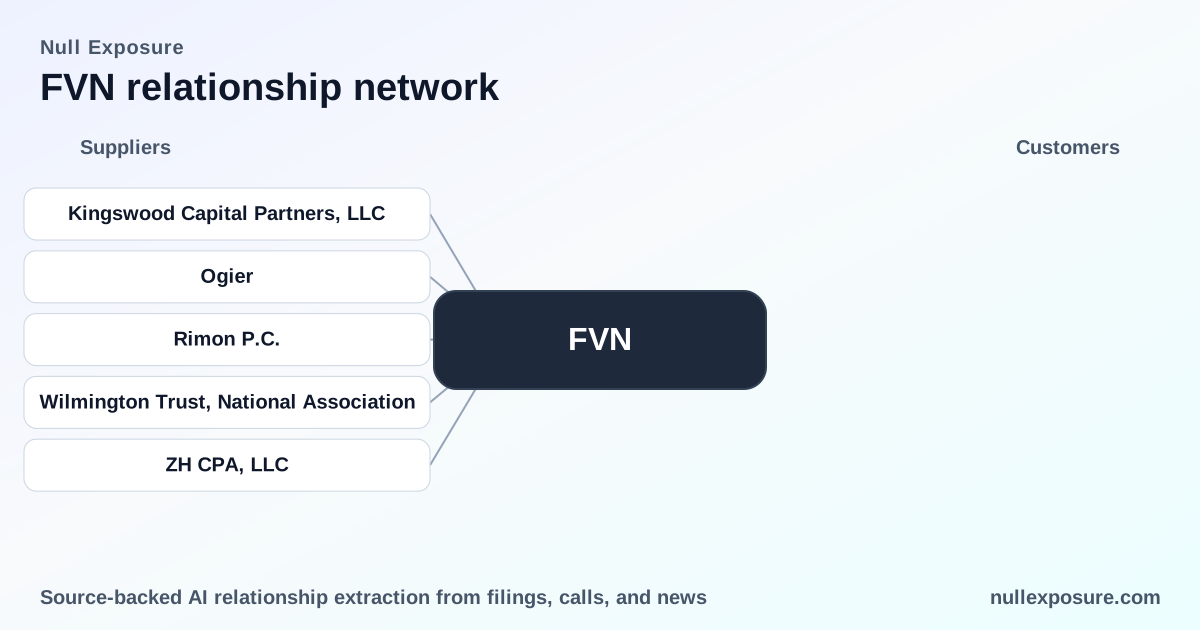
Future Vision II Acquisition Corporation (FVN) — supplier relationships and operating constraints investors should price in
Future Vision II Acquisition Corporation is a NASDAQ-listed SPAC that raises capital through an IPO and holds proceeds in trust until a business combination is completed; it currently records no operating revenue and no EBITDA, and its economics are driven by sponsor financing, underwriting economics and the ability to consummate a de‑SPAC transaction. Investors are buying exposure to deal execution, not recurring cash flow — the company monetizes only through successful merger outcomes, sponsor economics and any deferred underwriting arrangements tied to a business combination. For an investor or operator evaluating FVN as a counterparty, the supplier roster is small but functionally critical: underwriting, legal, auditing and trustee services are the plumbing that enable a SPAC to close a deal and remain compliant. Learn more at https://nullexposure.com/.
The operating posture: short-term, sponsor-centric, and execution-focused
FVN’s supplier relationships reflect a classic SPAC operating model: short-term contractual commitments, recurring low-value subscription arrangements with the sponsor, and a handful of specialist partners engaged to support an IPO and future transaction close. The registration and related disclosures indicate:
- Short-term contract posture: the company issued a promissory note to its sponsor that was due on a near-term maturity date, documenting early-stage, temporary financing to pay IPO expenses; the note was non‑interest bearing and unsecured. This signals a reliance on sponsor bridge funding during the formation and offering period.
- Subscription-style recurring spend with sponsor affiliates: FVN pays an affiliate of the sponsor $10,000 per month for office, utilities and administrative support — a predictable, low-dollar recurring charge that keeps overheads centralized with the sponsor.
- Active, early-stage relationships: the company accrued roughly $36,333 for sponsor-provided services through its first fiscal year, showing those supplier flows are already active and material to near-term cash management.
- Mixed spend bands at the company level: auditor fees totaled $70,000 for FY2024, while underwriting economics and convertible sponsor loans create larger contingent spend exposures in the $1M+ range disclosed in the registration statement (e.g., underwriting discounts and potential conversion options up to $1.5M). These figures reflect both fixed small-ticket operating costs and larger transaction-driven fees that will crystallize only if a business combination proceeds.
Taken together, these signals indicate a concentrated supplier ecosystem, short contract tenure, and high criticality: the listed providers are not optional conveniences — they are gatekeepers for SEC compliance, trust administration, and the IPO/closing mechanics.
How to read supplier risk into valuation and counterparty assessments
- Concentration: Two or three service providers (auditor, trustee, lead manager, legal counsels) carry outsized functional importance; disruption or conflicts here can delay a combination or trigger disclosure issues.
- Sponsor dependency: short-term loans and subscription payments to sponsor affiliates concentrate operational control and cost flows with insiders — this elevates counterparty risk if sponsor relationships sour.
- Fee structure: small recurring costs keep burn low today, but underwriting discounts and deferred commissions create deal-dependent contingent liabilities that investors should model into potential dilution and net proceeds at close.
- Maturity: relationships were established in FY2024 and remain active; they are operationally immature and purpose-built for executing the IPO and transitioning to a post‑combination entity.
Explore deeper supplier intelligence and comparable SPAC profiles at https://nullexposure.com/.
Relationship roll-call — who does what (and why it matters)
-
Kingswood Capital Partners, LLC — sole book-running manager for the offering. Kingswood led the IPO underwriting process, a functional role that controls syndication and underwriting economics for the transaction, according to a SPACInsider report covering the offering (March 9, 2026). Source: SPACInsider, March 9, 2026.
-
Ogier — Cayman Islands legal counsel to the company. Ogier provided offshore corporate and transactional counsel in support of the registration and IPO structure, per the same SPACInsider coverage. Source: SPACInsider, March 9, 2026.
-
Rimon P.C. — U.S. legal counsel on the initial public offering. Rimon handled U.S. securities and transactional documentation for the IPO, as reported in the SPACInsider article summarizing the offering. Source: SPACInsider, March 9, 2026.
-
Wilmington Trust, National Association — acting as trustee. Wilmington Trust is the trustee of the SPAC’s trust account and thus maintains custody of IPO proceeds pending a business combination, as noted in SPACInsider’s coverage. Source: SPACInsider, March 9, 2026.
-
ZH CPA, LLC — auditor for FY2024; billed approximately $70,000. ZH provided audit and review services and the registration filing discloses aggregate fees of about $70,000 for services from inception through December 31, 2024, reflecting a low but essential annualized audit spend. Source: IPO registration / FY2024 disclosures (period January 30, 2024 through December 31, 2024).
Each of these relationships is operationally essential for a SPAC: underwriting and counsel enable the IPO and deal documentation; the trustee holds capital; the auditor enables SEC reporting and comfort for investors.
Investment implications: what investors should pressure-test
- Execution risk dominates fundamentals. With zero revenue and no operating margin, FVN’s value is contingent entirely on completing a value-accretive business combination; supplier reliability and cost structures should be modeled into deal execution timelines.
- Sponsor-aligned costs create governance questions. Recurring payments to sponsor affiliates and short-term sponsor loans concentrate control and economic exposure with insiders; investors should review the registration statement for conflict disclosures and conversion mechanics (the filing notes up to $1.5M of sponsor loans may be convertible into units).
- Counterparty resilience matters more than price. Underwriter and trustee choice affects timing and the market reception for any proposed combination; legal and audit quality affect disclosure risk and time-to-close.
- Watch for crystallizing contingent costs at deal close. Underwriting discounts and deferred commissions are disclosed as post-combination items that can dilute public proceeds — model these as contingent liabilities in any valuation scenario.
Final read and next steps
FVN is a textbook execution-risk SPAC: small recurring supplier spend today, larger conditional fees on deal close, and heavy dependence on sponsor support and a tight set of specialist suppliers. For investors and operators assessing counterparty risk, the practical questions are execution timelines, sponsor incentives, and the continuity/independence of the supplier roster (audit, trustee, lead manager, and legal counsel).
If you need a concise supplier risk score or want comparative supplier maps across SPACs, start your review at https://nullexposure.com/. To commission a bespoke counterparty due diligence memo on FVN or similar vehicles, contact us through https://nullexposure.com/ — we translate supplier disclosures into actionable investor risk signals.