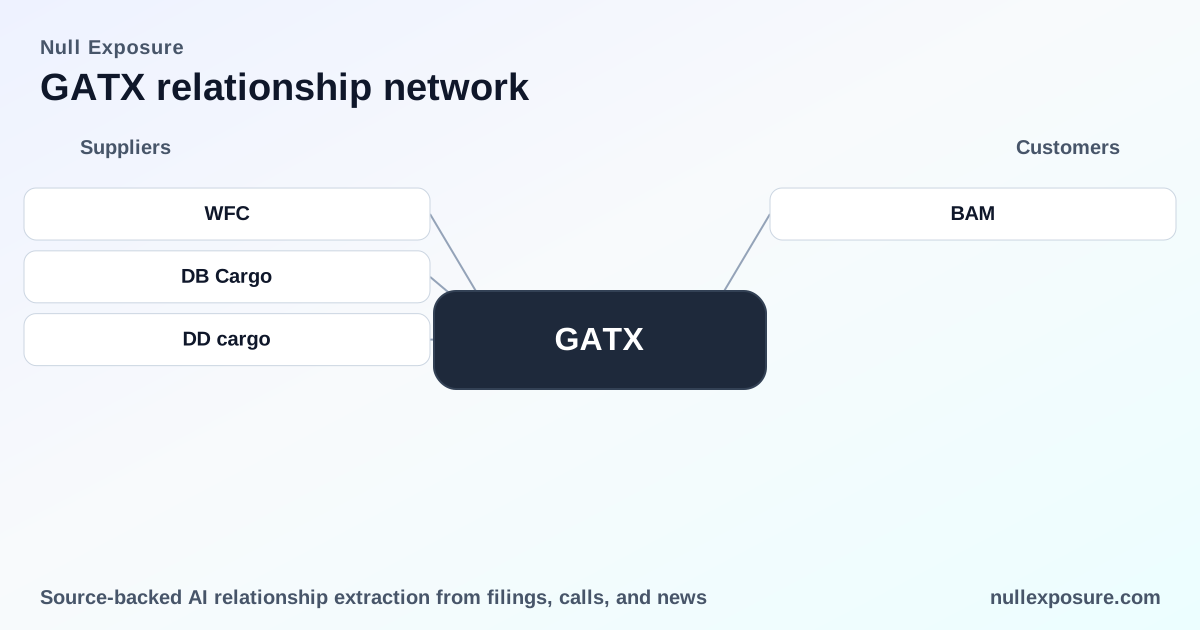
GATX supplier landscape: how recent rail-asset deals reshape counterparty risk and upside
GATX is a specialist lessor that monetizes transportation assets—primarily freight railcars and locomotives—through long-term operating leases, strategic sale-leasebacks and secondary-market remarketing. The company amplifies returns by combining fleet ownership with active asset rotation, joint-venture capital structures and targeted balance-sheet financing to acquire scale. Investors should read supplier and counterparty developments through two lenses: near-term integration and remarketing economics, and longer-term contracting posture that determines sourcing and fleet renewal costs. For a mapped view of supplier relationships and counterparties, visit https://nullexposure.com/.
How the 2025–2026 deals changed the playing field
GATX executed a series of large acquisitions in 2025–2026 that materially altered its supplier and counterparty map. The headlines are dominated by a joint venture with Brookfield Infrastructure Partners that purchased the bulk of Wells Fargo’s rail operating lease portfolio for roughly $4.2–$4.4 billion, while separate sale-leaseback activity added about 6,000 freight cars from DB Cargo. These are transformative transactions: they increase fleet scale, create substantial remarketing optionality, and shift financing and guaranty exposure to new JV arrangements. (See Mayer Brown, RailwayAge, and company filings/Q4 2025 commentary.)
Key counterparties and what each relationship means for GATX
Wells Fargo
GATX and Brookfield completed an acquisition of Wells Fargo’s wagon and locomotive leasing assets for roughly $4.2–$4.4 billion, buying the bulk of Wells Fargo’s rail operating-lease portfolio and substantially increasing GATX’s North American fleet. According to Mayer Brown (May 2025) and subsequent reporting by RailwayAge and Yahoo Finance (Q4 2025 / FY2026), that purchase was structured through a newly formed JV and closed around Jan. 1, 2026, delivering immediate scale and remarketing opportunities.
Wells Fargo Rail
The specific operating-lease portfolio was referenced as coming from Wells Fargo Rail; management characterized the portfolio acquisition as constituting all of Wells Fargo Rail’s operating leased assets and a key driver of Q4 FY2025 results. The Q4 2025 earnings-call transcript and coverage (InsiderMonkey and Finviz reporting in early 2026) confirmed the transaction’s centrality to GATX’s quarterly performance and secondary-market sales commentary.
DB Cargo
GATX’s GRE unit entered a sale-leaseback to acquire approximately 6,000 freight railcars from DB Cargo, one of Europe’s largest freight operators, expanding GATX’s international footprint and diversifying its asset mix. RailwayAge and GATX’s FY2025–FY2026 commentary (reported in Yahoo Finance and InsiderMonkey) describe this as one of GRE’s largest single transactions, enhancing leasing volume and revenue visibility from multi-year contracts.
DD cargo
Transcript excerpts in the Q4 2025 call refer to an acquisition described as nearly 6,000 railcars from “DD cargo” in the same context as the DB Cargo sale-leaseback; the reference aligns with company statements about a major freight-operator sale-leaseback closed in the period. The Q4 2025 earnings transcript (InsiderMonkey) cites this transaction as a distinct large closing that materially affected fleet growth.
What the constraint signal tells us about GATX’s supplier posture
GATX’s constraint data includes a company-level signal indicating that “Rail North America purchases new railcars from a number of manufacturers.” That excerpt is not tied to a named counterparty in the constraint, so treat it as a broader sourcing signal: GATX sources rolling stock from multiple manufacturers rather than relying on a single original-equipment supplier. This implies:
- Contracting posture: diversified upstream suppliers reduce single-vendor disruption risk and give GATX bargaining leverage on new-build pricing and delivery timing.
- Concentration: procurement is not concentrated by manufacturer, limiting supplier-side concentration risk.
- Criticality and maturity: relationships with manufacturers are strategic and ongoing; new-build channels remain critical for fleet renewal and growth, while sale-leasebacks and secondary purchases supplement supply.
Operational and financial implications for partners and investors
The Wells Fargo and DB Cargo transactions carry distinct operational consequences:
- Integration and remarketing pressure. Adding ~101,000 cars from Wells Fargo and ~6,000 from DB Cargo imposes immediate asset-management and remarketing tasks; successful redeployment determines near-term returns (RailwayAge; Yahoo Finance).
- Financing and guaranty exposure. The JV financing package included an unsecured $3.0 billion term loan and a $250 million revolver, reportedly led by Wells Fargo, with GATX providing a guaranty for the JV’s obligations—this alters sponsor credit exposure and leverage dynamics (TradingView report, FY2026).
- Revenue mix and margins. Management tied Q4 growth to gains on secondary-market sales and higher lease rates in select regions, suggesting the bolt-on purchases are already contributing to margin expansion (Finviz and company earnings commentary).
- Geographic and counterparty diversification. The DB Cargo sale-leaseback diversifies GATX’s portfolio into European-sourced assets and long-term lessee relationships, balancing North American concentration risk (RailwayAge; InsiderMonkey).
For a concise supplier risk profile and counterparty connectivity map, see https://nullexposure.com/ — the site aggregates these transactional relationships into operational risk signals.
What to watch next (practical investor checklist)
- Monitor JV remarketing rates and utilization statistics for the Wells Fargo fleet — these will determine whether the acquisition is accretive on an ROE and free-cash-flow basis.
- Track debt metrics and covenant cushions linked to the $3.0B term loan and revolver structure and the extent of GATX’s guaranty exposure.
- Observe lease-rate trajectory in North America and Europe — higher realized lease rates will validate the acquisitive strategy; weak pricing would compress the anticipated upside.
- Watch integration milestones for the DB Cargo sale-leaseback (asset deployment and lessee retention) as an indicator of international execution capability.
Bottom line: supplier moves create scale and new counterparty geometry
GATX executed large, strategic purchases that materially alter its supplier and counterparty profile: scale and remarketing optionality increased, and financing/guaranty exposure intensified through the Brookfield JV and associated bank facilities. The company’s sourcing posture—buying both secondary portfolios and new-builds from multiple manufacturers—positions it to manage supply-side risk while pursuing yield through active asset rotation. Investors should prioritize covenant transparency around JV financing, execution on remarketing, and early lease-rate outcomes as the best real-time gauges of deal success.
For a detailed supplier and counterparty map tied to portfolio exposures and event timelines, visit https://nullexposure.com/. For workflow and operational risk briefings tailored to fleet acquirers and lessors, see https://nullexposure.com/ now.