Gauzy Ltd. (GAUZ): supplier relationships and what they tell investors
Gauzy Ltd. commercializes advanced smart-glass technologies—electrochromic and Suspended Particle Device (SPD) systems—by selling integrated components and licensed modules into the automotive and architectural markets, and by providing engineering and product support for OEM integrations. The company monetizes through product sales to manufacturers and value-added engineering services that enable long-term embedded relationships with vehicle and building systems customers. For a focused supplier intelligence brief and relationship mapping, visit https://nullexposure.com/.
How Gauzy makes money, in plain language
Gauzy is a specialty materials and components supplier. Its core revenue stream derives from the sale of smart-glass products and related integration services to commercial and automotive customers who embed the technology into windows, sunroofs, façades, and interior surfaces. According to company filings through 2025-06-30, trailing twelve‑month revenue is $96.8M with gross profit of $29.0M, but the company is not yet profitable at the operating level (operating margin TTM: -62.4%). These metrics underline a business still in commercialization and scaling mode: revenue traction exists, but margins and profitability require continued execution on scale and unit economics.
Key financial and ownership signals:
- Market capitalization ~ $9.9M with revenue of ~$96.8M TTM — an uncommon profile that signals market valuation well below annual sales.
- High insider ownership (~31.5%) and institutional ownership ~23.7%, indicating concentrated control and selective institutional interest.
- Analysts list an average target price of $10 and show a single strong-buy rating in coverage — coverage is light but positive where present.
If you need a consolidated supplier and counterparty view across related vendors and advisors, explore the full offering at https://nullexposure.com/.
Why gauging supplier and advisor ties matters for Gauzy
Smart-glass suppliers operate at the confluence of manufacturing scale, materials sourcing, and customer engineering integration. For Gauzy, supplier and advisor relationships impact ramp speed, quality control, and buyer confidence. The company’s commercial model depends on predictable supply chains and credible investor relations and communications as it transitions from development contracts to volume OEM production. Supplier relationships are therefore strategic rather than transactional, with multi-year qualification cycles and integration risk that directly influence revenue visibility and margin trajectory.
Known relationships: what the record shows
Gauzy’s public relationship notices in the supplier scope are limited in this dataset, but they include one notable advisory/IR contact recorded in a corporate press release.
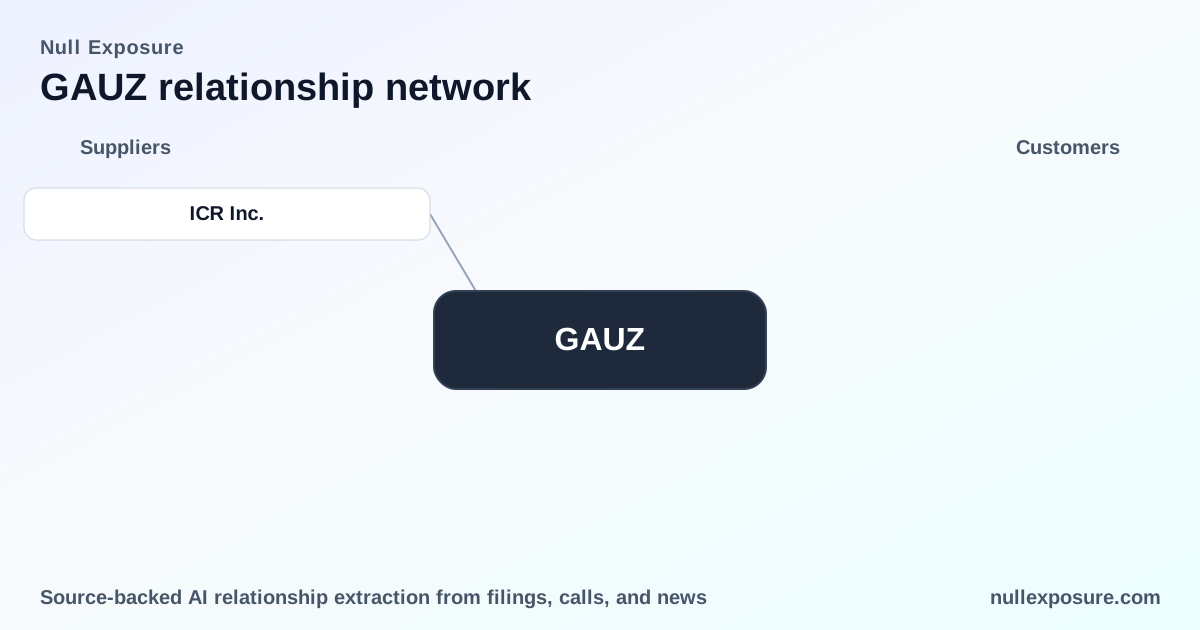
ICR Inc.
A company press release dated January 26, 2026 lists Dan Scott, ICR Inc., as the investor relations contact (noting an ir@gauzy.com address), indicating that ICR is acting as Gauzy’s investor relations and communications adviser for investor outreach; the release was distributed via GlobeNewswire on that date (source: GlobeNewswire, Jan 26, 2026 — https://www.globenewswire.com/news-release/2026/01/26/3226039/0/en/Gauzy-Ltd-Announces-Changes-to-Management-and-Board-of-Directors.html). This relationship is tactical for external communications around corporate actions and board/management announcements and serves as a channel to the investor community.
Constraints and company-level operating signals
No supplier-level contractual constraints are recorded in the provided material, so the following are company-level signals that matter for supplier relationships and investor assessment:
- Contracting posture — strategic and integrative. Gauzy’s products require OEM qualification and engineering collaboration; contracts will tend to reflect long lead times, acceptance testing, and milestone-based deliveries rather than simple spot purchase orders.
- Concentration risk — sector focus. The business is concentrated in automotive and architectural channels, so supplier exposure is tied to the cyclical health of those industries and to the company’s success securing a few large OEM customers.
- Criticality — high technical lock-in. Smart glass is an embedded component whose integration influences end-product differentiation; suppliers’ performance and quality materially affect customer relationships and warranty exposure.
- Maturity — commercializing with operational losses. With negative operating margins and negative returns on equity, Gauzy sits in a growth-but-not-yet-profitable phase; supplier terms, access to working capital, and scale will determine whether margins improve.
These signals create practical consequences for counterparties: expect long qualification cycles, potential concentration of supplier bargaining power if scale is limited, and heightened importance of communication and investor relations as the company executes commercialization.
Investment implications and downside vectors
For investors and operators evaluating supplier exposure to Gauzy, the following risk and opportunity map frames the commercial reality:
- Upside: If Gauzy converts engineering wins into multi-year OEM supply agreements, revenue scale should improve gross and operating leverage. A modest analyst target (average $10) suggests upside if execution accelerates.
- Downside: Current operating losses and a market valuation much smaller than annual revenue create volatility risk: failure to secure scale contracts or disruptions in supply/quality would compress the company’s already thin market valuation and limit access to capital.
- Governance and communications matter. The use of an external investor-relations firm like ICR highlights the company’s need to manage market perception during governance changes and scaling events (see GlobeNewswire release, Jan 26, 2026).
If you want an operational supplier risk scorecard or a relationship heat map against OEMs and advisors, see how we visualize these dependencies at https://nullexposure.com/.
What to watch next
- Customer qualification wins and any disclosures of multi-year purchase agreements with vehicle or façade OEMs.
- Gross-margin trajectory over the next 2–4 quarters as production scales.
- Supply-chain resilience, including component sourcing announcements or contract manufacturers added to the supply base.
- Communications cadence and governance updates: monitor releases and investor presentations—ICR’s role will be visible around such announcements (GlobeNewswire, Jan 26, 2026).
Bottom line
Gauzy is a technology supplier at the commercialization inflection: product-market fit exists, but profitability and scale remain the critical tests. The public record shows active investor-relations engagement through ICR during a governance announcement, underscoring management’s focus on external messaging as it navigates the next phase. For a deeper look at supplier-level exposure and to map counterparty concentration across Gauzy’s ecosystem, consult the full supplier intelligence resource at https://nullexposure.com/.