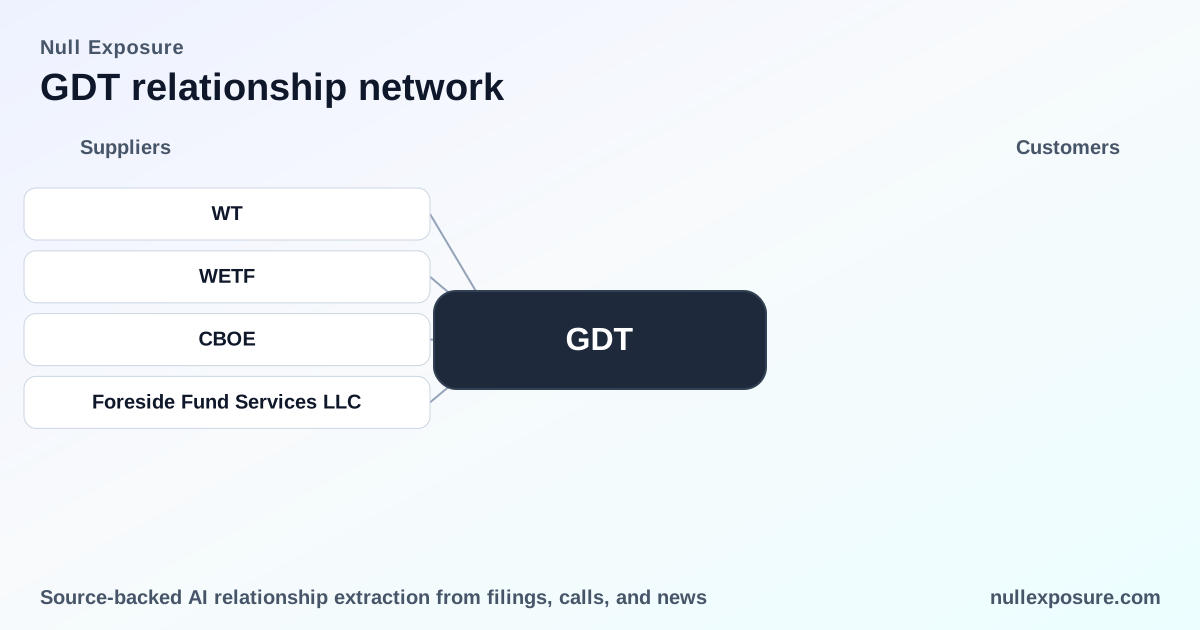
GDT: Who Supplies the Fund and What That Means for Investors
Thesis: GDT is a WisdomTree-sponsored exchange-traded fund—launched in March 2026—that monetizes through management and operating fees charged to fund assets and through distribution channels that support trading and market access. The fund’s structure relies on a conventional ETF operating model: an issuer/advisor charges an expense ratio, a distributor handles client-facing sales and regulatory disclosure, and an exchange provides the trading venue that enables secondary-market liquidity. For investor due diligence and supplier-risk mapping, track sponsor economics, distributor roles, and exchange listing dynamics. Visit https://nullexposure.com/ for a full supplier mapping service and ongoing monitoring.
Why the launch and expense structure matter to investors
WisdomTree announced the launch of the WisdomTree Efficient TIPS Plus Gold Fund (ticker GDT) on March 9, 2026, and set an expense ratio at 0.30%, signaling a competitive fee position for a multi-asset exposure product. According to the launch release, the fund listing on a major exchange is a deliberate choice to reach institutional and retail liquidity pools, which directly affects the speed at which assets can scale and fee revenue accrues. The expense ratio and channel choices define near-term revenue pacing: low fees increase adoption potential but require scale to generate meaningful management income.
For active supplier-risk monitoring and to see how GDT’s supplier graph evolves, go to https://nullexposure.com/.
Supplier relationships and what each party actually does
WisdomTree, Inc.
WisdomTree, Inc. is the fund sponsor and issuer for GDT and is the entity that stands behind the product in the market; the public announcement of the new fund on March 9, 2026 confirms the company issued the fund with the stated expense ratio. According to the March 2026 press release, WisdomTree positioned the product as part of its capital-efficient ETF lineup designed to combine inflation-protected bonds with gold exposure on a single ticker (Yahoo Finance, March 9, 2026).
Takeaway: WisdomTree is the revenue-facing owner of the product and the primary economic beneficiary of fee income.
Chicago Board Options Exchange (CBOE)
GDT was listed for trading on the Chicago Board Options Exchange at launch, which establishes the exchange as the market venue that provides secondary liquidity and price discovery for the fund (Yahoo Finance, March 9, 2026). The choice of CBOE affects market structure attributes such as spreads, maker-taker incentives, and the roster of market makers that will support the ETF.
Takeaway: Exchange listing is critical to tradability and investor access; CBOE selection influences liquidity mechanics and execution quality.
Foreside Fund Services LLC
Foreside Fund Services LLC is identified as the distributor for GDT, meaning it handles the regulated distribution chain, prospectus distribution, and intermediary relationships required for product placement (TradingView listing, March 2026). The distributor role typically includes oversight of sales materials and distribution compliance, which materially affects go-to-market and retention with intermediated channels.
Takeaway: Distributor reliability and compliance capability directly influence product uptake among advisors and platforms.
WisdomTree Asset Management, Inc.
WisdomTree Asset Management, Inc. is named as the primary advisor responsible for portfolio implementation and day‑to‑day investment decisions for the fund (TradingView listing, March 2026). The advisor’s investment process, trading relationships, and operational controls determine realized performance versus the fund’s stated strategy and therefore investor satisfaction and retention.
Takeaway: The advisor is the operational engine of the product; its capabilities set performance and tracking outcomes.
Operating-model constraints and company-level signals
Presenting company-level signals relevant to supplier risk and business model durability (not attributed to any single named relationship):
- Contracting posture: The fund follows standard ETF contracting conventions—fee-for-service relationships with an advisor, distributor, and exchange—indicating predictable counterparty arrangements and well-understood legal agreements that favor rapid onboarding of suppliers.
- Concentration and sponsor dependency: As a newly launched product, initial economic outcomes are concentrated on the sponsor’s ability to seed assets and to leverage existing distribution channels; the fund will rely on internal cross-sell and third‑party platforms to scale.
- Criticality of traded listing and distribution: Early revenue realization is tightly coupled to exchange liquidity and distributor placement; limited secondary-market depth or distribution reach would compress early fee capture.
- Maturity signal: The fund’s FY2026 launch date is an explicit maturity indicator: the product is in an early commercial phase, requiring capital and marketing investment to reach break‑even fee revenue.
These signals indicate that supplier risk is manageable within established ETF frameworks, but commercial success is conditional on rapid asset accumulation and distribution effectiveness.
Investment implications: risk, return and monitoring priorities
The combination of a low expense ratio and an exchange-listed structure creates both opportunity and a set of execution risks:
-
Opportunities
- Low fees can drive rapid asset inflows if distribution and market making align.
- Sponsor branding and an institutional listing accelerate trust and platform adoption.
-
Risks
- Early-stage concentration of fee revenue depends on effective distribution and market liquidity; failure to scale suppresses sponsor economics.
- Dependence on third-party distributors and exchanges introduces operational and reputational counterparty risk if onboarding or compliance issues arise.
For ongoing due diligence, monitor asset growth, bid-ask spreads on CBOE, placement activity through established platforms and distributor communications. For tailored supplier mapping and continuous risk alerts, see https://nullexposure.com/.
Bottom line: what investors and operators should act on now
GDT is a conventionally structured ETF backed by WisdomTree with the usual supplier palette—advisor, distributor, and exchange—already in place at launch. Key evaluation criteria are rate of asset accumulation, quality of secondary-market liquidity, and distribution penetration. Investors should prioritize tracking these commercial KPIs over the next 6–12 months to determine whether the fund’s fee economics will scale into a meaningful contributor to sponsor revenues.
If you want a detailed supplier exposure report or automated monitoring for GDT’s counterparties, visit https://nullexposure.com/ to request a tailored brief.