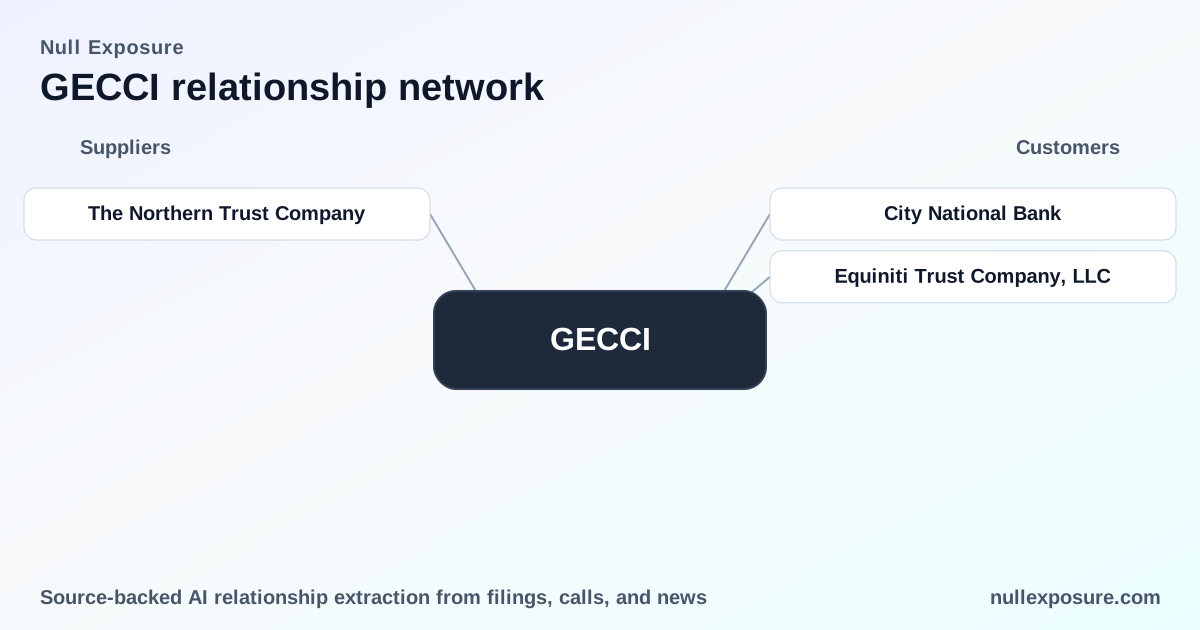
Great Elm Capital (GECCI) — supplier map and implications for investors
Great Elm Capital issues 8.50% notes due 2029 and operates as an externally-managed investment vehicle that monetizes by collecting management and incentive fees while generating cash flow from a diversified portfolio of private equity, debt and real estate positions. Investors buy the GECCI note for predictable income backed by the issuer’s portfolio, while operators and counterparties capture recurring fee revenue tied to asset servicing and management. For acquisition, monitoring or counterparty diligence, the supplier relationships disclosed in the company filings reveal the operational plumbing that underpins the note’s economics and operational risk profile. For deeper supplier intelligence, visit https://nullexposure.com/.
Quick snapshot: how GECCI runs and earns
Great Elm raises capital via public notes and invests in middle‑market secured and senior secured debt and select income-generating equity positions. The company pays an external manager for investment and administrative services and relies on third‑party custody and banking arrangements to support asset safekeeping and liquidity. The publicly-issued GECCI notes are part of a suite of maturities that create a staggered liability profile into 2029. According to the issuer’s description in regulatory filings, fees for external management are a recurring line item and amounted to 4,456 in the most recent year as reported (see constraints and filings below).
Custody and administration: Northern Trust is the named custodian
The 2024 Form 10‑K records a formal custody arrangement: the company entered into a Custody Agreement with The Northern Trust Company dated July 1, 2023. This places custody and asset safekeeping with a major global custodian, reducing operational custody risk compared with smaller providers. According to GECCI’s FY2024 Form 10‑K, the Custody Agreement is in force and forms the basis for asset handling and settlement activity.
What the supplier footprint reveals about operating posture
The filing excerpts and extracted relationship signals combine into a clear operational profile for investors and counterparty managers:
- Long-term liability schedule. The filings explicitly list note maturities across the group, with GECCI’s tranche maturing in 2029, which creates a multi‑year funding runway and predictable cashflow obligations.
- Mid‑market investment focus. GECCI targets middle‑market credits with enterprise values roughly between $100 million and $2 billion; this anchors portfolio credit quality and counterparty selection toward specialist lenders and servicers.
- U.S.-centric portfolio concentration. The company reports a heavily U.S.-weighted portfolio as of December 31, 2024, signaling regional market and regulatory exposure concentrated in North America.
- Outsourced investment and administrative model. The company is externally managed and pays recurring management and incentive fees, producing a stable vendor spend profile in the low‑millions annually as reported in the filings.
- Active vendor relationships and operational dependency. Filings reference reliance on third‑party cybersecurity programs and banking facilities, indicating operational control is shared with service providers.
These operating signals affect contract negotiation, counterparty diligence and liquidity planning: long-dated liabilities compress refinancing windows but create predictable debt servicing; mid‑market asset concentration increases idiosyncratic credit risk but supports higher coupon capture; outsized reliance on external managers amplifies vendor and operational risk. For vendor-level due diligence and supplier maps, see https://nullexposure.com/.
Evidence from the filings (operational constraints)
- The company enumerates note maturities across 2026–2029, including the GECCI notes maturing April 30, 2029, establishing the long‑term contract posture in the liability stack (FY2024 filing).
- Management states the investment strategy focuses on secured and senior secured debt of middle‑market companies, defining the counterparty universe by enterprise value range (FY2024 filing).
- The portfolio composition reported as of December 31, 2024 is predominately U.S.-based, demonstrating geographic concentration (FY2024 filing).
- The 10‑K documents an Investment Management Agreement and an Administration Agreement with an external manager that the company compensates via base and incentive fees; fees for the year ended Dec. 31, 2024 are recorded as 4,456 in the report (FY2024 filing).
- The company’s debt facility language discloses a revolving credit agreement that was amended in late 2023 to extend maturity into 2027, indicating active short‑term liquidity arrangements alongside the long‑dated notes (FY2024 filing).
Relationship rundown: every disclosed supplier connection
The disclosures returned a concise supplier list; each relationship below is summarized and sourced from the company filing.
- The Northern Trust Company — GECCI has a Custody Agreement dated July 1, 2023 with The Northern Trust Company, placing custody and related settlement responsibilities with a global custodian. (Source: GECCI Form 10‑K, FY2024 — custody agreement language.)
Risk and opportunity implications for investors and operators
- Operational risk: Outsourcing investment management and administrative functions concentrates day‑to‑day control with third parties; filings specifically reference reliance on the manager’s cybersecurity program, making vendor governance a first‑order risk.
- Counterparty concentration: Heavy U.S. portfolio exposure and a middle‑market investment focus create concentrated credit exposure to a defined borrower cohort, which both enhances yield potential and increases idiosyncratic default risk.
- Liquidity and refinancing: The note maturity in 2029 provides a clear refinancing horizon; the company also maintains a revolving credit facility extended into 2027, indicating active liquidity management in the near term.
- Service continuity advantage: Use of a major custodian like Northern Trust reduces custody and settlement operational risk versus smaller providers and supports institutional investor confidence.
How to use this supplier intelligence
- For investment committees: incorporate vendor governance checks on the external manager’s cybersecurity, controls and business continuity as part of quarterly credit reviews.
- For ops teams and counterparties: validate custody reconciliation flows and settlement SLAs with Northern Trust to ensure no disconnects in asset servicing ahead of the 2029 note maturity.
- For credit analysts: model refinancing scenarios around the 2027 bank facility amendment and the 2029 note horizon to stress-test liquidity under adverse markets.
Explore the full supplier map and supporting documents at https://nullexposure.com/ to integrate these signals directly into your counterparty due diligence workflow.
Bottom line and next steps
Great Elm’s publicly‑reported supplier set is compact but strategically significant: external management drives recurring vendor spend, a major custodian handles safekeeping, and a short‑term bank facility complements the long‑dated note. These elements define both the operational strengths and the key points of failure that investors and operators should monitor through the life of the GECCI note. For institutional-grade supplier intelligence and continuous monitoring, visit https://nullexposure.com/ and incorporate these vendor signals into your investment and operational risk frameworks.