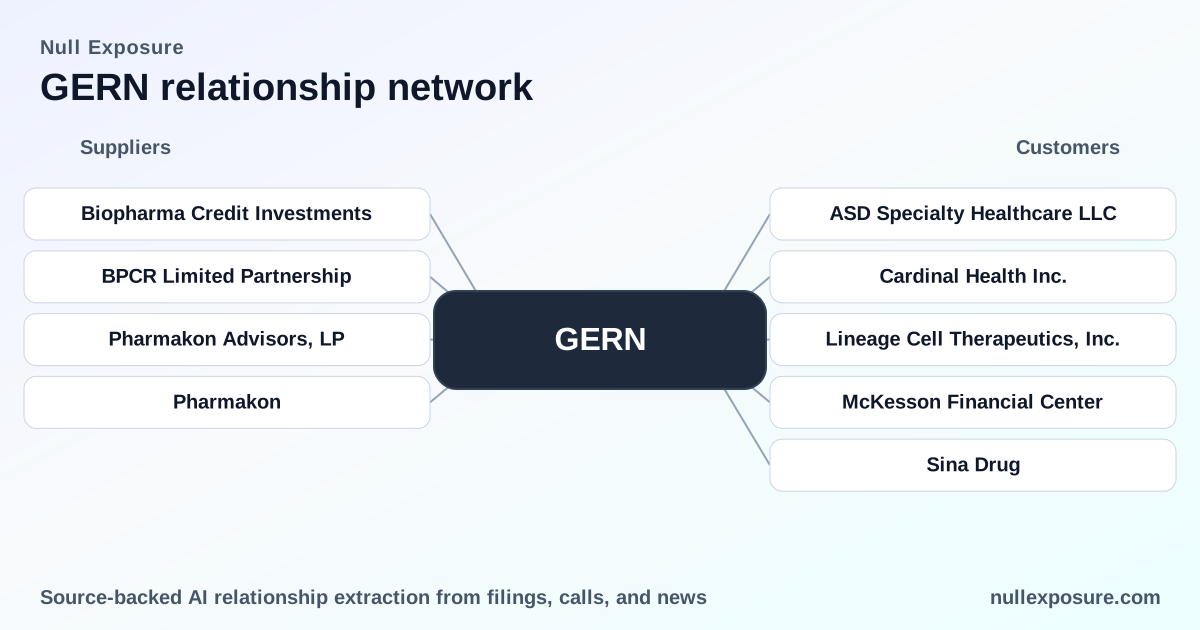
Geron Corporation (GERN): supplier and financing relationships that shape commercialization risk and runway
Geron Corporation develops and commercializes RYTELO for myeloid hematologic neoplasms and monetizes through product revenues and milestone-linked financing structures that support commercialization and scale-up. The company combines revenue from early commercial sales with structured loan facilities that unlock tranche-based capital tied to RYTELO performance, while outsourcing critical manufacturing and distribution functions to third parties — a dual model that creates both leverage and operational concentration for investors. For deeper, ongoing tracking of partner exposures, visit https://nullexposure.com/.
How Geron’s operating model drives partner dependency
Geron operates with a clear outsourcing posture: manufacturing, quality control, and distribution for RYTELO are handled predominantly by third‑party providers, and the company retains tranche-based debt facilities that provide contingent capital tied to product milestones. This structure reduces fixed internal manufacturing costs but creates highly material external dependencies. The company reports commercial purchase commitments of roughly $131.4 million as of December 31, 2024, which demonstrates both the scale of external spend and the embedded financial commitment to suppliers.
- Contracting posture: Geron relies on long-term supplier commitments for a product with long lead times, implying negotiated, forward-looking purchase commitments and inventory planning.
- Concentration and criticality: Third‑party manufacturers are a single point of failure for RYTELO commercialization; failure by a manufacturer could substantially delay launch and revenues.
- Maturity and stage: Relationships are active and operational — manufacturing and distribution arrangements have been in place since at least 2018 and continue through commercialization planning into 2026.
- Spend profile: Company-level signals point to large committed spend (>$100m), elevating counterparty importance to the company’s near-term P&L and cash flow.
These characteristics make counterparty performance and loan covenant flexibility two of the most important drivers of Geron’s equity-risk profile. Explore partner exposures and supplier intelligence at https://nullexposure.com/.
The concrete constraints investors should note
Geron’s public disclosures frame several firm-level constraints relevant to supplier and financing risk:
- Long lead-time manufacturing requires substantial and often long-term investments in the supply chain to meet commercialization and clinical demand.
- EMEA commercialization is contingent on regulatory approval, and Geron expects to engage third parties for HTA submissions, reimbursement, market access, and distribution in select EU countries.
- Manufacturing and distribution are critical: failure of third-party manufacturers or distributors would likely delay commercialization, raise costs, and materially affect results.
- Active supplier relationships: multiple agreements and purchase commitments are in place; these relationships are current and operational.
- High committed spend: approximately $131.4 million in commercial purchase commitments (company disclosure as of 12/31/2024), which signals both scale and contractual liability.
These constraints are company-level signals about Geron’s dependency profile and should inform any counterparty, credit, or operational due diligence.
Lenders and partners to monitor closely
Below I cover every recorded relationship in the public results — each one is relevant either as a lender or as a partner that enables Geron’s commercialization runway.
-
Biopharma Credit Investments — Geron amended a loan agreement that includes Biopharma Credit Investments as a lender counterparty, reflecting active financing relationships used to support operations and commercial buildout; this was disclosed in market reporting on Geron’s January 6 financing activity. (Finviz coverage of the January 6 amendment; reported March 2026.)
-
BPCR Limited Partnership — BPCR Limited Partnership is named in the same loan amendment that updated Geron’s debt terms on January 6, indicating multiple lenders participate in the facility that underwrites near‑term working capital and strategic optionality. (Finviz report describing the January 6 loan amendment; March 2026.)
-
Pharmakon Advisors, LP / Pharmakon — Geron executed a first amendment to its five‑year senior secured term loan with funds managed by Pharmakon Advisors, extending the outside date to request Tranche B ($75 million) and Tranche C ($50 million) loans to July 30, 2026; the company described this in a January 12, 2026 press release and reiterated the extension and potential access to up to $125 million in capital during its Q4 2025 earnings call. (Geron press release on GlobeNewswire, January 12, 2026; Q4 2025 earnings call transcript reported by InsiderMonkey.)
Each of these relationships is structured around debt facilities that provide staged capital or refinanced liquidity that supports commercialization. Track covenant changes and tranche draw conditions as key triggers for financing risk.
What this means for investors — distilled takeaways
- Financing provides runway but brings conditionality: The Pharmakon amendment and lender updates with Biopharma/BPCR extend optional capital access, but disbursement depends on contractual milestones and dates — these are near-term inflection points to watch.
- Supplier concentration is a core operational risk: Third‑party manufacturing is essential for RYTELO supply; procurement commitments (~$131.4m) lock in spending and heighten counterparty failure risk.
- Geographic execution will stress partners: Preparing for EMEA commercialization places added demand on HTA, reimbursement, and distribution partners; success is contingent on third‑party execution and regulatory approval.
- Active relationships and high spend increase counterparty credit considerations: Given the scale of commitments and the active state of supplier contracts, investors should treat key suppliers and lenders as quasi-operational stakeholders in Geron’s near-term delivery.
Practical watchlist and next catalysts
- Monitor whether Geron requests Tranche B/C by July 30, 2026 and the conditions attached to those draws — these events materially affect liquidity.
- Track regulatory milestones for EU approvals and corresponding onboarding of HTA and distribution partners — commercial rollout in EMEA is conditional but transformational for revenue outlook.
- Review third‑party manufacturing performance metrics and any public quality or production disruptions; any delay creates direct commercialization risk given the supply concentration.
- Watch for amendments, defaults, or changes in the loan agreements with Pharmakon, Biopharma, and BPCR that could alter covenants or required asset pledges.
For ongoing monitoring of these partner exposures and supplier risk indicators, visit the home page at https://nullexposure.com/.
Bottom line
Geron has constructed a capital-backed commercialization path: staged loan facilities provide contingent funding, while large, long-term supplier commitments secure product supply — together these create a tight coupling of financing and operational execution. Investors should treat lender amendments and tranche timing as near-term binary events and third‑party manufacturing and distribution as high‑criticality exposures. For continued coverage and supplier relationship intelligence, go to https://nullexposure.com/.