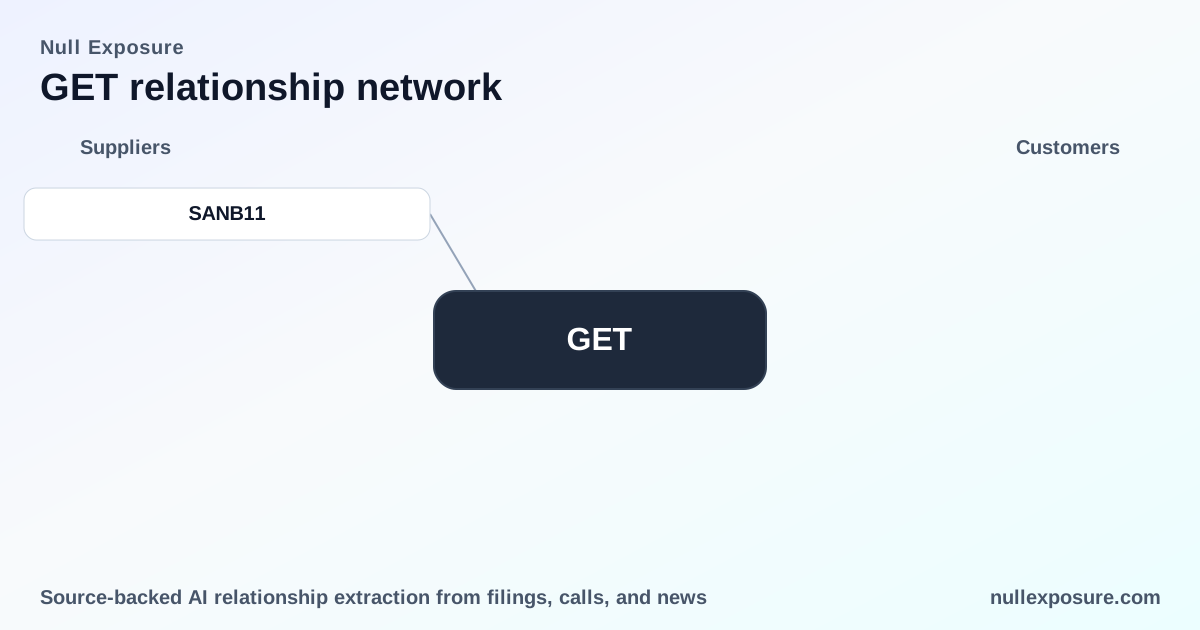
GET supplier relationships: what investors need to know
Thesis: GET monetizes hardware and related services by renting point-of-sale (POS) terminals into bundled commercial banking products, generating recurring contractual revenue tied to merchant acceptance and bank distribution channels. For investors and operators evaluating GET as a supplier, the relationship map is concise but strategically meaningful: the company supplies rental POS equipment into bank-led account packages where the bank collects a single monthly fee that includes both the checking account and the terminal rental.
If you want a quick view of supplier connections and commercial signals, start here: https://nullexposure.com/
Why a single supplier relationship matters more than its count
GET’s supplier footprint in the public record is thin but strategically embedded. A rental model for POS hardware creates predictable revenue streams and aligns incentives with banks that want a frictionless merchant onboarding product. When a bank bundles terminal rental with an account, GET trades large one-off sales cycles for recurring, lower-churn revenue and distribution scale through the bank’s branch and sales channels. That dynamic changes risk profiles: counterparty credit and bank distribution are now first-order items for investors, rather than purely hardware sales cycles.
Key takeaway: bundled rental contracts convert product sales into recurring service revenue and shift the company’s commercial risk toward its bank partners’ customer acquisition and account retention economics.
What the public relationship evidence shows
Below I list every supplier relationship found in the review and provide a short, plain-English synthesis for each.
Santander Brasil (SANB11)
GET provides POS equipment that is bundled into Santander Brasil’s integrated account offering; customers pay a single monthly fee that covers both a Santander checking account and the rental of the POS terminal supplied by GET. This arrangement places GET’s POS hardware inside a bank-distributed subscription product rather than a standalone merchant purchase. According to a March 9, 2026 report on investidor10.com.br, the bank’s integrated-account package explicitly includes the rental of the company’s POS equipment (investidor10.com.br/acoes/gett11/).
Operating-model constraints and what they imply for investors
There are no explicit contractual constraints disclosed in the review dataset. Treat that absence as a company-level signal: no flagged legal or supply constraints were returned in the scrape. From an operational and portfolio perspective, that lack of explicit constraints translates into these working hypotheses about GET’s business model characteristics:
- Contracting posture: Supplier to bank distribution channels, delivering hardware under rental or managed-service terms rather than as one-off product sales. This posture creates longer-term contractual engagement with bank partners instead of single-merchant transactions.
- Concentration: the public record shows limited partner visibility, increasing the importance of each disclosed relationship. A small number of bank distribution partners implies concentration risk in distribution unless the company has broader non-public deals.
- Criticality: POS rental is critical to merchant acceptance flow; for the bank partner, integrating terminals into an account package is a customer-acquisition tool, making GET an operationally important supplier for that product line.
- Maturity: association with large retail banks signals commercial maturity and compliance capability, since established banks require vetted suppliers and integration controls before bundling third-party hardware into client-facing financial products.
Key takeaway: limited public relationship data elevates the significance of each confirmed partner and increases the importance of monitoring counterparty credit, distribution concentration, and operational integration with banks.
(See more supplier signal services at https://nullexposure.com/ if you want a deeper look.)
Investment implications and risk checklist
- Revenue quality: rental contracts embedded in bank packages align revenue toward recurring streams, improving predictability relative to pure hardware sales. Revenue is functionally linked to bank product adoption and retention, not only POS installed base.
- Counterparty exposure: concentration in bank distribution is a material risk. A shrinkage in bank-led product sales or contractual renegotiation could disproportionately affect revenue.
- Operational integration and SLAs: because terminals are included in a bank’s customer-facing product, service-level obligations and regulatory compliance become financially material—downtime or security incidents could trigger remediation costs and reputational damage.
- Upside: bank bundling accelerates scale and merchant penetration without GET having to build a direct salesforce, which reduces customer acquisition cost and increases lifetime value if churn stays low.
Practical due-diligence items for investors and operators
- Request contract length, termination clauses, and revenue recognition treatment for bank-bundled rentals.
- Quantify concentration: ask for revenue split by bank partner and the percentage of merchants on bundled plans versus direct sales.
- Operational resiliency: verify SLAs, firmware update governance, and incident response plans tied to bank partners.
- Pricing and margin mechanics: clarify whether rental prices are set by the bank, shared, or dictated by GET, as this affects gross margin sustainability.
If you want a structured supplier map and to compare supplier concentration across peer relationships, explore: https://nullexposure.com/
Bottom line and action items
GET’s public supplier relationship with Santander Brasil demonstrates a business model that leans on recurring rental revenue through bank distribution, which is attractive for predictable cash flow but introduces concentration and counterparty risk. Investors should prioritize contract economics, distribution breadth, and operational SLAs in diligence.
For a comprehensive supplier risk profile and comparative insights, visit https://nullexposure.com/ — it’s the fastest way to convert relationship signals into actionable investment diligence.