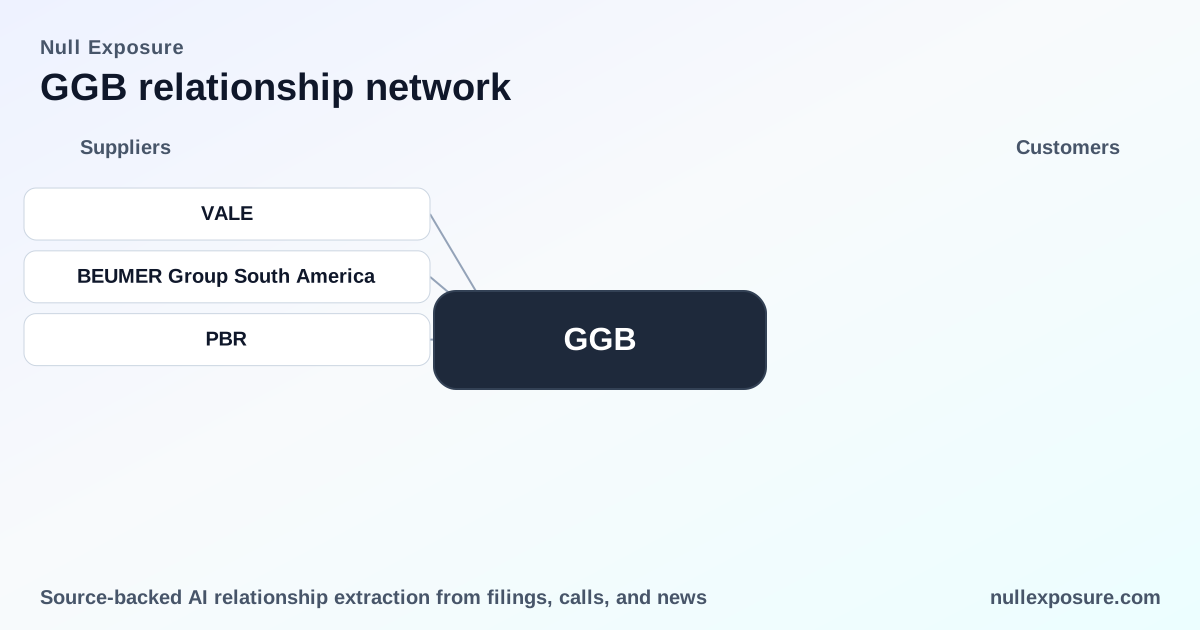
Gerdau SA ADR (GGB) — Supplier Relationships and Strategic Exposure
Gerdau is an integrated long-steel producer that monetizes through manufacturing and selling construction, automotive and industrial steel products across the Americas, leveraging both captive raw-material assets and third‑party procurement to manage cost and supply. Revenue is driven by steel volumes, product mix and feedstock sourcing, with profitability sensitive to iron‑ore and scrap markets, capital equipment availability and strategic asset transactions. For a focused view on supplier relationships and operational exposure, review primary partner links below — and explore deeper supplier intelligence at https://nullexposure.com/.
Why supplier relationships move the P&L here
Gerdau operates as a partially vertically integrated steel group: it produces finished long‑steel while retaining upstream exposure through owned mining assets and external ore purchases. This hybrid model reduces raw‑material volatility relative to pure buyers but leaves material procurement and capital‑goods dependency as core operational risks. Key operating characteristics:
- Contracting posture: A mix of captive supply from Gerdau’s own mine and contracted purchases from major miners, implying both negotiated long‑term arrangements and spot market exposure that influence margins.
- Supplier concentration: Relationships with large miners and specialized equipment OEMs concentrate risk in a small number of high‑impact vendors; procurement concentration can compress negotiation leverage during supply shocks.
- Criticality and maturity: Suppliers of iron ore and heavy materials‑handling equipment are mission‑critical; replacement cycles are long and integration of new suppliers or machinery increases operational friction and capex needs.
- Strategic flexibility: Gerdau supplements procurement with opportunistic asset purchases and joint ventures, which can accelerate capacity or lower unit costs but require execution capability.
If you evaluate counterparties or need counterparty due diligence tools, visit https://nullexposure.com/ for tailored supplier exposure profiles.
Supplier and partner snapshot — what matters to investors
Below are the disclosed supplier and partner mentions detected in public reporting; each relationship is summarized and sourced.
Vale — core ore supplier alongside internal mine output
Gerdau purchases iron ore from Vale while also using output from its own Várzea do Lopes mine in Itabirito, Minas Gerais, reflecting a dual-sourcing strategy that moderates but does not eliminate miner-concentration risk. According to a Valor International report dated March 12, 2025, Vale is listed among Gerdau’s iron‑ore suppliers while Gerdau retains internal mining production.
BEUMER Group South America — specialized materials‑handling equipment supplier
BEUMER Group South America won two contracts to supply stockyard machines to Gerdau’s Açominas Ouro Branco plant, indicating dependence on tier‑one OEMs for critical materials‑handling equipment and plant automation (IM‑Mining, April 24, 2025). These contracts underscore capex and maintenance exposures tied to specialized vendors.
Petroleo Brasileiro SA (Petrobras) — counterparty in asset acquisition/ship recycling
Gerdau purchased the P‑32 platform from Petrobras in a transaction completed in July 2023, executed in partnership with the Ecovix shipyard, signaling opportunistic asset transactions that can provide feedstock or secondary‑market metal supply streams (Rigzone, December 1, 2023). This transaction reflects non‑traditional sourcing and strategic asset capture beyond standard supplier contracts.
Constraints and company-level signals (what the public record shows)
Public supplier constraints are not enumerated in structured constraint excerpts for Gerdau; that absence itself is a signal. From the relationship evidence and operational disclosures, company-level signals include:
- Vertical integration bias: Ownership of the Várzea do Lopes mine reduces outright dependence on the spot ore market and supports a portion of feedstock requirements internally.
- Supplier concentration signal: Named relationships with major miners and specialized OEMs reflect moderate supplier concentration — large vendors whose contract terms and delivery performance materially influence margins and uptime.
- Capital-intensity and maturity of supplier base: Reliance on heavy equipment vendors like BEUMER implies long replacement cycles, planned capex, and service‑level dependency; this raises operational criticality and the need for predictable procurement.
- Strategic procurement flexibility: The Petrobras asset acquisition illustrates capacity to acquire non‑traditional assets for feedstock or recycling purposes, adding tactical supply options but increasing integration demands.
Investment implications — risks and opportunities
Investors should weigh these supplier dynamics against Gerdau’s financials and market positioning.
- Risk: feedstock price and counterparty concentration. Iron‑ore and scrap price swings directly affect margins; significant sourcing from large miners creates counterparty risk if contract terms tighten.
- Risk: capex and OEM reliance. Plant modernization and equipment uptime depend on specialized suppliers; delivery delays or cost inflation in equipment contracts will pressure operating margins and capex forecasts.
- Opportunity: captive mine for margin stabilization. The combination of owned ore production and contracted purchases provides a margin cushion relative to peers that are fully exposed to spot markets.
- Opportunity: strategic acquisitions broaden supply options. Asset transactions like the P‑32 purchase suggest an ability to secure alternative metal sources or expand processing capacity via secondary markets.
For active diligence on supplier exposure and counterparty risk tailored to capital allocations, see services at https://nullexposure.com/.
What to watch next (practical monitors for operatives and investors)
- Contract renewal timelines and price-indexing clauses with major miners, especially Vale.
- Progress and integration of BEUMER equipment at Açominas — commissioning delays would be an early operational red flag.
- Any further asset purchases from offshore or industrial counterparties that change scrap/feedstock economics.
- Quarterly updates on mining output from Várzea do Lopes to gauge the share of internal vs external ore.
Bottom line
Gerdau’s supplier footprint combines the defensive advantage of vertical integration with residual exposure to large miner counterparties and specialized equipment vendors. That hybrid posture supports consistent volumes but requires active monitoring of counterparty contracts, capex execution and opportunistic asset deployments. For a deeper supplier-level risk profile to inform underwriting, portfolio construction or operational planning, visit https://nullexposure.com/ and request a bespoke exposure review.