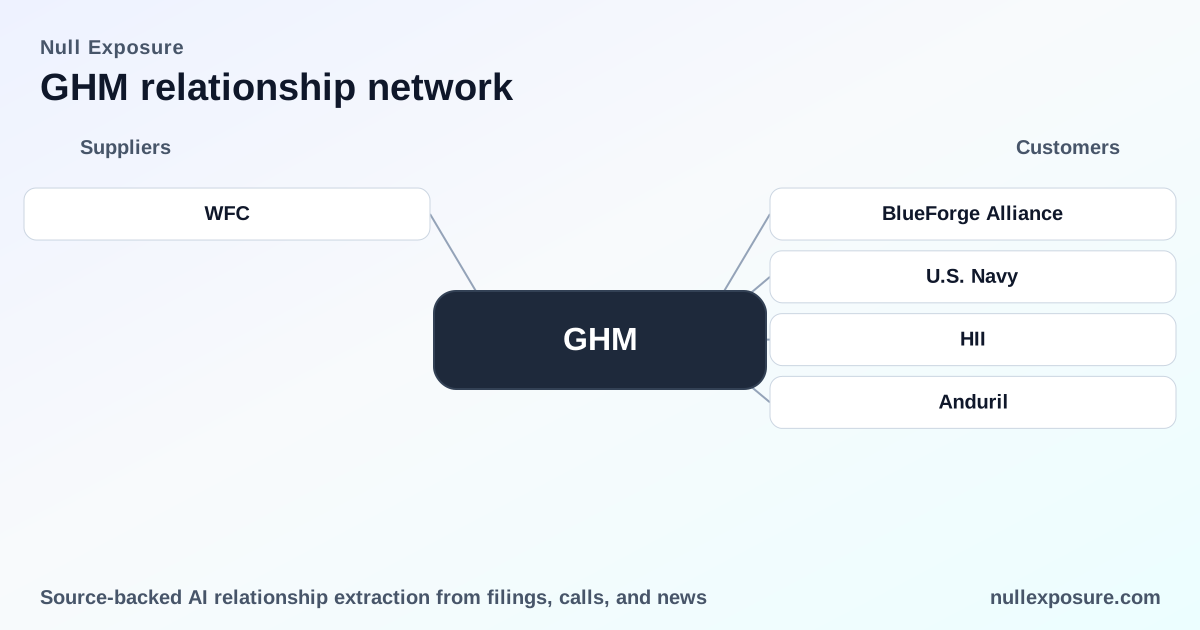
Graham Corporation (GHM): Supplier Relationships, Constraints, and What Investors Need to Know
Graham Corporation designs and manufactures vacuum and heat-transfer equipment for industrial customers and monetizes through engineered equipment sales, aftermarket parts, and service contracts to capital-intensive industries. The company converts engineering content and factory capacity into long-cycle revenue, with aftermarket service and spare-part sales providing higher-margin, recurring cash flow. Graham’s financial flexibility and supplier relationships directly influence working capital, delivery cadence, and margin preservation for customers in petrochemical, power, and defense end markets. Learn more about relationship intelligence at https://nullexposure.com/.
How Graham runs the business and how that affects suppliers
Graham operates as an engineering-led manufacturer: orders are won through technical competitiveness, delivered through internal fabrication, and supported by aftermarket parts and service agreements. Revenue recognition is lumpy and tied to project milestones; aftermarket spares and service drive gross-margin expansion over time. This operating model gives suppliers of raw materials, machining services, and logistics outsized influence on delivery performance and cost-of-goods-sold volatility. The company’s public financials show a mid-sized industrial footprint (roughly $237.6M revenue TTM and $887M market capitalization as of the latest reporting), which positions Graham as a meaningful, but not dominant, buyer in specialty machinery supply chains.
Key commercial implication: suppliers that can offer flexible payment terms, capacity certainty, and quality traceability capture strategic value in Graham’s procurement mix.
Active supplier relationship found in public reporting
Wells Fargo — amendment to credit agreement (FY2026)
Graham entered into a second amendment to its existing credit agreement with Wells Fargo to enhance financial flexibility, consistent with the company’s public disclosure in early March 2026. This amendment is a financing-side supplier relationship: the bank is a counterparty that underwrites short-term liquidity and covenant structures that affect Graham’s procurement and capital deployment choices. A TradingView news report covering the March 9, 2026 announcement documented the amendment to the credit facility. (Source: TradingView, March 9, 2026 — reporting on company disclosure.)
Why the Wells Fargo amendment matters to suppliers and operators
The Wells Fargo amendment is not a procurement contract, but it materially shapes supplier dynamics:
- Liquidity and payment terms: a credit amendment that increases flexibility reduces the risk of payment disruptions to domestic and international suppliers, improving Graham’s negotiating posture with vendors.
- Working-capital elasticity: improved financing reduces the need for near-term inventory liquidation or stretched payables, which supports stable supplier revenue flow.
- Investment cadence: with firmer liquidity backup, Graham can sustain capital projects and aftermarket service rollouts that drive future parts demand.
According to the March 2026 notice reported by TradingView, the amendment explicitly targeted enhanced financial flexibility—this is an operational lever that influences procurement choices and supplier performance expectations.
Operating constraints that shape supplier risk and opportunity
Graham’s public filings and disclosures give a clear country-level signal about operating constraints.
- Global exposure with manageable direct FX in purchasing: Graham operates internationally and discloses that purchases in foreign currencies represented approximately 5% of cost of products sold in fiscal 2025, which indicates foreign-exchange volatility is a real but contained procurement risk. This geographic footprint imposes logistics complexity and import/export compliance needs for suppliers. (Company disclosure, fiscal 2025.)
- Concentration and counterparty structure: Graham is a mid-sized industrial manufacturer with a concentrated product set; suppliers who provide specialized materials or machining services are strategically important because substitution costs are high and lead times are long.
- Contracting posture and maturity: Graham’s revenue mix (engineered equipment plus aftermarket service) implies project-based contracting with recurring service components—suppliers must be prepared for bursty demand during project build phases and steady demand from aftermarket channels.
- Criticality: equipment and precision components are mission-critical to customers in refining, power, and defense, so supply interruptions have direct downstream revenue impact for Graham and reputational consequences for suppliers.
These constraints are company-level signals that shape procurement behavior and risk tolerances; they are not tied to any single supplier unless explicitly named in an excerpt.
Practical takeaways for investors and operators
- Credit facilities are supply-chain levers. The Wells Fargo amendment increases operational optionality; investors should view bank relationships as part of Graham’s resilience toolkit, and suppliers should expect more stable payment discipline when such facilities are in place.
- FX exposure is present but contained. With roughly 5% of COGS in foreign currencies in fiscal 2025, suppliers that invoice in USD simplify Graham’s cost predictability and are likely to be advantaged in negotiations.
- Specialized suppliers command pricing power. Long lead times and technical specificity give qualified vendors leverage on both price and delivery prioritization during peak build periods.
- Aftermarket services are margin-preserving. Suppliers that integrate with Graham’s service organization—providing replacement parts, calibration, or rapid turnaround—stand to capture recurring orders with higher margin characteristics.
For procurement teams: prioritize capacity guarantees, traceable quality certifications, and flexible payment structures that align with Graham’s project cash flow patterns. For investors: monitor Graham’s bank covenant profile and any further credit amendments as leading indicators of working-capital stress or strategic investment capacity.
Learn more about how relationship intelligence informs investment decisions at https://nullexposure.com/.
Final recommendations and next steps
GHM is a technically focused manufacturer whose supplier dynamics are shaped as much by finance as by fabrication. The Wells Fargo amendment is a concrete signal that management is actively managing liquidity and that financial counterparties play a decisive role in supplier outcomes. Investors should track subsequent credit filings and supplier-side disclosures as early-warning indicators of margin pressure or capacity constraints. Operators and vendors should align commercial terms to Graham’s project-driven cash flow and offer FX-neutral pricing where possible.
If you evaluate supplier counterparty risk or want structured signals around supplier relationships, start with a strategic scan at https://nullexposure.com/ and use firm-level disclosures to prioritize vendor engagement.