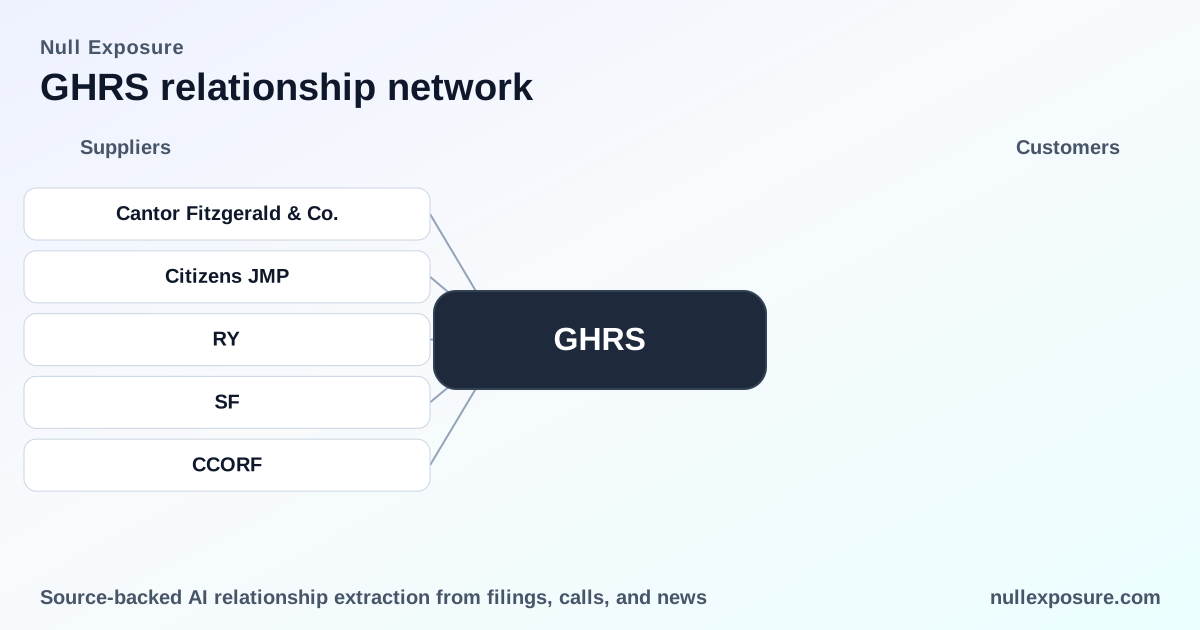
GH Research PLC (GHRS) — The underwriter network behind a $150 million financing
GH Research PLC is a clinical-stage biopharmaceutical company developing psilocybin-based therapeutics; it currently generates no product revenue and monetizes through equity financing, licensing opportunities and, ultimately, drug approval-driven sales and royalties. For now, GHRS’s financial trajectory is controlled by its ability to access capital markets and convert trial progress into licensing or commercial value, which makes its choice of banking and capital markets suppliers a strategic operational dependency. Learn more about supplier exposure and counterparty risk at https://nullexposure.com/.
Why the underwriter list matters to investors and operators
GH Research operates as a capital-intensive, pre-revenue biotech. The company’s balance between cash burn and trial milestones forces periodic reliance on the equity markets. The recent $150 million public offering — and the syndicate that managed it — is the single most consequential supplier relationship for near-term execution. That makes the composition of the underwriting group a direct indicator of both execution capacity and market access.
- Contracting posture: The use of multiple book-runners and co-leads reflects an active, transactional contracting posture focused on capital access rather than long-term vendor lock-in.
- Concentration and criticality: Suppliers are concentrated in a small syndicate of investment banks; this is typical for equity raises and is critically important because syndicate performance determines pricing, placement and timing.
- Maturity and counterparty quality: The counterparties named in the offering are mature, regulated dealers and banks; their participation signals conventional capital markets channels rather than boutique financing solutions.
If you evaluate counterparty and supplier risk for pre-revenue biotechs, this syndicate composition is a primary data point. For a deeper supplier-risk profile, visit https://nullexposure.com/.
The underwriting relationships — who did what
Below are the supplier relationships disclosed in the offering announcement; each entry is a plain-English summary tied to the original release.
Cantor Fitzgerald & Co.
Cantor Fitzgerald is listed as one of the joint book-running managers for the offering and an address is given for obtaining prospectus materials. According to the GlobeNewswire press release dated February 5, 2025, Cantor acted in a lead syndicate capacity for the $150 million public offering. (GlobeNewswire, Feb 5, 2025)
Citizens JMP
Citizens JMP is identified in the offering release as a co-lead manager alongside Canaccord Genuity, indicating a role in marketing and distribution of the new shares. The GlobeNewswire announcement of February 5, 2025 names Citizens JMP as a co-lead manager for the deal. (GlobeNewswire, Feb 5, 2025)
RBC Capital Markets, LLC
RBC Capital Markets is one of the joint book-running managers and is listed with contact details for distribution of prospectus materials, underscoring its role in the execution and syndication effort. This follows directly from the company’s February 5, 2025 press release about the offering. (GlobeNewswire, Feb 5, 2025)
Stifel, Nicolaus & Company, Incorporated
Stifel is named among the joint book-running managers and provided prospectus access details — a standard role in underwriting distribution and settlement. The GlobeNewswire release on February 5, 2025 documents Stifel’s position in the syndicate. (GlobeNewswire, Feb 5, 2025)
Canaccord Genuity
Canaccord Genuity is described as a co-lead manager for the offering alongside Citizens JMP, confirming a frontline role in investor outreach and pricing. The GlobeNewswire announcement dated February 5, 2025 references Canaccord’s co-lead status. (GlobeNewswire, Feb 5, 2025)
What this syndicate composition implies for valuation and execution
The selected underwriters are established capital markets participants with relevant equity distribution capability. For investors and corporate operators, that implies:
- Execution capacity is strong: A syndicate of Cantor, Stifel, RBC, Canaccord and Citizens JMP suggests broad distribution channels across institutional and retail desks, helping secure placement at scale.
- Cost of capital is transparent but dilutive: Using several full-service underwriters is standard for a sizeable public offering; underwriting fees and market dilution are the trade-offs for immediate liquidity.
- No disclosed long-term supplier contracts: There are no supplier constraints or long-term service commitments surfaced in the supplier-results. That is a company-level signal: GHRS is relying on transactional capital markets engagement rather than vendor-locked financing structures.
Taken together, these signals indicate that GH Research’s immediate operational continuity is contingent on periodic capital raises executed through a small but reputable syndicate, rather than on strategic financing partners or committed credit facilities.
Operational and investor risk checklist
Operators and investors should monitor the following, all of which flow directly from the supplier relationships and company financial profile:
- Cash runway versus clinical milestones — underwriting success directly affects program continuity.
- Dilution trajectory — repeated equity financings change capital structure and option economics.
- Market reception — the syndicate’s ability to place shares at target price influences cost of capital.
- Counterparty operational risk — settlement efficiency and book-building quality matter in tight markets.
Key risk takeaway: underwriter performance is a gating factor for GHRS’s ability to fund trials without compromising milestone schedules or shareholder value.
If you need a structured supplier-risk view or counterparty scoring for GH Research and similar issuers, explore full profiles at https://nullexposure.com/.
Conclusion — pragmatic read for investors and operators
GH Research is a development-stage biotech that monetizes through financing events today and hopes to monetize through product commercialization or licensing tomorrow. The $150 million offering and its syndicate composition are the near-term operational lever; the named underwriters are competent and provide meaningful distribution, but their involvement underscores how dependent GHRS is on equity markets rather than recurring commercial revenues. Investors should price the company as a capital markets-dependent story while tracking trial milestones that convert financing needs into licensing or product value.