Global Industrial (GIC): supply relationships, concentration and sourcing risk
Global Industrial monetizes by marketing and distributing branded and private‑label industrial equipment and supplies across North America. The company sources product from a broad base of manufacturers and wholesale distributors, stocks inventory in its channels, and sells through direct channels to commercial customers; revenue is driven by product margins, private‑label mix, and distribution efficiency. For investors and operators evaluating supplier exposure, the key themes are low single‑supplier concentration, meaningful reliance on Asia for private‑label lines, and a mixed vendor set that includes both large enterprises and small manufacturers. For a broader look at supplier footprints across mid‑cap industrials visit https://nullexposure.com/.
The plain‑English supply posture you need to know
Global Industrial’s public disclosures show a procurement model rooted in direct buying from both large and small manufacturers and from large wholesale distributors, rather than a tiered reseller network. This contracting posture produces operational flexibility: the company can shift between manufacturer and distributor inventory sources, which reduces single‑counterparty dependency. At the same time, the firm’s private‑label strategy links it to component and finished‑goods flows from Asia, creating a targeted geographic exposure.
- Concentration is low. The company states that no supplier accounted for 10% or more of product purchases in 2022–2024, signaling diversified sourcing and low counterparty concentration risk.
- Supplier mix is heterogeneous. Procurement spans both large enterprise manufacturers and small businesses, implying variable negotiating leverage and heterogeneous supplier credit profiles.
- Geographic dependency is material for certain lines. Private‑label SKUs depend on imports from China and domestic manufacturers that source Asia‑made components, elevating logistics and tariff sensitivity for those product segments.
These are company‑level signals drawn from recent disclosures; they frame how to think about counterparty risk without tying those constraints to any one vendor unless the filing explicitly does so.
Why these characteristics matter for investors and operators
From an investor perspective, low supplier concentration supports resilience in gross margin and continuity of supply: the absence of a dominant supplier reduces the likelihood of a single counterparty causing major supply interruptions. However, because private‑label products are imported from China and components transit Asia, country‑level shocks (tariffs, port congestion, supplier insolvency) can compress margins for those SKUs.
For operators, the mixed supplier base implies the need for segmented supplier management: large manufacturers require longer strategic negotiations, while small manufacturers demand operational oversight and quality control. The maturity signal—direct sourcing from manufacturers and wholesale distributors—suggests established procurement processes but also exposure to upstream component volatility. In practice, that means inventory strategy, hedging on freight, and dual‑sourcing are meaningful levers for risk management.
If you’re tracking supplier footprints across industrial distributors, our research hub aggregates these supplier signals—explore more at https://nullexposure.com/.
Supplier relationships found in public reporting
Below is the single named supplier relationship identified in the most recent third‑party coverage and transcripts. Each entry is a concise, plain‑English note with source context.
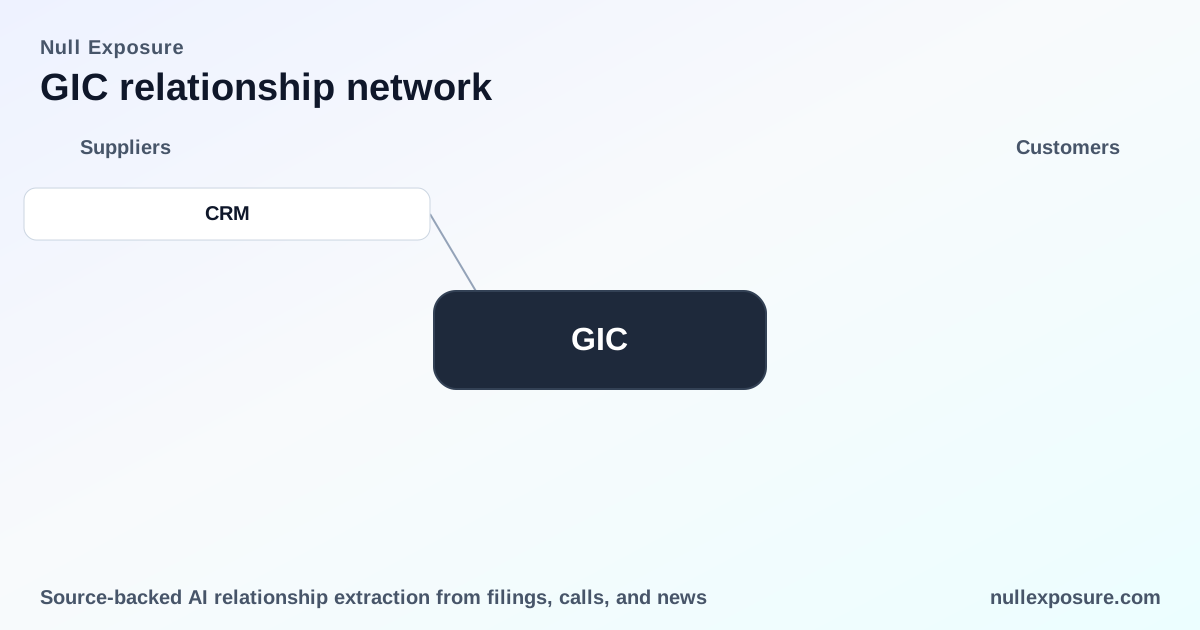
Salesforce (CRM) — enterprise software supplier
Global Industrial completed the planned rollout of Salesforce for its sales, marketing and customer service teams in FY2026, indicating a move to a standardized CRM and service platform to support commercial operations and customer‑facing workflows. This is a software vendor relationship that supports go‑to‑market and post‑sale servicing rather than product supply. According to an FY2026 earnings call transcript reported by InsiderMonkey on March 9, 2026, “We completed the planned rollout of Salesforce for our sales, marketing and customer service teams.” (InsiderMonkey, earnings call transcript, FY2026).
Putting constraints into an operational frame
Use the disclosed constraints as actionable signals:
- Contracting posture (direct purchases from manufacturers and wholesale distributors): This is a mature procurement model that enables faster response to demand shifts and negotiated trade credit with manufacturers, but it requires robust supplier monitoring and quality assurance programs.
- Concentration (no supplier ≥10% of purchases): Low counterparty concentration reduces single‑point‑failure risk and supports operating leverage stability; investors should treat top‑line volatility as more demand‑driven than vendor‑driven.
- Geographic exposure (APAC/China reliance for private labels): This is the principal external risk vector—trade policy, freight rate volatility, and regional production disruptions will disproportionately affect private‑label margins.
- Relationship roles (manufacturers and distributors): The mix of upstream manufacturers and wholesale distributors means procurement plays both strategic sourcing and tactical replenishment roles; this hybrid role is a sign of a company that balances scale with variety.
None of these constraints designate a single unavoidable supplier; rather, they are company‑level characteristics that define where operational levers and risk mitigations should be concentrated.
What investors should watch and what operators should do
For investors: prioritize metrics that capture the interplay of sourcing and margin—private‑label gross margins, inventory days, freight expense, and supplier payment terms—and monitor commentary on tariff exposure or supplier instability in APAC corridors. The company’s low supplier concentration is a positive, but geographic concentration for private labels is the key single risk.
For operators: accelerate dual‑sourcing for private‑label critical components, lock in freight and currency hedges where economics allow, and treat SaaS vendor rollouts (Salesforce) as mission‑critical enablers of revenue capture and service quality.
If you need consolidated supplier mappings and contract posture analysis for portfolio companies, see how we present supplier risk at https://nullexposure.com/.
Bottom line
Global Industrial’s supplier profile is diversified on the vendor side and concentrated by geography for private labels, delivering operational resilience with targeted exposure to Asian sourcing risks. The recent Salesforce rollout is operationally material as an enabler of commercial execution but does not change the Company’s product supply dynamics. Investors should weigh low counterparty concentration against Asia‑dependent private‑label exposure, and operators should prioritize procurement segmentation, logistics hedging, and supplier continuity planning.
For a deeper vendor‑level view across similar industrial distributors and to benchmark supplier risk, visit https://nullexposure.com/.