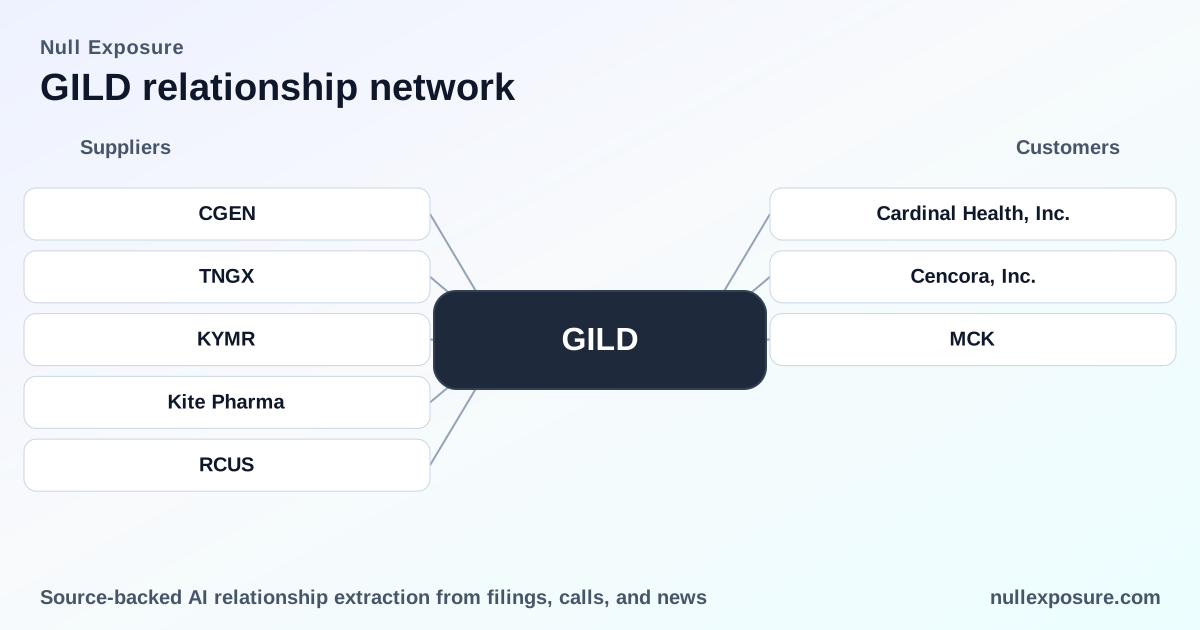
Gilead Sciences (GILD): supplier network, contractual posture, and what it means for investors
Gilead monetizes proprietary and partnered drug assets by combining in-house development with a broad set of licensing, manufacturing and services relationships. The company generates cash through mature antiviral franchises and selectively acquires or licenses early-stage programs — then converts milestones, royalties and product sales into recurring revenue once assets reach commercialization. For investors, the key operational takeaway is Gilead’s hybrid model: strategic licensing to source innovation, heavy reliance on third-party manufacturers and CROs to scale, and options structures that shift development risk off the partner upon exercise. For a concise map of supplier exposure and relationship risk, see NullExposure’s summary at https://nullexposure.com/.
How to read this: a buyer that outsources scale and buys optionality
Gilead operates like a large biopharma platform: it internalizes late-stage development and commercialization but routinely structures early deals as options or licenses so the company can control spend and selectively assume risk. That contracting posture reduces upfront R&D cash outflow while concentrating operational criticality on manufacturing partners and CROs. If you want a tailored supplier-risk briefing, visit https://nullexposure.com/ for supplier-level analytics and alerts.
What each supplier relationship in the public record tells investors
Below are concise, investor-oriented summaries of every supplier/partner relationship surfaced in the recent coverage.
-
Compugen Ltd. (CGEN) — Compugen has licensed GS-0321, described as a potential first-in-class anti–IL-18 binding protein antibody, to Gilead; the structure indicates Gilead holds development rights for that program. According to a Q4 2025 earnings call transcript reported by The Globe and Mail, GS-0321 is explicitly licensed to Gilead (The Globe and Mail, 2026-03-09: https://www.theglobeandmail.com/investing/markets/stocks/GILD/pressreleases/511024/compugen-cgen-q4-2025-earnings-call-transcript/).
-
Tango Therapeutics (TNGX) — Tango recognized deferred collaboration revenue from Gilead that materially contributed to FY2025 top-line recognition; this indicates prior milestone or option-based payments from Gilead were realized in revenue. TradingView’s coverage of Tango’s 2025 filing highlights recognition of remaining deferred collaboration revenue tied to Gilead (TradingView, 2026-03-09: https://www.tradingview.com/news/tradingview:39d1bb2cfa72a:0-tango-therapeutics-2025-10-k-62-4m-revenue-101-6-m-net-loss/).
-
Kymera Therapeutics, Inc. (KYMR) — Kymera’s oral CDK2 molecular glue program and other preclinical work are covered by an exclusive option and license agreement with Gilead; if Gilead exercises the option it will pay an option fee and take full responsibility for development, manufacturing and commercialization. This is described in Kymera’s FY2026 business update and earnings disclosures (InvestingNews / FinViz coverage, March 2026: https://investingnews.com/kymera-therapeutics-announces-fourth-quarter-and-full-year-2025-financial-results-and-provides-a-business-update/ and https://finviz.com/news/325228/kymera-q4-loss-wider-than-expected-cash-boost-extends-runway).
-
Kite Pharma — Programs transferring into Gilead’s cell therapy infrastructure are routed via Kite Pharma for manufacturing transfer and later-stage development, reflecting integrated internalization of cell therapy scale-up after initial development. Industry reporting of the manufacturing transfer to Gilead’s cell therapy infrastructure references Kite as the conduit for later-stage manufacturing (OncoDaily, March 2026: https://oncodaily.com/techology/gilead461928).
-
Arcus Biosciences, Inc. (RCUS) — Arcus has executed multiple amendments with Gilead that include options for Gilead to license additional programs and co-develop existing ones, signaling a multi-program option framework rather than single-product buyouts. TradingView’s recap of Arcus’ 10-K referenced these amendments and option structures with Gilead (TradingView, March 2026: https://www.tradingview.com/news/tradingview:43ccde7c24ee6:0-arcus-biosciences-inc-sec-10-k-report/).
Contracting posture, concentration and what the constraints tell investors
Gilead’s public disclosures and relationship evidence produce several clear operational signals:
-
Licensing and options-based sourcing are core behaviors. Constraint analysis shows a high-confidence signal for licensing contracts; Gilead’s playbook is to license or option early-stage assets and bring only selected programs through to full internal development and commercialization. This lowers upfront R&D capital exposure while preserving control through option exercise.
-
Gilead functions as a licensor and a consolidator of late-stage assets. Company-level filings historically describe Gilead both acquiring rights and granting rights in defined geographies, a sign of sophisticated IP and territory management that supports predictable revenue recognition once products reach market.
-
Manufacturing is outsourced at scale and is operationally critical. There is a strong signal that Gilead depends on CMOs for the majority of API and drug product manufacturing; disruptions at contract manufacturers would translate directly into supply risk for marketed products.
-
Extensive use of service providers for clinical operations and cybersecurity. Gilead delegates the bulk of clinical trial execution to CROs and retains third-party advisors for cybersecurity and validation, implying operational reliance on external vendors for trial timelines and regulatory deliverables.
Together these constraints imply a mature supplier program with concentrated operational criticality on a subset of partners (manufacturers and CROs) and a contracting posture that emphasizes optionality and staged risk transfer.
Investment implications and operational risks investors should track
-
Upside through option exercises: Option and milestone payments convert early-stage pipelines into high-return assets if programs succeed; investors should monitor milestone calendars for large, near-term exercises (Compugen, Kymera, Arcus examples).
-
Concentration risk in manufacturing: Because Gilead outsources manufacturing, a disruption at a major CMO or a failed transfer (cell therapy via Kite) would have outsized impact on product supply and near-term cash flow; investors should monitor transfer progress and CMO audits.
-
Revenue recognition volatility from collaboration accounting: Tango’s recognition of deferred collaboration revenue illustrates how Gilead-linked revenue flows can create lumpy recognition patterns for partners; this also affects partner stability and future deal economics.
-
Deal economics matter more than volume: Gilead’s option-style deals reduce capital deployed upfront but concentrate future payout exposure into option exercise and milestone triggers — these terms determine long-term economics far more than the headline number.
If you need a supplier risk scorecard or an alert on option-exercise events tied to Gilead, visit NullExposure for subscription analytics and situational alerts: https://nullexposure.com/.
Final takeaways for investors and operators
Gilead is a platform that buys optionality, outsources scale, and internalizes commercialization. That structure delivers predictable profits from mature franchises while keeping the pipeline flexible through licensing and option agreements. The primary operational risk is supplier concentration — especially CMOs and cell therapy transfers — and the primary upside is disciplined option exercise that converts early licenses into high-margin products.
For ongoing supplier monitoring, scenario modeling, or a bespoke analysis of Gilead’s counterparty exposure, access NullExposure’s supplier coverage and alerts at https://nullexposure.com/.