Global Interactive Technologies (GITS): supplier relationships, capital posture, and what investors should price
Global Interactive Technologies (GITS) builds immersive AR/AI experiences and monetizes through licensing, content distribution, and service revenues tied to partnerships across gaming, marketing, and education verticals. The company drives revenue by acquiring and commercializing intellectual property and promotional rights, then distributing content through partnerships and platform transactions while supplementing cash needs with short-term insider financing. Investors evaluating supplier risk should weigh a partnership-driven go-to-market against tight short-term liquidity and concentrated insider funding.
For further supplier-risk intelligence, visit https://nullexposure.com/.
Quick commercial profile — how GITS actually makes money
GITS combines content ownership with outsourced execution. It purchases or licenses creative assets (for example, theme-song and distribution rights), bundles those assets into promotional campaigns or platform offerings, and captures fees from distribution and in-platform transactions. Revenue is highly dependent on successful partner-led promotions and the company’s ability to monetize small-scale content placements, which explains why reported trailing revenue is minimal while valuation metrics look disconnected (MarketCap ~$9.5M vs. RevenueTTM $1,867). The operating model relies on external suppliers for development, fulfillment and payments integration, creating a supplier footprint concentrated in services and short-term arrangements.
What the public filings and disclosures reveal about financial posture
GITS reports negative operating margins and negative EBITDA, reflecting pre‑commercial scale and elevated operating leverage. The company’s financials show near-term liquidity funded in part through short-term loans from insiders: company disclosures reference loan agreements dated July 1, 2024 with executive or shareholder individuals at an annual rate of 4.6%, and total short-term loan payables around $370k. These internal borrowings indicate a contracting posture that is short-term and centralized, which has direct implications for supplier negotiations: suppliers will face buyers who prefer flexible, near-term contracts and who rely on outsourced service providers rather than maintaining large internal teams.
- Key financial signals: Market cap ~$9.5M, RevenueTTM $1,867, EBITDA negative, EPS -2.08, Price-to-Sales >5,000 (reflects extremely low revenue base).
- Contracting posture: Short-term, opportunistic financing with insiders, signaling limited long-term treasury capacity.
- Supplier mix: Heavy use of outsourced development and operational support, which reduces fixed costs but raises dependency on third-party service providers.
Constraints and what they imply for supplier relationships
The company-level constraints pulled from GITS disclosures create a clear commercial profile:
- Short-term contracting dominates. Disclosed short-term loan agreements (July 1, 2024) and $370k in short-term payables signal a preference for near-term financial commitments and transactional supplier arrangements rather than multi-year, capital-intensive contracts.
- Insider funding and concentration. Borrowings from named individuals (President Jaeman Lee and largest shareholder Hangmuk Shin in July 2024) reflect concentrated funding sources; that raises counterparty and governance considerations when pricing risk for suppliers or investors.
- Service-oriented supplier mix. The company has explicitly transitioned core functions to outsourced development and operational support, pointing to a supplier ecosystem focused on software services, fulfillment (e.g., shipping partners), and payment integrations.
- Spend envelope and maturity. Spend evidence centers in the $100k–$1M band and short-term maturities, which positions GITS as a small-volume buyer with episodic, project-level engagements.
Collectively, these constraints represent a high-flexibility, low-commitment buyer profile that is attractive for vendors offering rapid delivery and low minimums but unattractive for capital-intensive suppliers seeking long-term guarantees.
Supplier relationships in the public record
GITS maintains promotional and content-distribution relationships that drive visibility and platform monetization. Below is every relationship identified in public results.
ATEEZ — pop culture promotion and soundtrack rights
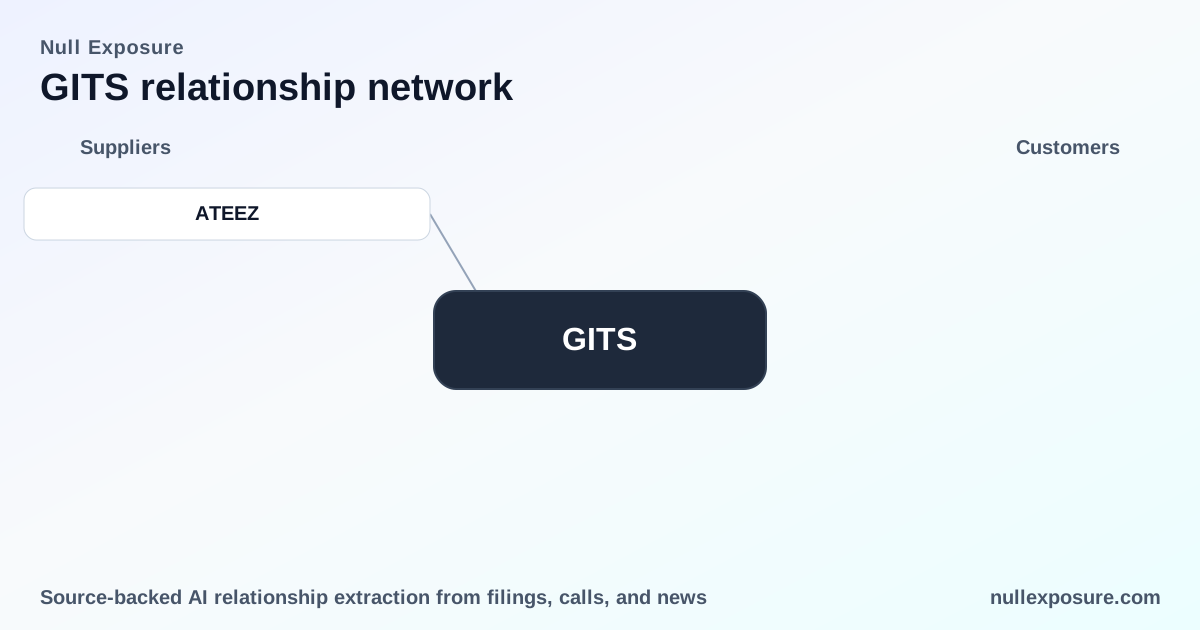
GITS acquired master and global distribution rights to the theme song for its upcoming animated feature and is using the track as part of a worldwide promotional campaign for “The Legend of MegaRace,” leveraging K‑pop star power to boost engagement and discovery. According to a Benzinga report on March 9, 2026, the announcement of the ATEEZ partnership drove a notable stock uptick as investors priced in increased market visibility from the worldwide promotional push. (Benzinga, March 9, 2026: https://www.benzinga.com/trading-ideas/movers/26/01/50164113/global-interactive-stock-jumps-after-k-pop-giant-ateez-partnership)
What each relationship means for revenue and risk
The ATEEZ arrangement illustrates GITS’s go-to-market playbook: acquire exclusive content rights, run a global marketing campaign, and monetize through distribution and platform engagement. This is a high-visibility, high-optionality revenue lever—it can generate outsized attention but does not by itself create recurring revenue. For suppliers and investors, the ATEEZ relationship reduces commercial execution risk for that project (the company bought rights and coordinated distribution) but does not materially change GITS’s overall liquidity profile or its dependence on short-term supplier contracts.
Practical takeaways for investors and supplier-operators
- Valuation disconnect is real: GITS’s market metrics imply a growth story priced far beyond current cash flows; investors should treat the equity as a speculative play on successful commercialization of intermittent content deals. Operationally, suppliers should price for short-term engagements and rapid exit clauses.
- Counterparty and governance risks require premium: Insider financing and concentrated shareholder funding mean suppliers and arms‑length investors should require explicit payment terms and, where possible, escrowed or milestone-based payments.
- Outsourcing lowers capex but increases dependency: The company’s reliance on outsourced development and third-party services (including logistics and payment processors) reduces fixed costs but centralizes execution risk in external vendors; suppliers offering integrated, guaranteed delivery will command a premium.
For a deeper supplier-risk assessment and competitive context, check our platform: https://nullexposure.com/.
How to position commercially if you’re considering a relationship
If you are a vendor or investor evaluating GITS, structure engagements around clear deliverables, short invoice cycles, and protections for IP and payment. Consider three practical contract elements:
- Milestone payments tied to distribution and monetization events.
- Short-term renewal options rather than open-ended commitments.
- Explicit remedies or escrow for content-rights transactions.
Final recommendation
GITS is an early-stage, content-first operator that monetizes via licensed content and outsourced execution while relying on short-term, insider-backed financing. Investors should value the company as a high-risk, event-driven opportunity; suppliers should treat GITS as a low-commitment buyer that requires tight commercial protections. For comparative supplier intelligence and to monitor new relationship filings, visit our home page: https://nullexposure.com/.
If you need a tailored supplier risk memo or contract checklist based on GITS’s disclosures, we provide customized reports and monitoring tools to support due diligence—start at https://nullexposure.com/.