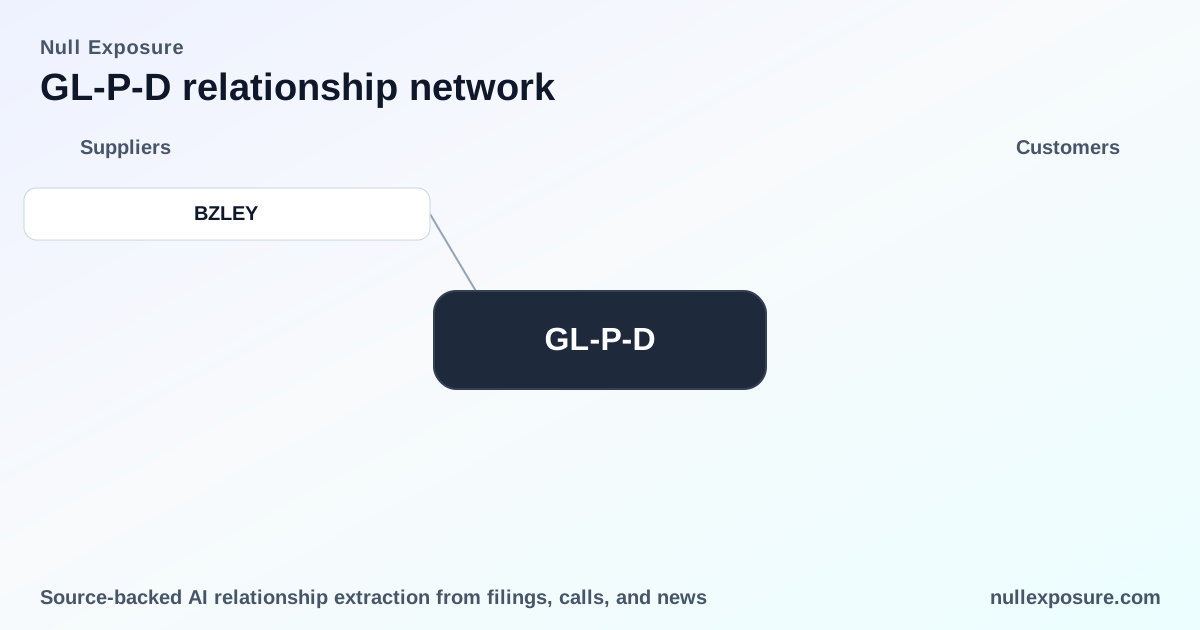
GL-P-D supplier relationships: what investors need to know about the Beazley tie-in and supplier posture
GL-P-D sits inside the life and supplemental insurance franchise and monetizes through written premiums, distribution partnerships (worksite and affinity channels), and investment income from float. The supplier footprint—how distribution, underwriting services, and third‑party benefits flows are organized—directly affects margin capture, renewal economics, and capital deployment. This profile surfaces a single material supplier relationship that changes distribution reach and integration complexity for the franchise. For a deeper look at related supplier intelligence, visit https://nullexposure.com/.
One concrete relationship in the record — a strategic acquisition of benefits distribution
The supplier-scope results return a single, high‑signal relationship: Beazley sold its benefits business to Globe Life, expanding Globe Life’s presence in the worksite benefits market. This transaction is a distribution- and capability-focused consolidation rather than a core underwriting partnership. Reinsurance News reported on the development on 9 March 2026, noting the transaction built Globe Life’s reach in the worksite marketplace (Reinsurance News, March 9, 2026 — https://www.reinsurancene.ws/beazley-sells-benefits-business-to-globe-life/).
Visit https://nullexposure.com/ to cross-check historical supplier mappings and to see how single-event supplier changes have impacted peers.
Beazley → Globe Life (benefits business)
Beazley divested its benefits business to Globe Life in FY2021, and the sale was reported as a move to extend Globe Life’s worksite distribution and product footprint. The write-up framed the deal as an acquisition of distribution capabilities rather than a long-term reinsurance or servicing contract (Reinsurance News, March 9, 2026 — https://www.reinsurancene.ws/beazley-sells-benefits-business-to-globe-life/).
What this relationship implies for GL-P-D’s operating model
This single-event relationship signals an operational emphasis on acquiring distribution and embedded channels. That emphasis generates four investor-relevant characteristics:
- Contracting posture — acquisitive and integration-focused. The enterprise structures relationships through M&A of distribution assets rather than long-term supplier contracts alone; that changes cashflow timing and integration risk profiles.
- Concentration — visible single-event concentration in distribution. The public record identifies a single material supplier transfer; concentration of distribution sources increases the importance of managing integration and retention of acquired relationships.
- Criticality — distribution is critical to revenue pathways. A benefits business acquisition is a distribution play: retaining employer and broker relationships after handoff is essential to preserve premium flows.
- Maturity — the relationship is transactional and transitional. The Beazley divestiture is an acquisition of an existing business rather than the creation of a long-term external supply arrangement, so early-stage integration and operational alignment drive near-term execution risk.
No explicit supplier constraints were returned in the scan results. At the company level, the absence of disclosed procurement constraints in public supplier records is itself a signal: public supplier disclosure is limited, so investors should assume supplier concentration and integration risk are handled chiefly through internal M&A and commercial negotiation rather than public long-term supplier commitments.
Operational and investor takeaways from the Beazley transfer
The Beazley-to-Globe Life handover changes the risk/return profile in several concrete ways:
- Revenue upside from expanded worksite distribution is immediate if employer and broker relationships remain intact post-acquisition; this is the primary monetization vector.
- Integration risk is the principal near-term vulnerability. Retention of clients and smooth systems/underwriting migration determine whether the acquisition adds value or creates churn.
- Capital allocation shifts toward deployment for distribution consolidation. M&A of distribution assets suggests management prioritizes top-line growth via bolt-ons rather than solely organic channel development.
- Limited public supplier transparency requires active due diligence. With only one relationship surfaced publicly, investors should push for direct disclosure on supplier concentration, vendor terms, and contingency plans.
Quick checklist for diligence and monitoring
- Confirm the retained book economics and expected persistency for acquired benefits business lines.
- Track retention rates of employer contracts and brokers in the 12 months post-close.
- Review integration milestones that affect policy administration and claims flows.
- Monitor announcements or filings for any additional supplier or outsourcing contracts tied to the integration.
If you want a structured supplier-scorecard that compares these metrics across peers, start with the supplier hub at https://nullexposure.com/.
Final recommendations for investors and operators
For investors: treat the Beazley acquisition as a distribution-driven strategic shift; price in upside from worksite expansion but allocate a near-term haircut for integration execution risk until retention and persistency data are reported. Demand clear disclosure on transition service agreements, retaining broker compensation schedules, and measured KPIs on client retention.
For operators: prioritize policyholder and broker communications, align claims and administration systems early, and protect cash flows with clear transitional agreements.
For more supplier-focused intelligence and to map how similar deals have altered supplier risk across the sector, explore the broader repository at https://nullexposure.com/.
Sources referenced in this profile
- Reinsurance News, “Beazley sells benefits business to Globe Life,” March 9, 2026 — https://www.reinsurancene.ws/beazley-sells-benefits-business-to-globe-life/ (FY2021 transaction reporting).