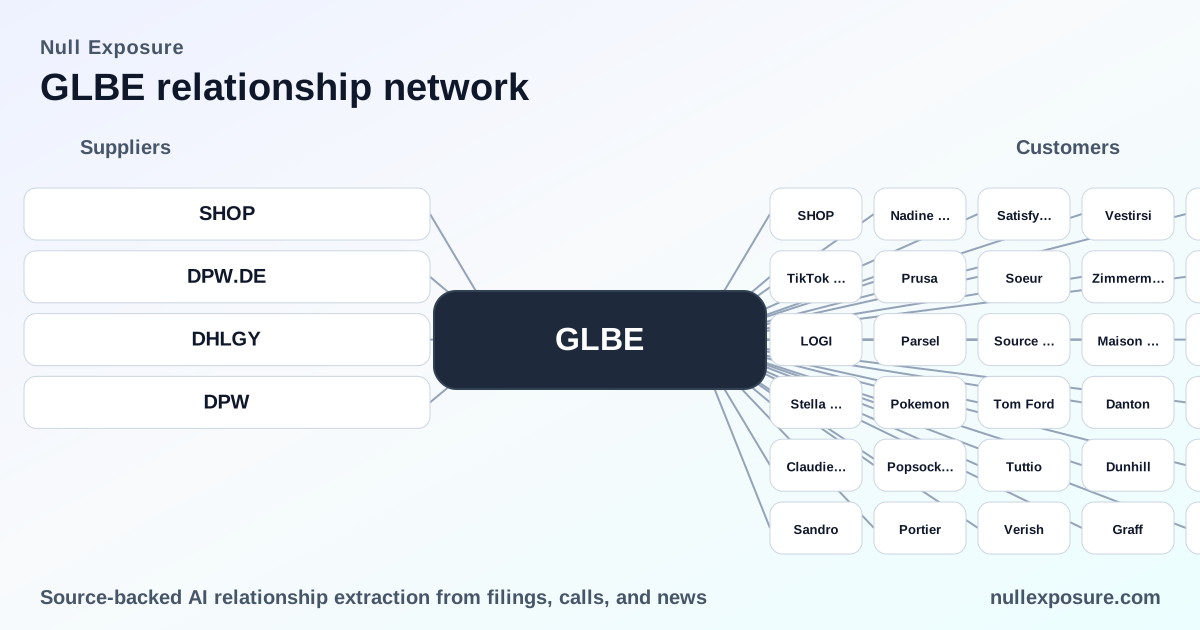
Global‑E Online (GLBE): Why Shopify and DHL Matter for Cross‑Border Growth
Global‑E operates a cross‑border direct‑to‑consumer commerce platform that stitches together payments, duties, taxes, and fulfillment to let merchants sell internationally with a single integration. The company monetizes through service fees on gross merchandise volume (GMV), fulfillment and logistics services, and value‑added products such as duty recovery and marketplace integrations, turning scale in GMV into recurring revenue and improving operating leverage as margins expand. For investors and operators, the strategic partnerships Global‑E holds with major e‑commerce and logistics platforms are direct levers on GMV throughput and take‑rate stability.
Discover more actionable supplier intelligence at https://nullexposure.com/.
How Global‑E’s business model translates into cash flow and risk
Global‑E is a platform business that converts merchant onboarding and cross‑border order flow into a suite of billed services. Revenue is driven by GMV and the effective take rate on that GMV; the company also captures margin through fulfillment and duty services. Financially, Global‑E reported Revenue TTM of $962m and Gross Profit TTM of $436m, with operating margin strength reflected in an operating margin around 18.8% and EBITDA of $158.6m. The equity market values that growth and margin profile at a premium—trailing P/E ~89 and forward P/E ~36—which implies continued execution on both GMV growth and margin expansion is already priced into the stock.
From an operating‑model perspective, investors should focus on four characteristics:
- Contracting posture: Global‑E runs strategic platform integrations and commercial agreements rather than transactional spot relationships; partnerships with platform and logistics providers are negotiated for scale and feature integrations.
- Concentration: A meaningful portion of channel distribution runs through integrated platforms; concentration risk exists if a small number of partners or merchant cohorts drive outsized GMV.
- Criticality: For merchants wanting turnkey cross‑border checkout, Global‑E’s integrations are operationally critical—losing a major partner would reduce merchant convenience and could depress onboarding and GMV.
- Maturity: The business is beyond early scale—profitability improvement and buybacks are now part of the narrative—so diligence should shift from product‑market fit to contract economics, retention, and partner renewal terms.
Partners that show up in the filings and press: Shopify
Global‑E has deepened integrations with Shopify that include extended agreements and exclusive feature work such as support for Shop Pay, designed to increase merchant conversion and GMV routed through Global‑E; those integrations are cited as drivers of take‑rate stability and operational scale. According to coverage in Simply Wall St and reporting tied to FY2026, Shopify integration remains a central distribution channel for Global‑E’s cross‑border checkout capability (SimplyWallSt, March 9, 2026; SahmCapital, Jan 30, 2026).
Partners that move boxes and margins: DHL
Global‑E’s relationship with DHL is positioned as the logistics backbone that supports fulfillment scale and international delivery reliability, which in turn supports higher GMV throughput and improved margins on fulfillment services. Industry commentary and investor notes emphasize DHL as a core logistics partner in FY2026 discussions about margin expansion and GMV continuity (SahmCapital, Feb 5/Mar 1, 2026; SimplyWallSt, March 2026).
Why these two relationships matter together
Shopify brings merchant distribution and checkout integration; DHL brings the logistics capacity to fulfill cross‑border orders. Together they reduce friction along the customer journey and convert more merchant listings into actual cross‑border transactions, directly feeding the revenue drivers of GMV and take‑rate. Company commentary around its FY2025 results explicitly ties revenue mix to service fees, fulfillment services and integrations with partners such as Shopify and social commerce marketplaces (The Globe and Mail press release tied to FY2026 results).
Relationship roll call — concise, source‑anchored takeaways
- Shopify — Global‑E has expanded its Shopify integrations with strategic agreements and feature work (Shop Pay support) that increase GMV throughput and support take‑rate stability; coverage cited these integrations as central to the FY2026 growth story (SimplyWallSt and SahmCapital, March 2026 / Jan 30, 2026).
- DHL — Global‑E leverages partnerships with DHL for fulfillment scale and delivery reliability, which investors link to margin expansion on fulfillment services and reduced delivery friction for merchants (SahmCapital and SimplyWallSt, Feb–Mar 2026).
Practical implications for procurement, ops, and investors
Operational diligence should prioritize contract economics and renewal visibility. Key focus areas:
- Contract terms and exclusivity: Confirm whether Global‑E holds exclusive feature integrations (for example Shop Pay) and the duration and renewal cadence of those agreements.
- Revenue concentration metrics: Quantify what share of GMV and revenue runs through each partner and across top merchants.
- Service level and cost pass‑through: Validate fulfillment SLAs with DHL and how logistics cost changes flow through to Global‑E margins or merchant pricing.
- Integration stickiness: Measure churn and time‑to‑onboard for merchants migrating to Global‑E via Shopify channels.
If you need structured supplier profiles or a tailored risk brief on GLBE partnerships, get access at https://nullexposure.com/.
Constraints and governance signals
The available relationship data contains no explicit contractual constraints or limitation excerpts on Global‑E; that absence is itself a company‑level signal—you should treat public commentary and press as directional but perform direct contract review to confirm durations, exclusivity clauses and termination rights. Governance diligence should prioritize verifying the maturity of the partnerships, renewal windows, and any revenue‑share thresholds that affect take‑rate economics. These are company‑level characteristics and not assigned to any single partner in the public excerpts.
Actionable checklist and final investor verdict
For investors and operators evaluating Global‑E as a supplier or investment:
- Confirm partner contract maturity and renewal risk with Shopify and DHL.
- Request GMV concentration tables by partner and top merchants.
- Stress‑test margin sensitivity to logistics cost changes and partner fee renegotiation.
Bottom line: Global‑E’s value proposition is the orchestration of checkout, duties, and fulfillment at scale; Shopify and DHL are primary operational levers that translate merchant distribution into monetized GMV and improved margins. Execution on partner renewals and retention of merchant flow will determine whether the current market premium for GLBE is justified.
To commission a tailored supplier risk brief on Global‑E and its partner contracts, visit https://nullexposure.com/ and request a bespoke report.