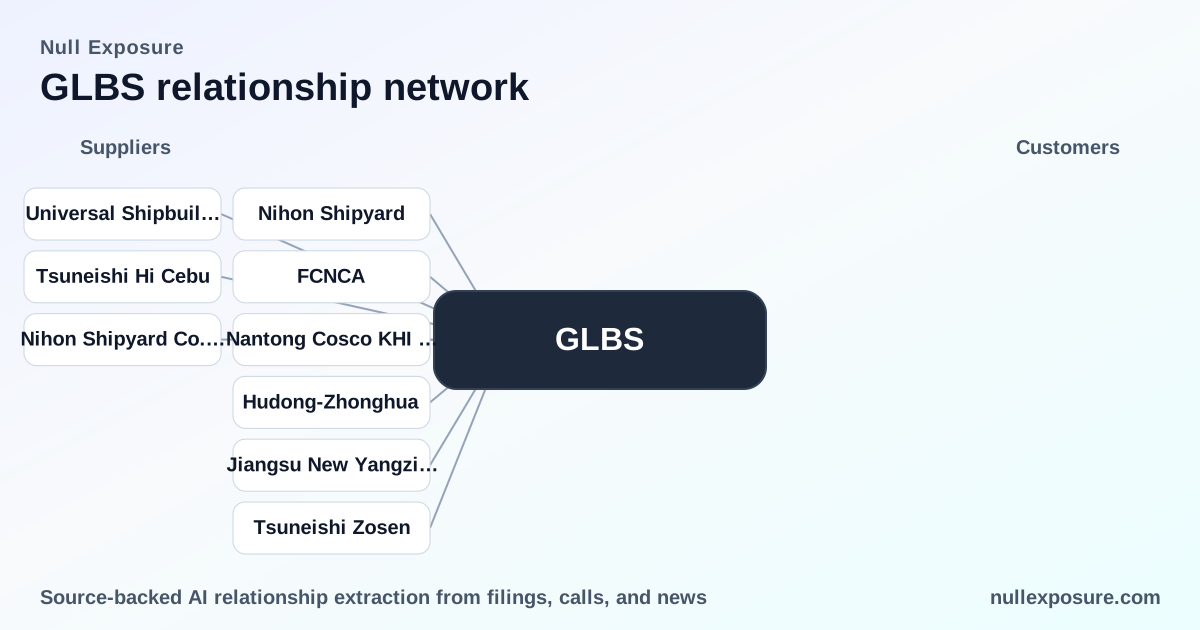
Globus Maritime (GLBS): supplier map, capital posture and what investors should price in
Globus Maritime operates as an integrated dry-bulk shipping platform that monetizes by owning and operating small-to-mid sized bulk carriers (Ultramax and Kamsarmax classes) and chartering them into the seaborne dry bulk market. Revenue is driven by freight rates on the charter market and fleet utilization, while capital intensity comes from newbuild programs and loan facilities that finance vessel acquisitions. This profile makes supplier and lender relationships central to both operational continuity and balance-sheet risk.
Explore supplier relationships and counterparty risk at https://nullexposure.com/.
Why supplier relationships matter for a shipping investor
Globus’s economics are straightforward: vessel ownership captures upside in time-charter and voyage markets, while newbuilds and vessel maintenance lock in costs and capabilities for the fleet. Shipyards determine the pace and technical competitiveness of fleet renewal; banks determine refinancing options and covenant flexibility. For an investor, the supplier map reveals where CapEx is committed, which yards set delivery schedules, and which lenders control near-term capital structure outcomes.
The supplier footprint: multiple yards, a concentrated newbuild program
Globus has contracted with a mix of Japanese, Chinese and Philippine yards for newbuilds and has legacy vessels from multiple builders. The company draws on a geographically diverse set of shipbuilders, but recent growth is concentrated in a small number of newbuilds that materially affect fleet age and fuel-efficiency. That concentration in recent newbuild activity creates both upside (modern fuel-efficient tonnage) and timing risk if deliveries slip.
- Key operating implication: modern Ultramax deliveries increase charter competitiveness and residual value, improving revenue per vessel; however, they also increase near-term capital commitments and reliance on yard delivery schedules.
If you want a consolidated view of counterparties and exposure, see https://nullexposure.com/.
Relationship-by-relationship review (plain-English, source-backed)
Nihon Shipyard / Nihon Shipyard Co., Ltd.
Globus contracted with Nihon Shipyard — the joint venture of Imabari Shipbuilding and Japan Marine United — for the construction of a fuel-efficient Ultramax, marking an entry into Japanese-built assets for the company. According to Splash247 (March 2026), this deal positions Globus to access Japanese design and construction standards for fuel efficiency. (Source: Splash247, March 2026)
A separate company disclosure lists a January 2024 Ultramax (GLBS Hero) as built by Nihon Shipyard and registered in the Marshall Islands, confirming at least one delivered unit from this relationship. (Source: GlobeNewswire via The Manila Times, November 2025)
Nantong COSCO KHI Ship Engineering Co., Ltd. / Nantong Cosco KHI Ship Engineering Co., Ltd.
Globus has multiple Ultramax deliveries from Nantong COSCO KHI, including the 2024-built M/V “Glbs Magic” (≈64,000 DWT) and at least one sister vessel (Glbs Might), reflecting a clustered newbuild execution with this Chinese yard. VesselFinder and Cyprus Shipping News reported the September 2024 delivery of “Glbs Magic,” and The Manila Times filing references both 2024 and 2024-built Ultramaxes tied to Nantong. (Sources: VesselFinder, September 2024; Cyprus Shipping News, December 2024; GlobeNewswire via The Manila Times, Nov 2025)
Hudong-Zhonghua
Globus’s fleet includes Kamsarmax tonnage built at Hudong-Zhonghua, with vessels such as Galaxy Globe (2015 build) and GLBS Angel (2016 build) listed in company disclosures and fleet tables. These are legacy assets that contribute to fleet capacity but are older relative to recent Ultramax additions. (Source: GlobeNewswire via The Manila Times, November 2025)
Jiangsu New Yangzi Shipbuilding Co.
The company’s Diamond Globe (2018 build, Kamsarmax) traces to Jiangsu New Yangzi, representing another element of Globus’s multi-yard historic build pattern and contributing to a mixed-age fleet. (Source: GlobeNewswire via The Manila Times, November 2025)
Tsuneishi Zosen
Globus lists Orion Globe (2015 build, Kamsarmax) from Tsuneishi Zosen among its fleet, underscoring the international spread of its past newbuild program across established Japanese yards. (Source: GlobeNewswire via The Manila Times, November 2025)
Universal Shipbuilding Corporation
Power Globe (2011 build, Kamsarmax) is recorded as built by Universal Shipbuilding — a legacy asset demonstrating that Globus has historically sourced from large, well-known Japanese shipbuilders. (Source: GlobeNewswire via The Manila Times, November 2025)
Tsuneishi Hi Cebu
GLBS Gigi (2014 build, Kamsarmax) was constructed at Tsuneishi Hi Cebu in the Philippines, adding a Philippine-built vessel to the company’s roster and reinforcing a geographically diverse legacy fleet. (Source: GlobeNewswire via The Manila Times, November 2025)
First Citizens Bank & Trust Company
Globus amended its CIT loan facility with First Citizens Bank & Trust Company in September 2025, extending the termination date for Tranches F and G through August 10, 2027, to align with other tranches — an active refinancing action that improves near-term covenant and maturity alignment. This amendment is disclosed in the company’s Q3 2025 filing and summarized in GlobeNewswire coverage. (Source: GlobeNewswire via The Manila Times, November 2025)
What the relationships collectively tell investors
- Modernization push: Recent Ultramax deliveries (multiple 2024 builds) show a deliberate fleet renewal toward fuel-efficient Ultramaxes, shifting the fleet mix and improving commercial competitiveness.
- Multi-yard execution: Globus sources newbuilds across Chinese (Nantong COSCO KHI), Japanese (Nihon, Tsuneishi, Universal) and Philippine (Tsuneishi Hi Cebu) yards, reducing single-yard delivery concentration but creating program-management complexity.
- Legacy fleet diversity: Older Kamsarmax builds from several yards indicate a mixed-age fleet that will drive ongoing maintenance and potential cascade sale/redeploy decisions.
- Active credit management: The First Citizens loan amendment is a timely capital-structure action that extends maturity profile and reduces immediate refinancing pressure.
These elements combine into a capital-intensive growth posture where operational upside from newer vessels is balanced against refinancing and delivery execution risk. If you want a quick, consolidated view of supplier exposure and counterparty risk, visit https://nullexposure.com/ for a supplier map and risk dashboard.
Constraints and company-level operating signals
The dataset provided no explicit contractual constraints; as a company-level signal, note these operational characteristics:
- Contracting posture: Globus executes both direct newbuild contracts and phased payments across multiple yards, implying active CapEx scheduling and milestone payment risk.
- Concentration: Recent growth is concentrated in a small set of Ultramax newbuilds (notably Nantong COSCO KHI and Nihon Shipyard), which creates delivery timing sensitivity.
- Criticality: Shipyards and lenders are critical counterparties — delayed deliveries or financing friction would directly impair revenue generation and capital returns.
- Maturity: Fleet composition spans 2011–2024 builds, indicating mixed maturity across technical and regulatory lifecycles; this drives heterogenous operating costs and resale dynamics.
Investment takeaway and next steps
Globus is executing a targeted modernization of its fleet while actively managing credit maturities. For investors, the key levers are freight-rate exposure, newbuild delivery execution, and financing runway provided by relationships such as First Citizens and major Asian yards. Monitor yard delivery notices, charter coverage on the new Ultramaxes, and any further loan amendments.
If you evaluate supplier counterparty risk or want a consolidated supplier-lender analysis for GLBS, start here: https://nullexposure.com/. For a tailored supplier risk briefing and exposure map, visit https://nullexposure.com/ and request the GLBS supplier dossier.