Great Lakes Dredge & Dock (GLDD): What the Saltchuk deal and advisor map mean for suppliers and investors
Great Lakes Dredge & Dock monetizes a fleet-and-expertise business model: it sells dredging and marine construction services on a project-by-project basis to federal, state and private clients, collecting revenue from time-and-materials and fixed-price contracts while monetizing vessel assets and specialized crews. Recent acquisition activity and a bank-backed tender offer have converted a public infrastructure services company into an entity in transition — changing counterparty priorities, payment certainty and procurement dynamics for suppliers and lenders alike.
For a deeper supplier-risk and counterparty profile, see our platform: https://nullexposure.com/
The short thesis: project cashflow meets strategic buyout
GLDD operates a capital-intensive, project-driven business where revenue is tied to discrete contracts and the availability of specialized vessels. Contracting is lumpy, counterparty-critical and asset-dependent, so any change in ownership or financing touches working capital, bonding capacity and procurement cadence. Saltchuk’s all-cash acquisition and the fully committed financing behind it materially reduce public equity risk and will accelerate integration of procurement under a private owner. For more background and to monitor counterparties, visit https://nullexposure.com/.
Deal dynamics that shape supplier exposure
Saltchuk’s announced acquisition of GLDD for roughly $1.5 billion (reported in February–March 2026) rewrites the company’s strategic and financial posture. An all-cash, bank-backed deal reduces counterparty credit risk for suppliers in the near term but concentrates negotiating leverage under the new owner. Procurement cycles will compress toward integration and standardization under Saltchuk, and committed bank financing removes a financing contingency that could have delayed or interrupted payments. This changes the supplier risk model from public-equity volatility to private-owner integration risk.
Company-level operating signals:
- Contracting posture: Project-based and lumpy, which creates revenue seasonality and episodic working capital needs for vendors.
- Concentration: High dependence on large, government and infrastructure contracts, increasing contract award criticality.
- Criticality: GLDD’s fleet is strategic for ports, coastal protection and energy-related seabed work, so supplier relationships for specialized equipment and shipyard services are mission-critical.
- Maturity: Public company history, established fleet and advisor roster indicate corporate maturity; acquisition shifts the governance horizon to private ownership and operational integration.
The counterparty and advisor map you need to know
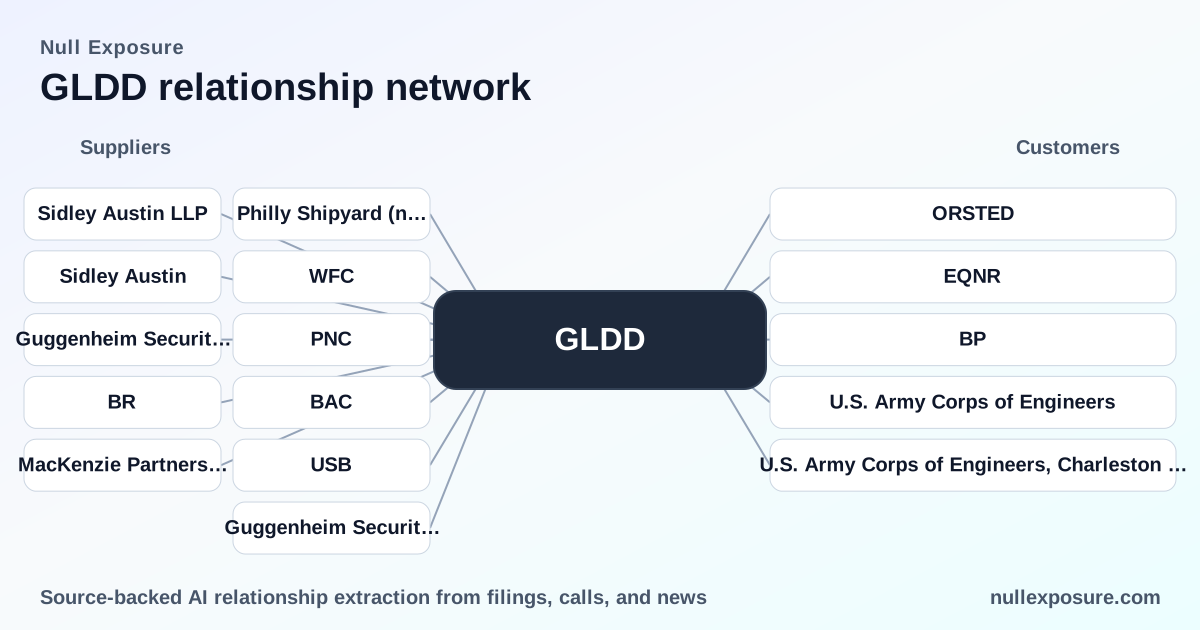
Below I list every named relationship referenced in public reporting on the transaction and what each party’s role means for suppliers and investors.
-
Philly Shipyard (now Hanwha Philly) — Great Lakes ordered the Jones Act-compliant subsea rock installation vessel Acadia from Philly Shipyard, signaling continued fleet renewal and reliance on domestic shipbuilders for critical assets. Source: Maritime Executive (reported March 2026).
-
Wells Fargo — Identified as one of the banks providing fully committed financing for Saltchuk’s acquisition, which gives the deal immediate liquidity support and reduces execution risk. Source: gCaptain (March 2026).
-
PNC — Included in the syndicate providing committed financing for the transaction; this participation indicates multi-bank support rather than single-lender concentration. Source: gCaptain and GlobeNewswire (February–March 2026).
-
Bank of America — Named as a lender in the committed financing package backing Saltchuk’s purchase, reinforcing the bank-level underwriting behind the tender offer. Source: gCaptain and GlobeNewswire (February–March 2026).
-
U.S. Bank — Also a committed financing provider for the transaction, completing a group of large commercial lenders that collectively eliminate a financing condition. Source: gCaptain and GlobeNewswire (February–March 2026).
-
Guggenheim Securities, LLC — Serving as exclusive financial advisor to Great Lakes, Guggenheim directed the sell-side process and valuation negotiations, central to the transaction terms suppliers should anticipate under new ownership. Source: GlobeNewswire press release (February 11, 2026).
-
Sidley Austin LLP (Sidley Austin) — Acting as legal advisor to Great Lakes, Sidley Austin handled transaction documentation and regulatory clearance issues that affect covenant structures and post-closing obligations. Source: GlobeNewswire and Pulse2 reporting (February–March 2026).
-
Broadridge Corporate Issuer Solutions, LLC — Appointed as depositary and paying agent for the tender offer, Broadridge is the operational conduit for equity settlement and shareholder communications; its role ensures orderly execution of the offer mechanics. Source: GlobeNewswire (March 4, 2026).
-
MacKenzie Partners, Inc. — Engaged as the information agent communicating tender instructions to shareholders and custodial brokers, MacKenzie’s role is administratively important to the tender timetable and disclosure flow. Source: GlobeNewswire (March 4, 2026).
-
Evercore and Fried, Frank, Harris, Shriver & Jacobson — Reported as advisors to Saltchuk in the gCaptain coverage, these firms advise the buyer on financing and legal structure, shaping the acquisition terms that will govern GLDD’s supplier contracts post-close. Source: gCaptain (March 2026).
(Each relationship above is drawn from public press coverage and company disclosures issued in February–March 2026.)
What this means for vendor contracts, bonding and payment timing
- Near-term: stronger cash visibility. The committed bank financing and all-cash offer reduce the risk of abrupt cash-flow interruptions tied to a failed financing condition. Suppliers should expect immediate payment certainty for outstanding invoices tied to the public entity and clarity on successor obligations.
- Medium-term: renegotiation and integration risk. Private ownership typically centralizes procurement; suppliers should prepare for requests to rebid, revised master service agreements, and standardized terms under Saltchuk.
- Strategic suppliers should engage early. Given the fleet renewal (Acadia build) and contract concentration, suppliers of shipyard services, specialty equipment and heavy marine consumables are strategically positioned to win scope under the new owner if they secure prequalification and bonding capacity.
If you manage exposure to GLDD as a vendor or counterparty, validate contract assignment language, confirm receivables treatment in the tender documentation and update credit limits. For monitoring tools and counterparty screens, visit https://nullexposure.com/.
Final takeaways and next steps
- The acquisition converts public equity uncertainty into private integration risk. Bank backing removes a principal execution risk, but the change in ownership concentrates procurement control.
- Operational continuity is likely near-term; commercial rebalancing follows. Suppliers will see payments stabilized but should plan for RFPs and consolidated supplier lists during integration.
- Advisors and lenders on both sides create a robust governance and financing structure that reduces the chance of a deal reversal, but increases the probability of standardized, buyer-favorable contract terms.
To track updates, tender mechanics and counterparties in real time, and to assess your supplier exposure to GLDD, use our monitoring and due-diligence resources at https://nullexposure.com/. For bespoke supplier-risk reviews and counterparty scoring, contact our team through the same homepage.