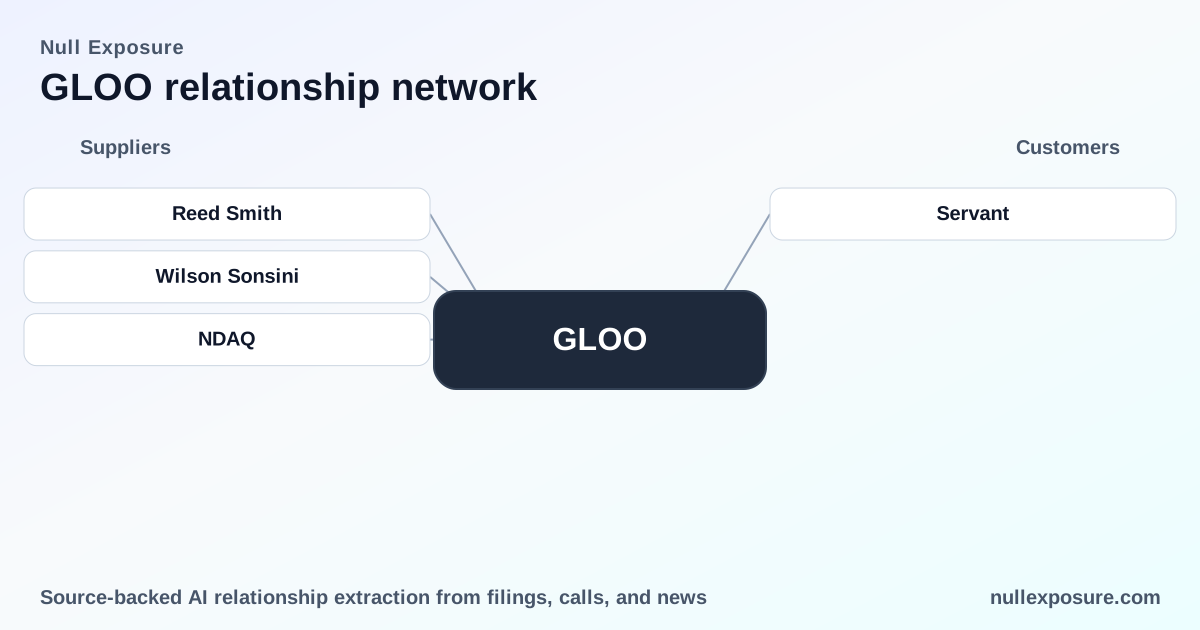
GLOO supplier relationships: legal counsel and listing partners that shape the IPO path
Gloo Holdings operates a vertical technology platform serving the faith and flourishing ecosystem and monetizes primarily through subscription and services relationships built on that platform. The company’s near-term supplier footprint disclosed in public filings focuses on professional services and the exchange relationship required to complete its public offering—critical, short-duration engagements that directly enable capital formation and market access.
Explore strategic supplier signals and tailored vendor risk intelligence at https://nullexposure.com/.
Why the disclosed suppliers matter to investors
Gloo’s public disclosures list a compact set of external partners associated with the company’s S‑1 and listing process. Those partners are not product vendors; they are commercial and regulatory enablers—law firms and the exchange. That profile implies a supplier posture that is transactional, highly critical for the offering timeline, and low in ongoing operational concentration risk. The absence of broader vendor disclosures (software providers, hosting, or payments partners) in the supplied results is itself a signal: the IPO narrative emphasizes capital formation and legal/regulatory support rather than dependency on third-party platform providers.
How to read the contracting posture, concentration, criticality and maturity
- Contracting posture: The relationships disclosed are professional services engagements—standard bilateral counsel retainers and an exchange application—rather than long-term strategic outsourcing contracts. That structure produces predictable, scoped costs tied to milestones (e.g., S‑1 drafting, securities counsel, listing approval).
- Concentration: Publicly named suppliers are few and concentrated in legal and listing functions, which is appropriate for an IPO but not indicative of broader supplier concentration across operations.
- Criticality: These partners are high‑criticality for the event (the offering and listing). Legal counsel and exchange relationships directly affect timing, regulatory compliance, and the prospectus content.
- Maturity: The relationships are mature in the sense of being standard market practices for an IPO: engagement of established law firms and a formal exchange application process. These are not experimental vendor relationships requiring extended onboarding.
For more granular supplier-risk scoring and event monitoring tied to filings and news, see https://nullexposure.com/.
What each disclosed relationship reveals
-
Reed Smith — Reed Smith is listed among legal advisors to Gloo in the S‑1 filing process; the firm provided additional guidance alongside Wilson Sonsini as Gloo prepared its offering. This is a conventional engagement with an established securities and corporate practice supporting IPO documentation. Source: TradingCalendar coverage of Gloo’s S‑1 filing (first reported March 9, 2026, citing the S‑1).
-
Wilson Sonsini — Wilson Sonsini acted as a principal legal advisor referenced in the S‑1 and supplied customary IPO counsel and legal structuring support for Gloo’s transaction. The firm’s involvement signals standard market counsel for technology issuers. Source: TradingCalendar coverage of Gloo’s S‑1 filing (March 2026).
-
Nasdaq (NDAQ) — Gloo has applied to trade on the Nasdaq exchange; the S‑1 explicitly notes that the offering is contingent on Nasdaq approval and will not proceed if the application is denied. The exchange relationship is therefore the gating supplier dependency for going public. Source: TradingCalendar coverage of Gloo’s S‑1 filing (March 2026).
Operational and strategic implications for investors
The supplier picture is straightforward and concentrated on the IPO mechanics. That concentration is appropriate for a company at this stage but elevates event risk—any disruption to counsel engagement or exchange approval affects timing, dilution outcomes, and cost of capital.
- Legal counsel involvement is consistent with an experienced issuance approach: engagement of two market-leading law firms reduces single‑advisor dependency and provides complementary capabilities (transaction drafting, securities compliance, and negotiation of underwriting terms).
- The Nasdaq relationship is binary and critical: the company itself disclaimed that the offering will not move forward without exchange approval. Investors must treat exchange review timelines and any regulatory feedback as immediate catalysts for valuation and capital plans.
Risk factors and a short watchlist
Investors should monitor a limited set of supplier-related risks that directly affect the IPO and near-term liquidity:
- Listing approval timeline and feedback — any material comments from Nasdaq could delay pricing or require amendments to disclosures; the company has stated the offering depends on Nasdaq approval. (Source: TradingCalendar report on the S‑1, March 2026.)
- Legal contingency costs — while counsel choice reduces single‑advisor concentration, extended regulatory review or litigation-related disclosures could increase legal fees and compression of net proceeds.
- Opaque operational vendor disclosure — the published results emphasize professional services for the listing; absence of other vendor detail in the S‑1 results should prompt diligence on hosting, payments, and data partners once post‑IPO filings (10-Q/10-K) are available.
Key financial context: Gloo reported TTM revenue of roughly $67.5M with negative EBITDA, indicating the company is scaling while not yet cash‑flow positive—another reason the timing and success of the offering are material to continuing operations. (Company reporting: latest quarter October 31, 2025.)
Actionable investor checklist
- Confirm Nasdaq approval status and review any Nasdaq comment letters as soon as they are filed; the listing relationship is the immediate gating item.
- Track amendments to the S‑1 for new supplier disclosures (hosting, data, payments) that would change operational vendor concentration.
- Monitor legal fees and contingent liabilities disclosed in the final prospectus and subsequent financial reports for expense pressure that would affect runway.
For ongoing monitoring and supplier risk intelligence tied to public filings and newsflow, visit https://nullexposure.com/.
Bottom line: supply-side exposure is concentrated and event-driven
Gloo’s publicly disclosed supplier relationships center on legal advisors (Wilson Sonsini and Reed Smith) and the Nasdaq listing application, which together define the company’s path to market. These relationships are highly critical for the IPO event, low in long-term vendor concentration risk as disclosed, and standard in market maturity. Investors should treat exchange approval and S‑1 amendments as primary catalysts and expand vendor diligence once post‑IPO filings reveal operational suppliers.
If you want a tailored supplier-risk brief or monitoring feed tied to GLOO’s ongoing filings and news, start here: https://nullexposure.com/.