GLOP-P-B: Sponsor-linked preferreds anchored in LNG charters — what investors and operators need to know
GasLog Partners LP’s 8.200% Series B preferred units (GLOP-P-B) are a fixed-to-floating, cumulative, redeemable perpetual instrument that monetizes exposure to LNG shipping via distributions backed by a partnership ownership model and long-term charter economics. The security’s value proposition is twofold: income stability from a fixed coupon clause coupled with optional redemption and downstream upside tied to the partnership’s fleet and sponsor arrangements with GasLog Ltd. For investors evaluating supplier and sponsor relationships, the counterparty map and conflict remediation steps are the primary determinants of credit and operational risk. Learn more at the NullExposure homepage: https://nullexposure.com/
The security and the commercial spine — why sponsor ties matter
GLOP-P-B sits inside a classic midstream-style shipping partnership structure where asset ownership and charter contracts generate distributable cashflows. The sponsor — GasLog Ltd — is the dominant commercial counterparty, feeding vessels, purchase options and charter opportunities into the partnership. That sponsor linkage creates concentrated counterparty exposure but also a predictable commercial pipeline when long-term charters are in place. The instrument’s fixed-to-floating design protects coupon receipts while aligning long-run interest cost sensitivity with market rates, and the cumulative feature ensures missed payments accumulate ahead of equity distributions.
Who GLOP-P-B does business with — transaction-level evidence
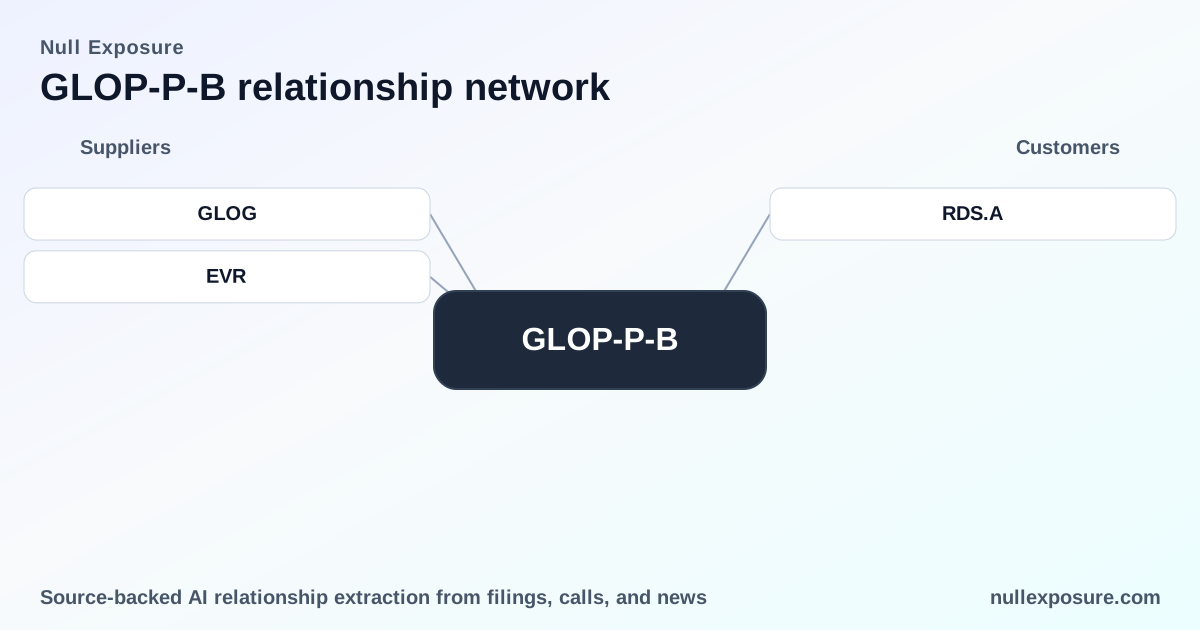
The supplier relationship feed includes three distinct records spanning 2016–2019. Each record is summarized below with its source.
GasLog Ltd — acquisition of entity owning GasLog Seattle (FY2016)
In FY2016 GasLog Partners LP executed an agreement to purchase 100% of the shares in the company that owned and chartered the LNG carrier GasLog Seattle from GasLog Ltd, reinforcing the partnership’s strategy of growing its owned fleet via sponsor-originated transactions. Source: LNG Industry, October 2016 — https://www.lngindustry.com/lng-shipping/27102016/gaslog-partners-agrees-to-purchase-gaslog-seattle-lng-carrier/
Evercore — adviser to the Conflicts Committee during IDR elimination discussions (FY2019)
In FY2019 Evercore acted as adviser to the Conflicts Committee of GasLog Partners’ board in connection with the transaction to eliminate incentive distribution rights, signaling formal conflict management and independent advice during sponsor-partnership restructurings. Source: GlobeNewswire press release, June 24, 2019 — https://www.globenewswire.com/news-release/2019/06/24/1872866/0/en/gaslog-ltd-and-gaslog-partners-lp-announce-agreement-to-eliminate-incentive-distribution-rights.html
GasLog Ltd — acquisition right following GasLog Warsaw charter (FY2019)
Following commencement of GasLog Warsaw’s eight-year charter to Endesa in FY2019, GasLog Partners LP held a contractual right to acquire that LNG carrier under an agreement between GasLog Ltd and the partnership, illustrating how long-term charters and sponsor purchase options drive fleet renewal and capacity growth. Source: Riviera Maritime Media, FY2019 commentary — https://www.rivieramm.com/opinion/opinion/igaslog-warsawi-helps-meet-rising-demand-for-lng-shipping-54835
Operating-model constraints and company-level signals
No supplier-relationship constraints were reported in the feed for GLOP-P-B. That absence is itself a company-level signal: there are no explicit contractual limits, termination penalties, or supplier-imposed covenants surfaced in the relationships returned. From a business-model perspective, the following characteristics define the operating posture and commercial risk profile:
- Contracting posture: Sponsor-originated vessel sales and acquisition rights dominate the partnership’s contract flow, so counterparty control over asset allocation is high.
- Concentration: GasLog Ltd is the principal counterparty and source of fleet growth; concentration risk is substantial and central to credit assessment.
- Criticality: Long-term charters underpin distributable cashflows; vessel-level charter durability is critical to preferred security coverage.
- Maturity: Transactions referenced (multi-year charters, eight-year terms, and perpetual preferred units) reflect intermediate-to-long maturity horizons for both assets and securities.
These are company-level signals and should be evaluated in combination with publicly available covenant language and charter schedules before concluding on credit risk.
What this means for investors and operators
- Counterparty concentration is the dominant risk/return driver. Sponsor transactions supply both assets and future charter streams; investors buy GLOP-P-B exposure to that pipeline rather than a broadly diversified sequel of counterparties.
- Governance and conflict remediation matter. The use of an independent adviser (Evercore) in FY2019 indicates the partnership implemented formal steps to manage sponsor conflicts during structural changes — a governance strength for creditors.
- Charter tenure underpins cashflow visibility. Acquisition rights that convert charters into owned-vessel revenues sharpen predictability for preferred distributions when charters are investment-grade and long-term.
- Preferred structural protections are explicit. The cumulative, fixed-to-floating, redeemable perpetual features prioritize income capture and place redemption optionality in the issuer’s hands — important for modeling downside scenarios.
If you want a concise counterparty map and operational risk summary for desk use, visit our research hub: https://nullexposure.com/
Risk checklist for immediate diligence
- Confirm sponsor counterparty credit and any cross-default mechanics tied to sponsor financings.
- Review the partnership’s charter backlog and exercise/closing history on sponsor-originated purchase options.
- Inspect covenant language governing preferred distributions, redemption triggers, and subordination to secured creditors.
- Validate governance track record for conflict resolution; adviser engagement history is a positive signal.
Actionable takeaways and next steps
GLOP-P-B delivers income-oriented exposure to LNG carrier economics with concentrated sponsor linkage. For investors focused on stable coupon flows, the security’s structure and the partnership’s sponsor-originated fleet transactions are attractive — provided sponsor credit and charter durability are independently verified. Operators evaluating counterparty stability should insist on complete charter schedules and transparency around sponsor acquisition pipelines.
To access a structured supplier-risk brief and modeled downside scenarios, start here: https://nullexposure.com/ — and schedule a follow-up if you require underwriter-caliber counterparty analytics.