GasLog Partners LP Perp Pref Unit Series C (GLOP-P-C): Supplier Relationship and Investment Brief
GasLog Partners LP Perpetual Preferred Unit Series C (GLOP-P-C) is a perpetual preferred equity instrument issued by a master limited partnership in the LNG shipping sector and monetizes through periodic distributions funded by the partnership’s vessel operations and related cash flows. The security’s fixed/floating yield profile targets income-oriented institutional holders; its value and distribution capacity are directly linked to the partnership’s fleet economics, chartering strategy and capital flows within the GasLog corporate family.
If you are evaluating counterparty exposure or supplier relationships tied to GasLog Partners, start with a concise corporate-relationship synthesis and operational risk map to understand how sponsor transactions change distribution mechanics and credit positioning. For a broader set of supplier and counterparty intelligence, visit https://nullexposure.com/.
What GLOP-P-C represents for investors and counterparties
GLOP-P-C is listed on the NYSE as a preferred stock instrument offering a perpetual claim on partnership distributions with a hybrid fixed-to-floating coupon structure. Preferred units sit ahead of common equity for distribution priority but typically rank behind senior creditors; that ranking drives counterparty negotiating leverage if the partnership needs to refinance or restructure. The public data available for this security is limited on conventional financial metrics, which increases the importance of transactional and sponsor-level transparency when assessing supplier credit exposure.
Notable corporate relationships and the transaction that matters
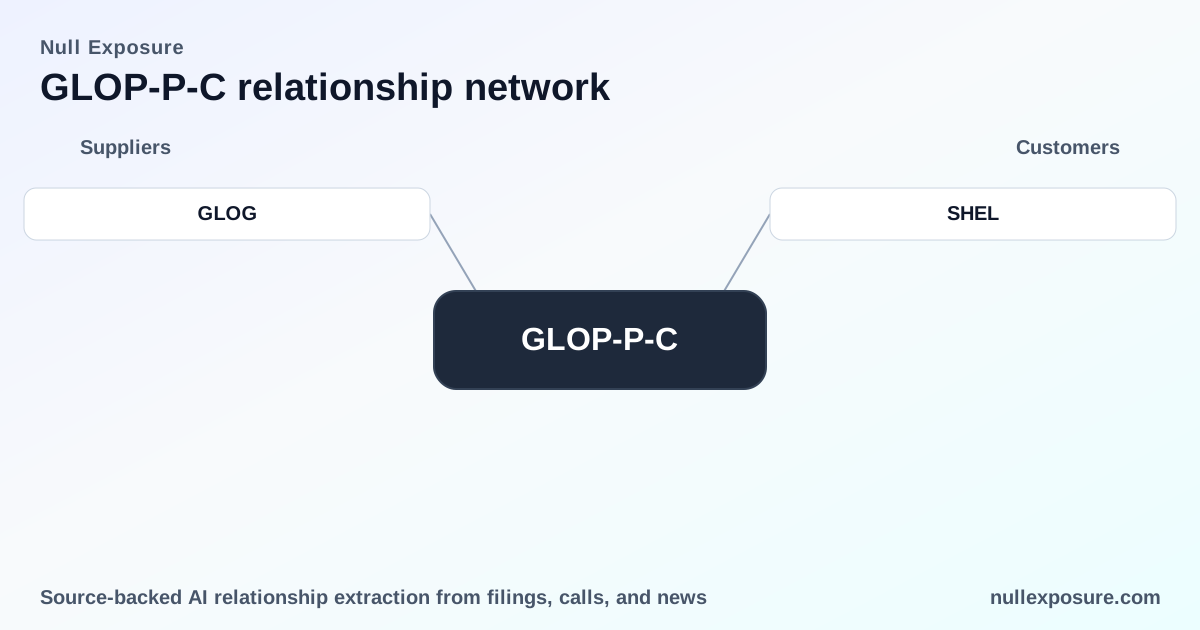
GasLog (GLOG) — In a disclosed transaction, GasLog Partners agreed to acquire the vessel GasLog Gibraltar from its sponsor GasLog for USD 207 million and simultaneously agreed to fully repay a USD 45 million unsecured term loan owed to GasLog. This move consolidated asset ownership within the partnership and eliminated an intercompany unsecured liability (source: Marinelink report referencing the FY2018 disclosure: https://www.marinelink.com/news/gibraltar-partners435390).
Why the GasLog–GasLog Partners transaction matters to suppliers and investors
- Consolidation of ownership changes cash flow lines. Purchasing GasLog Gibraltar converts a sponsor-level charter or ownership arrangement into a partnership-owned asset, shifting future charter revenue, maintenance obligations and residual value risk onto the partnership balance sheet.
- Repayment of the unsecured loan reduces related‑party credit exposure. Eliminating the USD 45 million unsecured term note to the sponsor reduces intercompany leverage and the related-party counterparty concentration on the liability side.
- Net effect on distribution capacity is directional and transactional. The acquisition required $207 million of consideration; whether that consideration was funded from cash, borrowings, or issuance determines the near-term distribution coverage profile. The transaction description itself confirms a strategic reallocation of assets and liabilities within the GasLog corporate family (source as above).
For supplier negotiations and underwriting, treat this class of sponsor-driven transactions as value-reallocations rather than neutral housekeeping: ownership transfers and debt repayments materially change who bears operational, salvage and credit risk.
If you want a broader mapping of supplier exposures and related transactions, explore practical tools at https://nullexposure.com/.
Company-level operating model signals and constraints
No explicit third-party constraints were recorded in the collected material; that absence is itself a signal to underwriters and counterparties about the need to interrogate sponsor linkages and contract terms. From a company-level perspective, the partnership’s operating model shows these characteristics:
- Contracting posture — charter-driven: The business is charter and voyage revenue centric; counterparty health and charter backlog quality directly drive distribution capacity to preferred holders and suppliers.
- Concentration — fleet and sponsor concentration are material: A limited, modernized LNG fleet creates concentrated exposure to a small set of high-value assets and to the sponsor GasLog as a repeat counterparty and arranger of asset transactions.
- Criticality — vessels are critical assets: Ships like GasLog Gibraltar are operationally critical; maintenance, drydock scheduling and crewing contracts have outsized importance for short-term cash flow.
- Maturity — corporate and instrument maturity differ: The partnership position is ongoing but the Series C preferred is perpetual; perpetual instruments rely on sustained free cash flow and stable sponsor behavior over an indefinite horizon.
These signals should guide contract terms with suppliers: require clear lien and set-off mechanics, retain step-in rights on critical service contracts, and price for concentration risk accordingly.
Key risk vectors for investors and operators
- Sponsor alignment risk. Sponsor-driven asset transfers and intercompany loan structures change economic exposures for preferred holders and suppliers; governance provisions and related-party disclosures are critical to evaluate.
- Interest-rate and coupon profile sensitivity. The fixed-to-floating design exposes holders and counterparties to both rate environments and distribution-coverage variability.
- Operational concentration. A small fleet means that a single vessel outage or redelivery diversion can move coverage metrics significantly.
- Transparency and data coverage. Publicly available metrics for the preferred unit and partnership-wide financials are limited, increasing reliance on transactional disclosures like the GasLog Gibraltar acquisition for insight.
Boldly price for these risks in supplier contracts and in stress scenarios for distribution coverage.
Practical takeaways and recommended next steps for operators and investors
- Reprioritize sponsor disclosure in diligence. Require full contract copy and sponsor-related-party schedules when underwriting supplier exposure to GLOP-P-C counterparties.
- Embed operational protections. For maintenance and service providers, secure contractual protections (liens, assignment triggers, escrow provisions) tied to vessel ownership changes.
- Monitor transactional filings. Sponsor transactions such as the GasLog Gibraltar purchase are leading indicators for capital allocation that affect distribution capacity and counterparty priority.
For a deeper look at supplier relationships across energy and shipping counterparties, review our platform and analytic offerings at https://nullexposure.com/.
Closing perspective
GLOP-P-C sits at the intersection of shipping operations and sponsor-controlled capital allocation. The acquisition of GasLog Gibraltar and the repayment of the USD 45 million unsecured term loan demonstrate how sponsor actions reallocate economic risk within the GasLog family and directly affect distribution funding mechanics for preferred holders and the credit posture seen by suppliers. Treat sponsor transactions as primary drivers of value reallocation and structure supplier agreements and investor diligence accordingly.
If you require a tailored counterparty exposure review or integration of these signals into underwriting models, start a conversation at https://nullexposure.com/ and secure the supplier intelligence needed to price risk correctly.